
Fugo Chromebox — dedicated ChromeOS signage player
The Fugo Chromebox is a slim, fanless ChromeOS media player built for always-on digital signage. It auto-updates in the background and is centrally managed from your Google Admin console — the ChromeOS counterpart to the Fugo NUC.
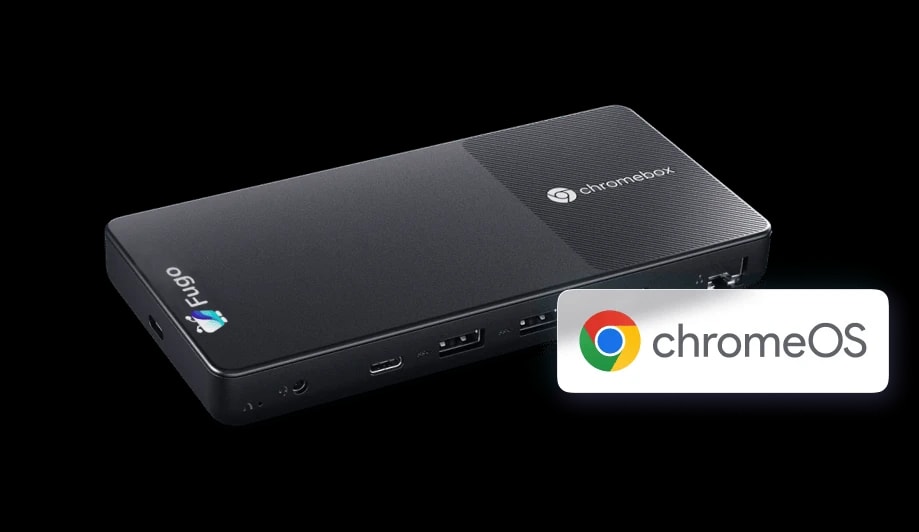
A stable, hands-off signage player
Purpose-built for teams standardised on Google Workspace who want reliable, centrally managed screens.
Slim and fanless
A compact, silent box that tucks behind any display — no moving parts, no fan noise, and low power draw for always-on running. Because there is no fan to clog or fail, it holds up in dusty retail floors, warehouses, and enclosed cabinets where a conventional PC would overheat.
Auto-updating ChromeOS
ChromeOS updates itself in the background, so players stay current and secure without manual patching or on-site visits. Updates are signage-safe and roll out quietly overnight, so screens are never interrupted mid-day by a forced consumer OS upgrade.
Google admin management
Enrol and manage every device from the Google Admin console — push policies, monitor status, and control your fleet centrally. Teams already standardised on Google Workspace can add signage players to the same console they use for laptops and Chromebooks, with no new tooling to learn.
Secure by design
ChromeOS runs Fugo in locked-down kiosk mode with verified boot and sandboxing, keeping screens tamper-resistant in public spaces. There is no exposed desktop for passers-by to reach, and the device boots straight back into your content after any power cut.
Fugo Chromebox specifications
Everything the Fugo Chromebox ships with.
System
- ChromeOS
- Intel Celeron N4500
- 8 GB RAM
- 32 GB storage
Displays
- Up to 2 displays
- HDMI output
- USB-C output
Connectivity
- Gigabit Ethernet
- Wi-Fi 6
- Hardware price: $400
Get a Fugo Chromebox live
Fugo runs natively as a Chrome kiosk app — added by URL in Chrome device management, then paired to Fugo CMS in a few minutes.
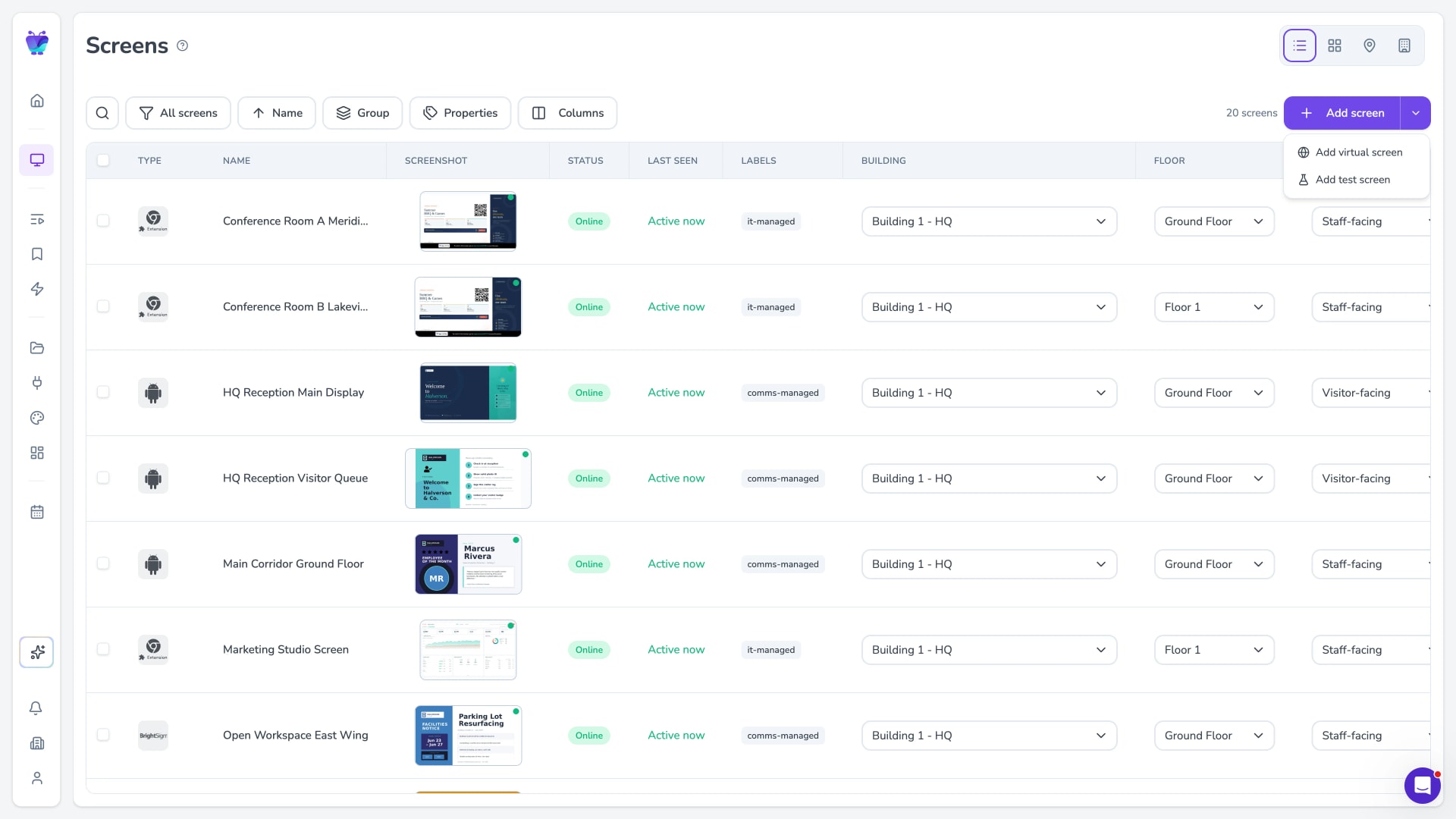
Add Fugo as a kiosk app
In the Google Admin console, go to Devices → Chrome → Apps & extensions → Kiosks, add Fugo by URL (https://player.fugo.ai), and set it to auto-launch. This installs the Fugo player on the Chromebox and tells it to open straight into signage every time it powers on.
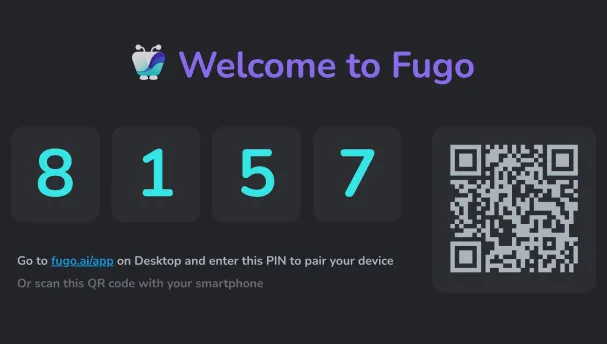
Enrol and boot into Fugo
Enrol the Chromebox (Ctrl+Alt+E) before signing in, so it picks up your organisation policy and license. On the next boot it launches straight into the Fugo kiosk and shows a 4-digit pairing PIN on the screen.
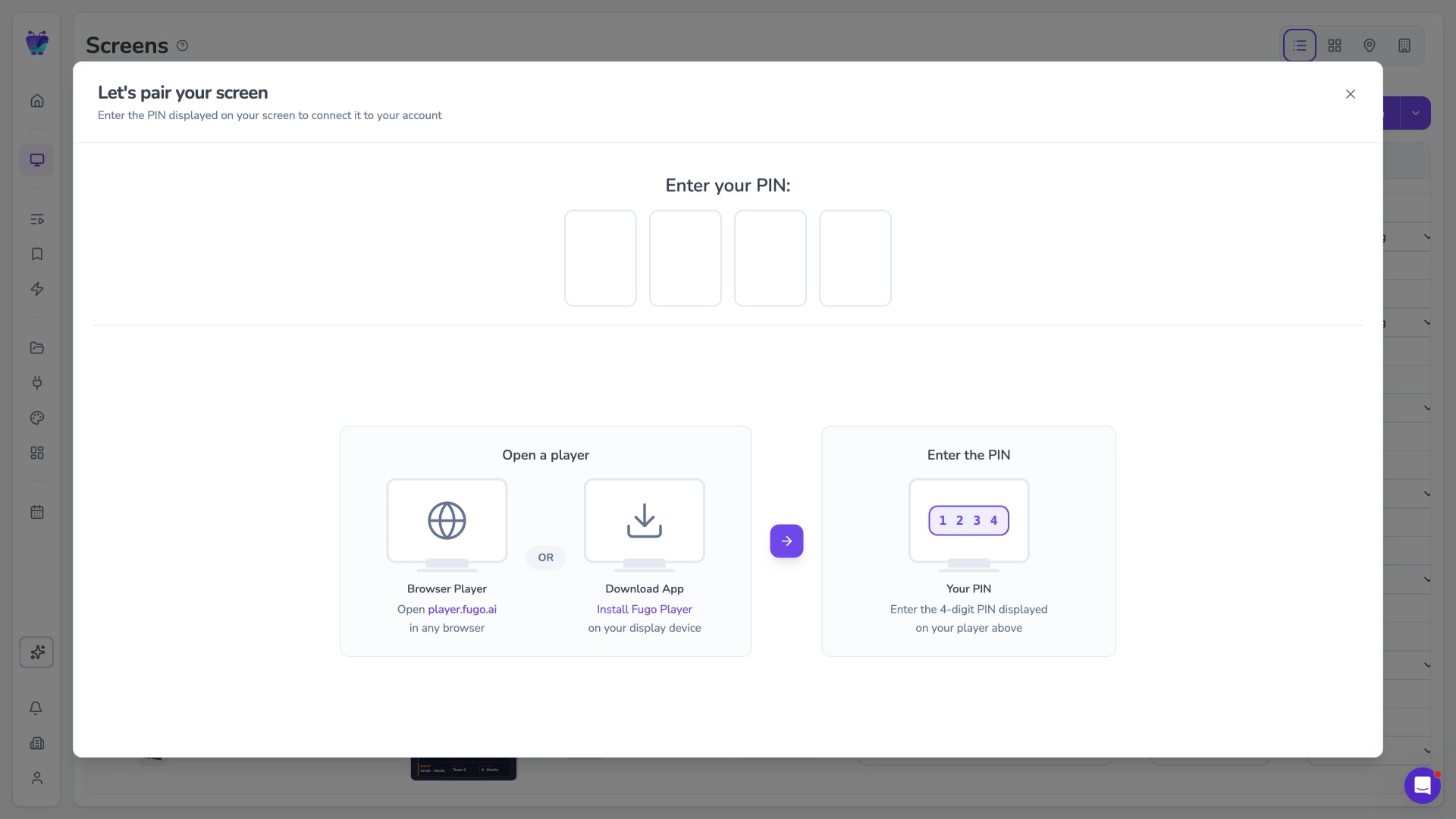
Pair and publish
In Fugo CMS, create a screen and enter the PIN to connect the Chromebox. From there you can build playlists, schedule content, and publish to the device — and update it any time from the cloud.
A full digital signage software suite
The Fugo Chromebox provides reliable on-screen playback, while Fugo CMS gives you everything you need to design, schedule, and manage content across your network.
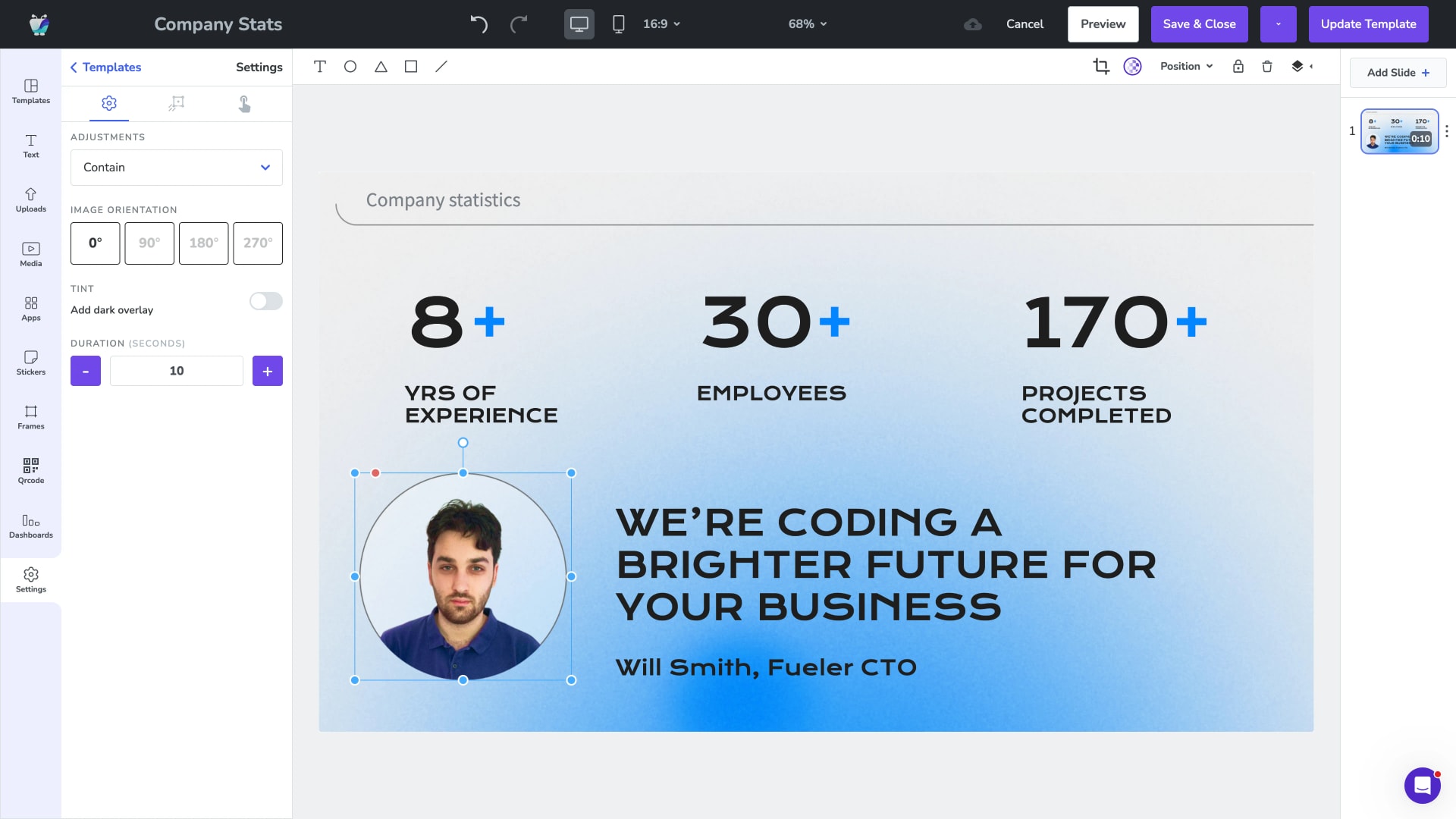
Design content without leaving Fugo
Build screen-ready posters, menu boards, and welcome screens in the built-in Design Studio — no third-party design tool required. Start from an industry template or a blank canvas, then reuse and update your designs across every Chromebox.
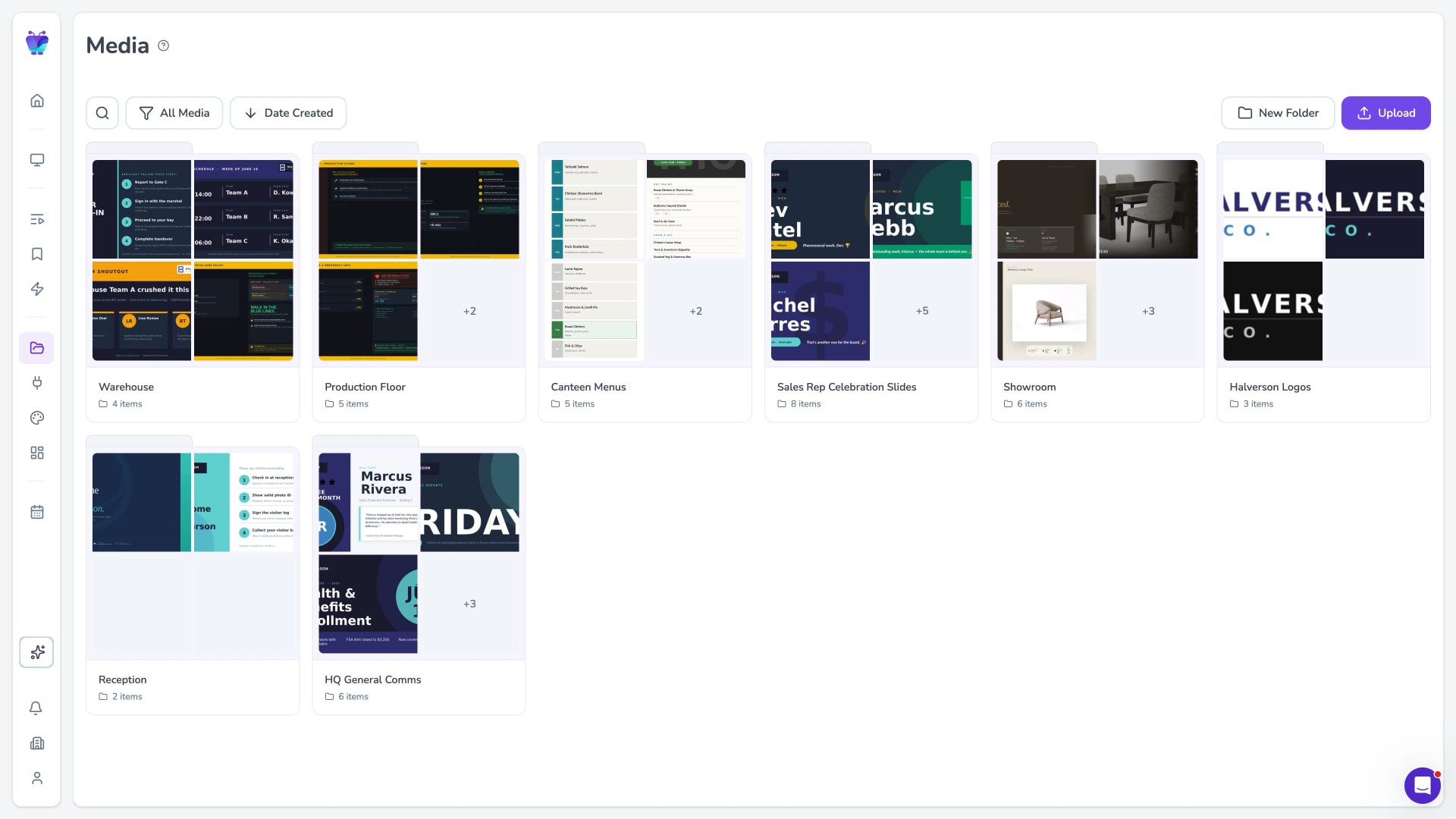
Pull in the content you already have
Upload images and video, or connect the sources where your content already lives through the Fugo app store. Play social walls, TV dashboards, digital menus, and web pages alongside your own media in a single playlist.
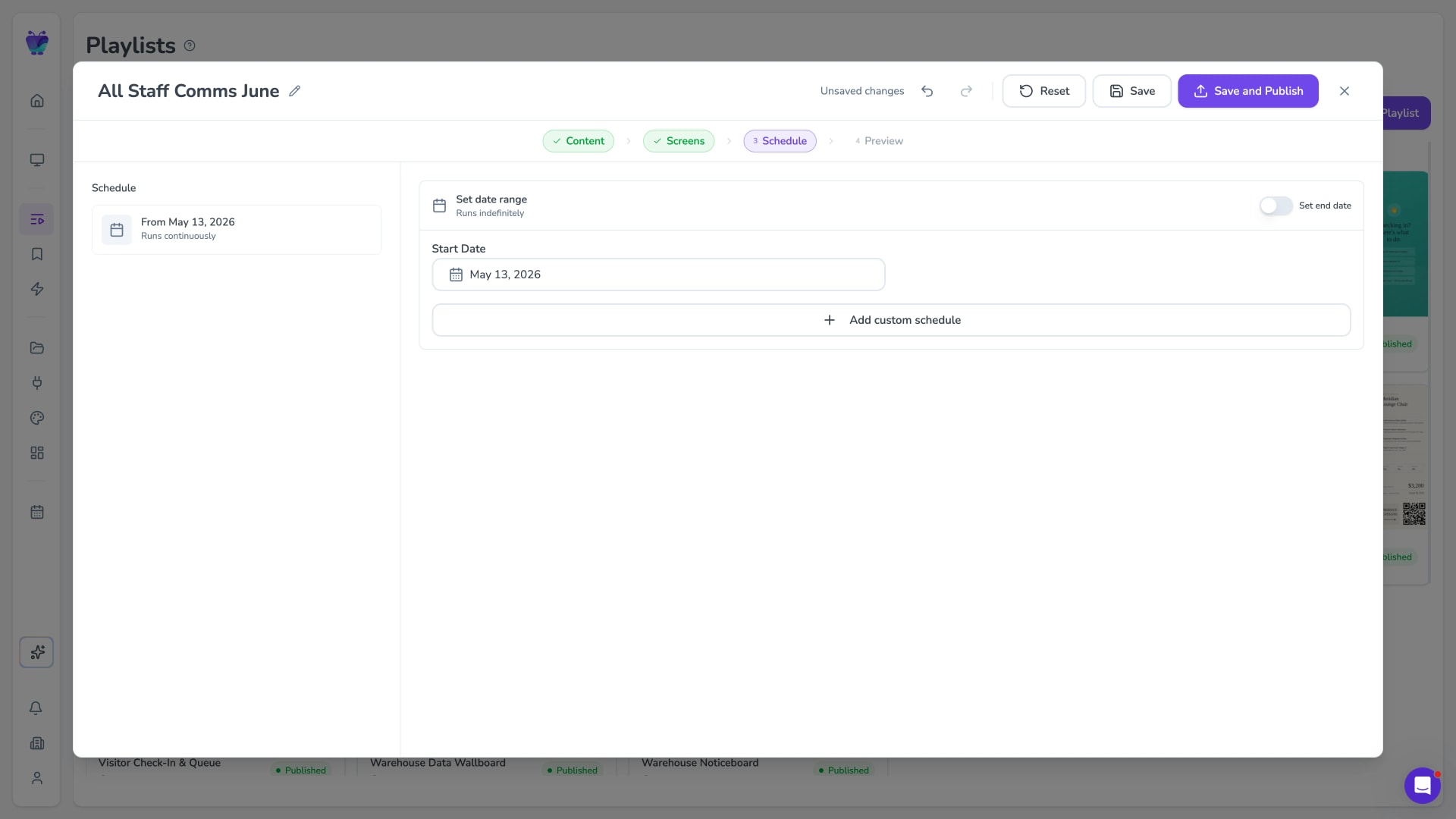
Schedule and publish with control
Plan recurring schedules, set start and end dates, and push urgent takeovers across your screens in seconds. Content updates over the air, so a Chromebox behind a display never needs a physical visit to change what it plays.
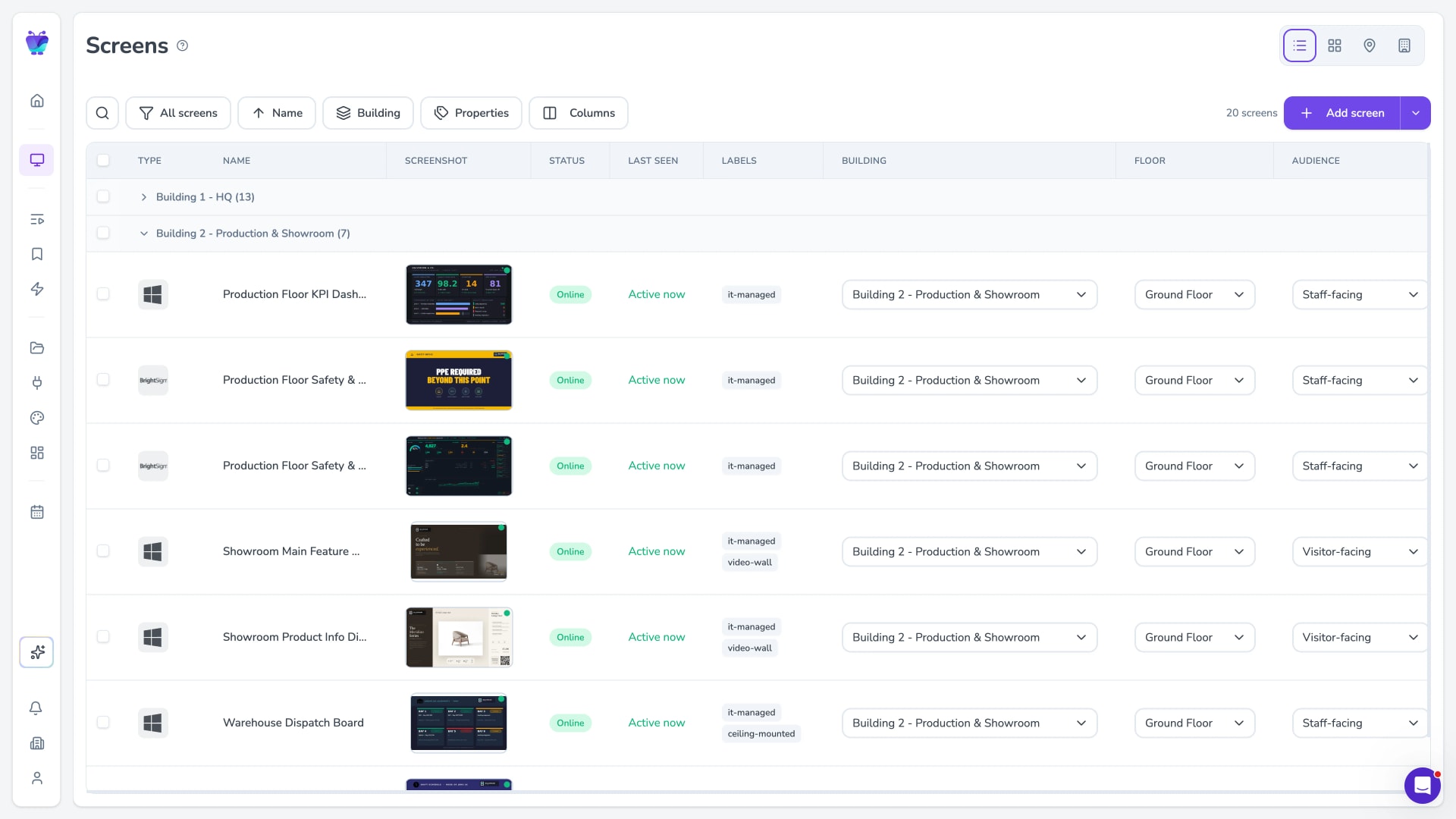
Manage every screen centrally
Group, tag, and monitor screens across sites from one cloud dashboard, on top of the fleet management you get from the Google Admin console. See what each Chromebox is playing and catch offline screens at a glance.
What you need to run the Fugo Chromebox
Chromeboxes bought direct from Fugo do not include the Kiosk & Signage Upgrade — buy it separately. There is no free trial for the upgrade.
Google workspace account
A Google Workspace account gives you the Admin console used to enrol and manage devices, with at least one user set up as an administrator. Business plans start at around $12/user/mo; a Basic plan starts at around $6/user/mo.
Kiosk & signage upgrade
A Kiosk & Signage Upgrade at $25/yr per device enables kiosk mode, auto-launch of the Fugo player, and central management from the Admin console. It is sold separately after you receive your Chromebox — and is the cheaper, purpose-built choice versus the Chrome Enterprise Upgrade at $50/yr.
Fugo subscription
An active Fugo subscription runs the content — building playlists, scheduling, and monitoring every screen from the cloud. Plans start at $24 per screen per month for full CMS access.
What a Fugo Chromebox costs to run
Four line items get a Chromebox live: the hardware, a Google Workspace account, the ChromeOS Kiosk & Signage Upgrade, and your Fugo subscription. The hardware is a one-off; the rest are ongoing.
Fugo Chromebox — $400
A one-off hardware cost per device: the slim, fanless ChromeOS player with Intel Celeron N4500, 8 GB RAM, and 32 GB storage. Contact us for a quote to order.
ChromeOS licensing
A Google Workspace account (from around $12/user/mo on Business) plus a Kiosk & Signage Upgrade at $25/yr per device. The upgrade is purchased from the Google Admin console or a Google Authorized Partner and, once assigned, stays tied to that device.
Fugo subscription
From $24 per screen per month for full access to Fugo CMS — Design Studio, apps, scheduling, and central screen management. See the pricing page for plan details.