
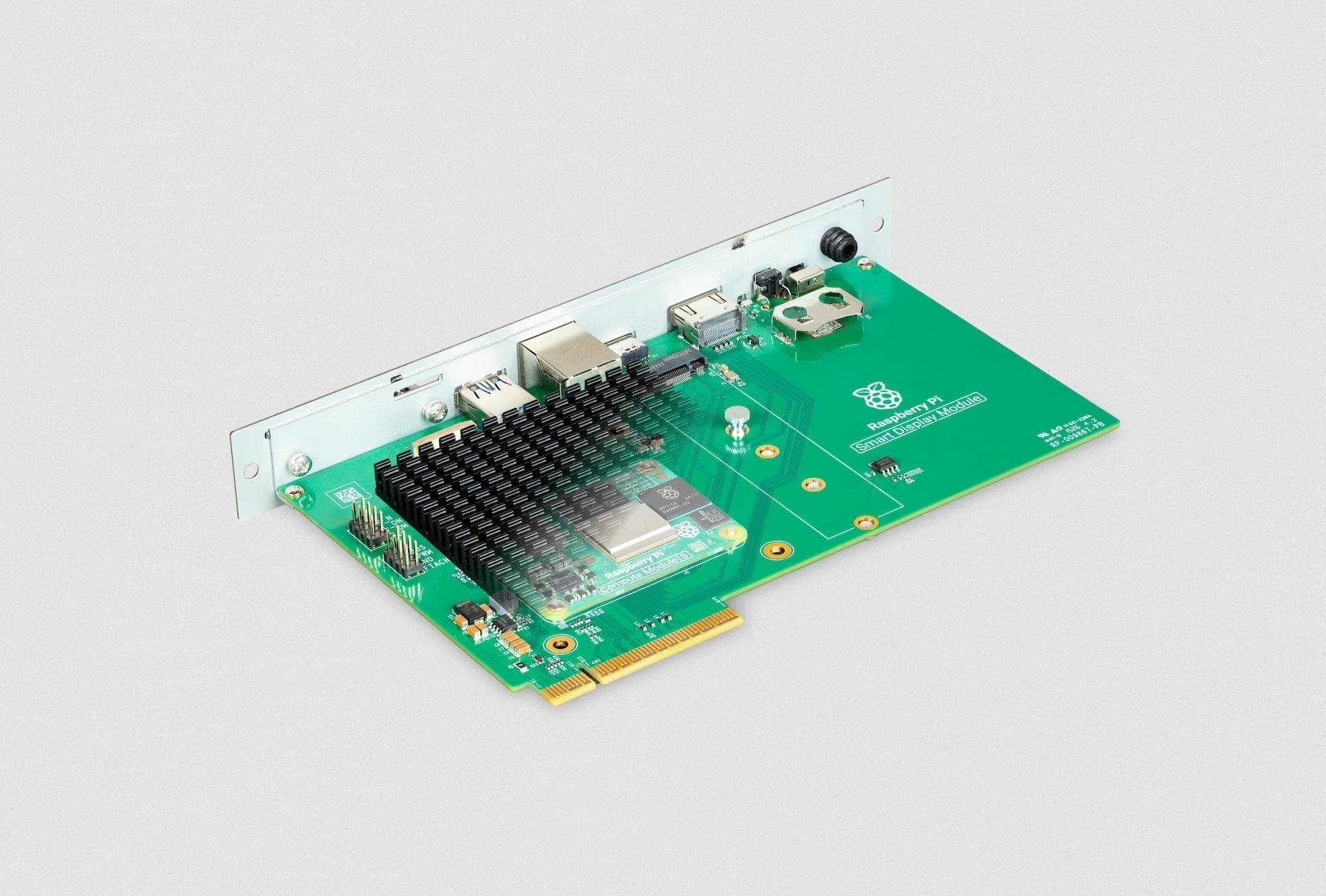
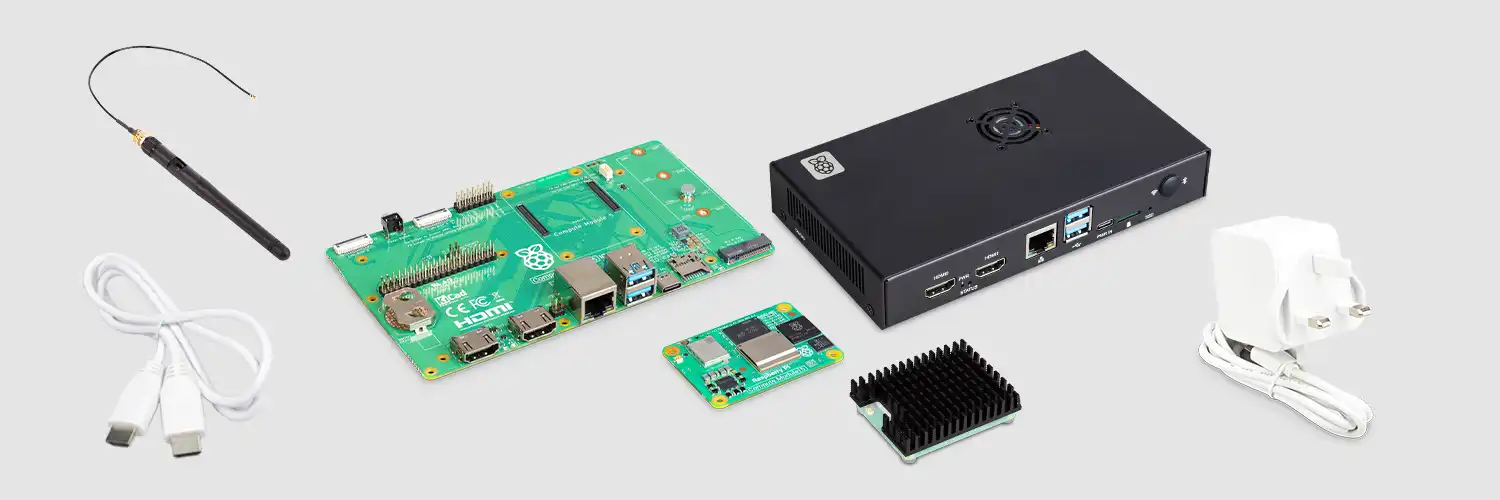
Raspberry Pi has started selling its Smart Display Module, a $30 adapter board that lets a Compute Module 5 slot directly into an Intel SDM-compatible professional display.
The board was developed with Sharp Display Solutions Europe and first shown at ISE earlier this year. It's now available through Raspberry Pi’s reseller network.
 element14 presents
For digital signage, the layout is familiar. The computer lives inside the display, takes power from the display and avoids an external player enclosure altogether. Raspberry Pi’s board also adds HDMI output for a second independent video stream and an M.2 slot that can be used for expansion, including AI accelerators.
The $30 figure only covers the Smart Display Module itself. A Compute Module 5 is still required, and Raspberry Pi currently lists CM5 from $67.50. It's available with 2GB, 4GB, 8GB or 16GB of RAM, along with several eMMC storage options.
That still puts the entry point well below many traditional slot-in PCs.
SDM has been around for a while
Intel introduced Smart Display Module as a smaller successor to OPS, with SDM-S and SDM-L form factors designed to sit inside commercial displays. The standard provides power and high-speed connectivity through the display, without the separate housing required by an external player.
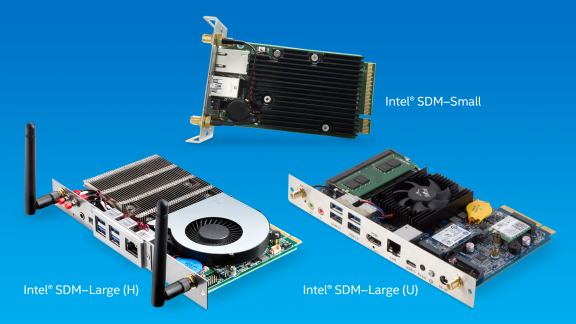
Sharp has been one of the more visible supporters of the format. Its current display range includes models that accept Intel SDM modules, and Sharp has also supported Raspberry Pi Compute Modules directly in previous generations of professional displays.
The new Raspberry Pi board brings those two paths together. Sharp is already selling an SDM MPi5 Kit based on Compute Module 5, with 24/7 operation and 4Kp60 HEVC decoding among the listed specs.
Other SDM options are appearing alongside it. Sharp’s current computing portfolio includes SDM modules based on Raspberry Pi, BrightSign and Intel hardware, giving integrators a choice of compute platform within the same display architecture.
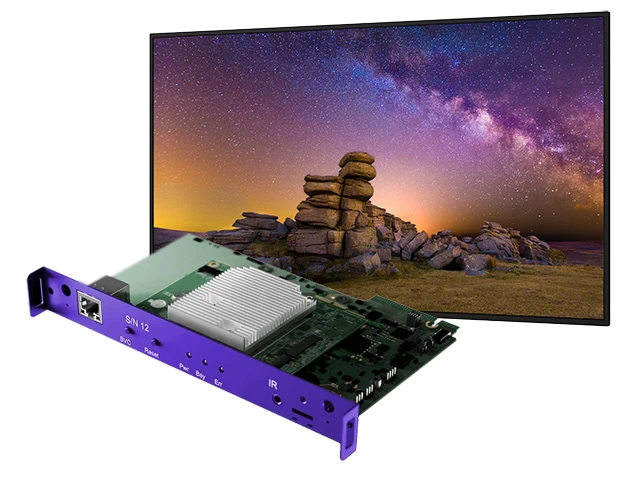
That is a fairly different proposition from buying a display around a permanently fixed SoC.
Compute Module 5 raises the ceiling
The Raspberry Pi name still carries some baggage in commercial signage.
Older Pi deployments were often associated with basic playback, DIY installations or relatively simple content. Compute Module 5 is built around the Raspberry Pi 5 platform, with a 2.4GHz quad-core Arm Cortex-A76 processor, VideoCore VII graphics and hardware 4Kp60 HEVC decoding.
The memory options also reach 16GB. That gives signage vendors more headroom for workloads that spend most of their time inside a browser rather than decoding a playlist of local media. At Fugo, that's the part we care about most.
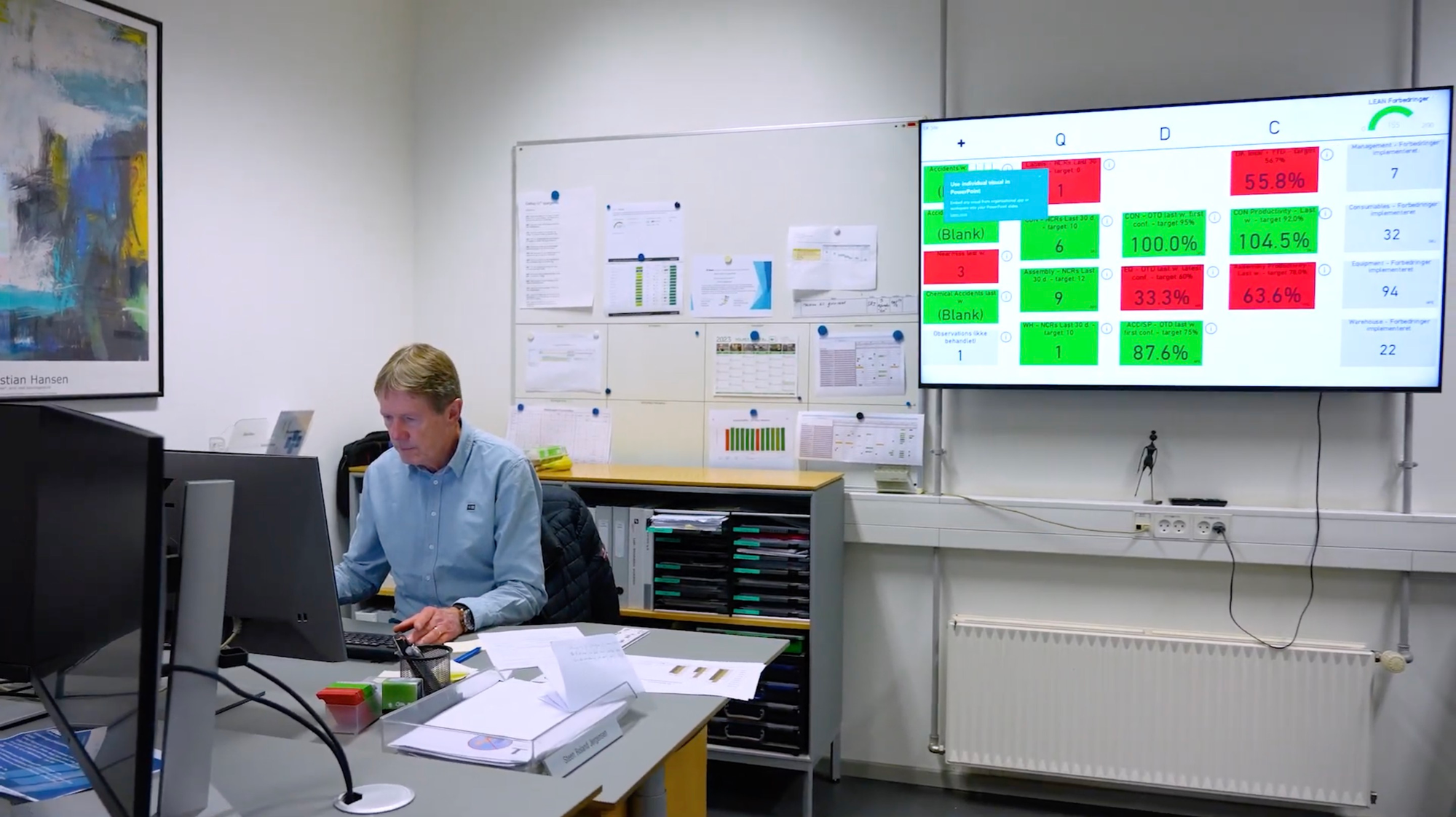
A large portion of the signage our customers run today is web content: things like Power BI reports, Looker dashboards, web apps and authenticated web sessions that can remain active for hours or days at a time. Those workloads put very different demands on a player than a sequence of MP4s and JPEGs.
 Sarah
Sarah
Fugo was the first digital signage platform to fully support Raspberry Pi 5, so CM5 is familiar territory for us. The Smart Display Module gives that same generation of Pi hardware a different route into commercial displays
We still need to test the combination against the heavier dashboard workloads we see in production. A 2GB CM5 and an 8GB CM5 may share a product name, but they are unlikely to behave identically once several demanding browser sessions are involved.
The physical installation is hard to argue with
A conventional signage player adds at least one more device behind the display.
Then come the HDMI lead, power supply and whatever mounting arrangement keeps the player where it belongs.
None of that's unusual or particularly difficult. It does become noticeable across larger deployments, especially on installations where access behind the screen is poor.
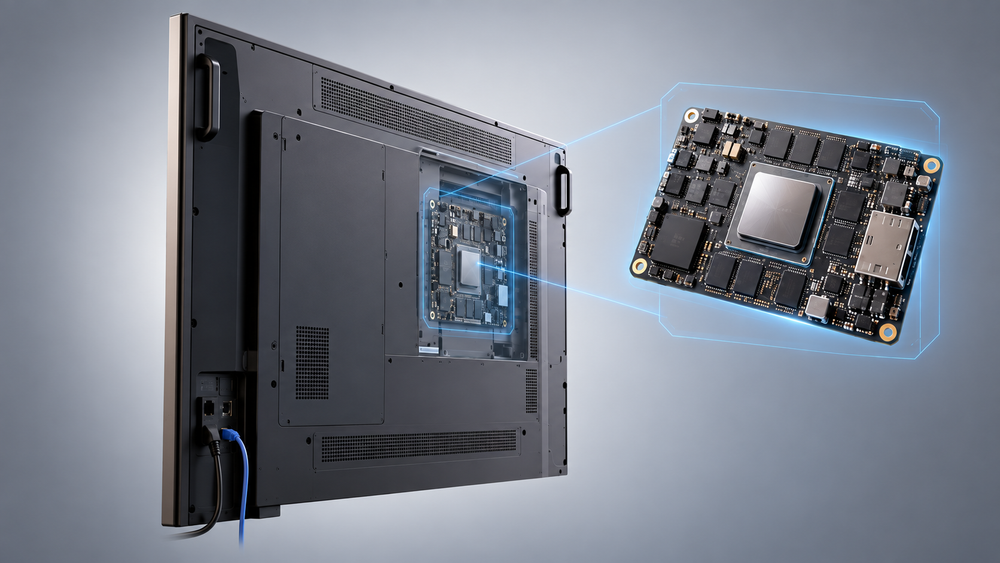
With SDM, the compute module is part of the display assembly. There's no separate player enclosure and no external video connection between the player and panel. Raspberry Pi says the board requires no separate external power source either.
Servicing follows the same modular logic. The compute can be removed or replaced without replacing the display itself.
That has always been one of the better arguments for slot-in hardware.
Display support remains fairly narrow
SDM is still far from a universal feature on commercial displays.
Sharp has embraced it across parts of its professional range, and its documentation now positions SDM as the replacement for OPS.
But plenty of large signage estates are built around something else. Samsung largely pushes Tizen-based embedded signage. LG has webOS Signage. Sony and Philips both have their own SoC-based commercial display lines. In those environments, there may be no SDM slot to use.
That keeps HDMI players relevant for the obvious reason that almost every display has HDMI.
An integrator standardising on compatible Sharp displays can make SDM part of the hardware specification from day one. A mixed estate assembled over several years is a different proposition.
The Smart Display Module therefore sits closer to the display-selection decision than most external players do.
The M.2 slot gives it another route
Raspberry Pi has also given the board an M.2 expansion slot.
Its own launch material spends some time on AI acceleration and edge processing, with analytics running locally inside the display rather than being sent to a cloud service.
Sharp is making a similar case for its CM5-based SDM kit, particularly around analytics and other edge workloads.
 Sharp Display Solutions Europe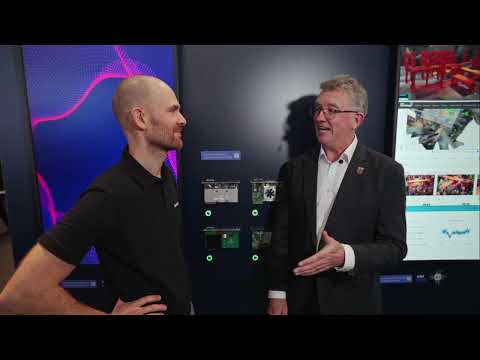
Digital signage has been hearing versions of that pitch for years, usually involving cameras, audience measurement or some form of adaptive content.
The practical uses will depend heavily on the deployment.
The hardware provision is there, though, and M.2 is useful well beyond AI accelerators. It leaves room for a display computer to gain capabilities without changing the underlying player architecture.
Where we see it being handy
For Fugo customers already considering Raspberry Pi, the Smart Display Module adds an embedded option.
Our software can run on CM5 without an external Raspberry Pi enclosure sitting behind the display. On an SDM-compatible screen, the player becomes part of the panel installation.
We would expect the strongest fit to be projects where the display hardware is being spec-ed alongside the CMS rather than inherited from an existing estate. That's also where modular compute makes the most sense commercially. The display can remain in service while the computer inside it changes over time.
Sharp’s current range already shows where that model can go. The same display family can be paired with Raspberry Pi, Intel or other SDM compute depending on the workload and budget.
For signage buyers, that separates the expected lifespan of the panel from the expected lifespan of the computer driving it.
Raspberry Pi’s contribution is a CM5 route into that model at a relatively low cost. The board itself is $30. The complete player costs more once CM5 is added, and the screen still needs an SDM slot.
Those constraints narrow the addressable market considerably. Within that market, though, this is a very sensible piece of signage hardware.