
Fugo

Fugo NUC digital signage player

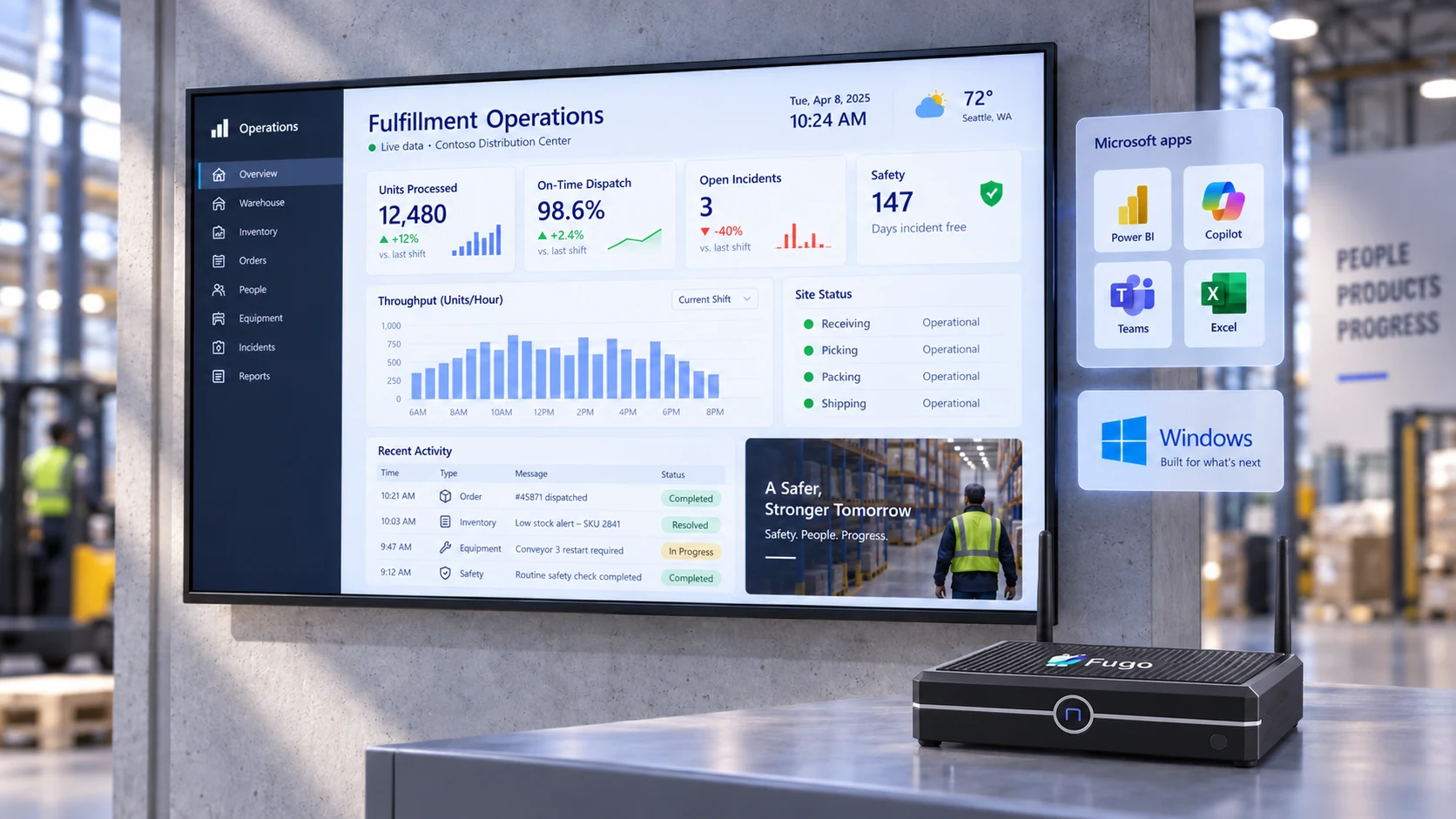
The Fugo NUC ships pre-installed with Fugo — a Windows-based dedicated signage player that auto-launches on boot, drives up to 3 displays, and slots into your existing Microsoft IT.

Fugo NUC digital signage player
Why the Fugo NUC

A dedicated player built for demanding signage

More storage, security, and remote management than a consumer stick — the go-to player for video walls and always-on deployments.

Ships pre-installed with Fugo

Fugo comes pre-configured and auto-launches on boot, so there is no imaging, manual install, or app-store hunting. Unbox the player, plug it in, and it is ready to pair to your Fugo account — a Customer Success Manager can help with bulk rollouts.

Up to 3 displays and video walls

Drive up to three displays from a single device over HDMI, DisplayPort, and USB-C. With 1× DisplayPort and 2× HDMI outputs configured through the Intel Graphics Command Center, the Fugo NUC is the go-to player for video walls where a consumer stick would fall short.

Fits your Windows IT

The Fugo NUC runs Windows 10 IoT Enterprise LTSC, so it slots straight into existing Microsoft and Windows IT policies, imaging, and endpoint tooling. Your IT team manages it with the same standards they already apply to the rest of the estate.

Remote management built in

Schedule, publish, and monitor every player from the Fugo CMS in the cloud. Kiosk mode is enabled remotely once your screens are live, locking the player to signage so content keeps playing without on-site intervention.

Spec sheet

Fugo NUC specifications

A purpose-built signage player at $500 / €460 / £400 per device — bulk pricing available via sales@fugo.ai.

Processing & storage

  • Windows 10 IoT Enterprise LTSC
  • Intel Celeron N5105 processor
  • 8 GB RAM (expandable up to 32 GB)
  • 128 GB SSD

Displays & connectivity

  • Up to 3 displays (HDMI + DisplayPort + USB-C)
  • 1× DisplayPort + 2× HDMI outputs
  • Gigabit Ethernet + Wi-Fi 5
  • Video walls configured via Intel Graphics Command Center
Setup

Get the Fugo NUC live in three steps

Fugo auto-launches on boot, so pairing a Fugo NUC takes just a few minutes.

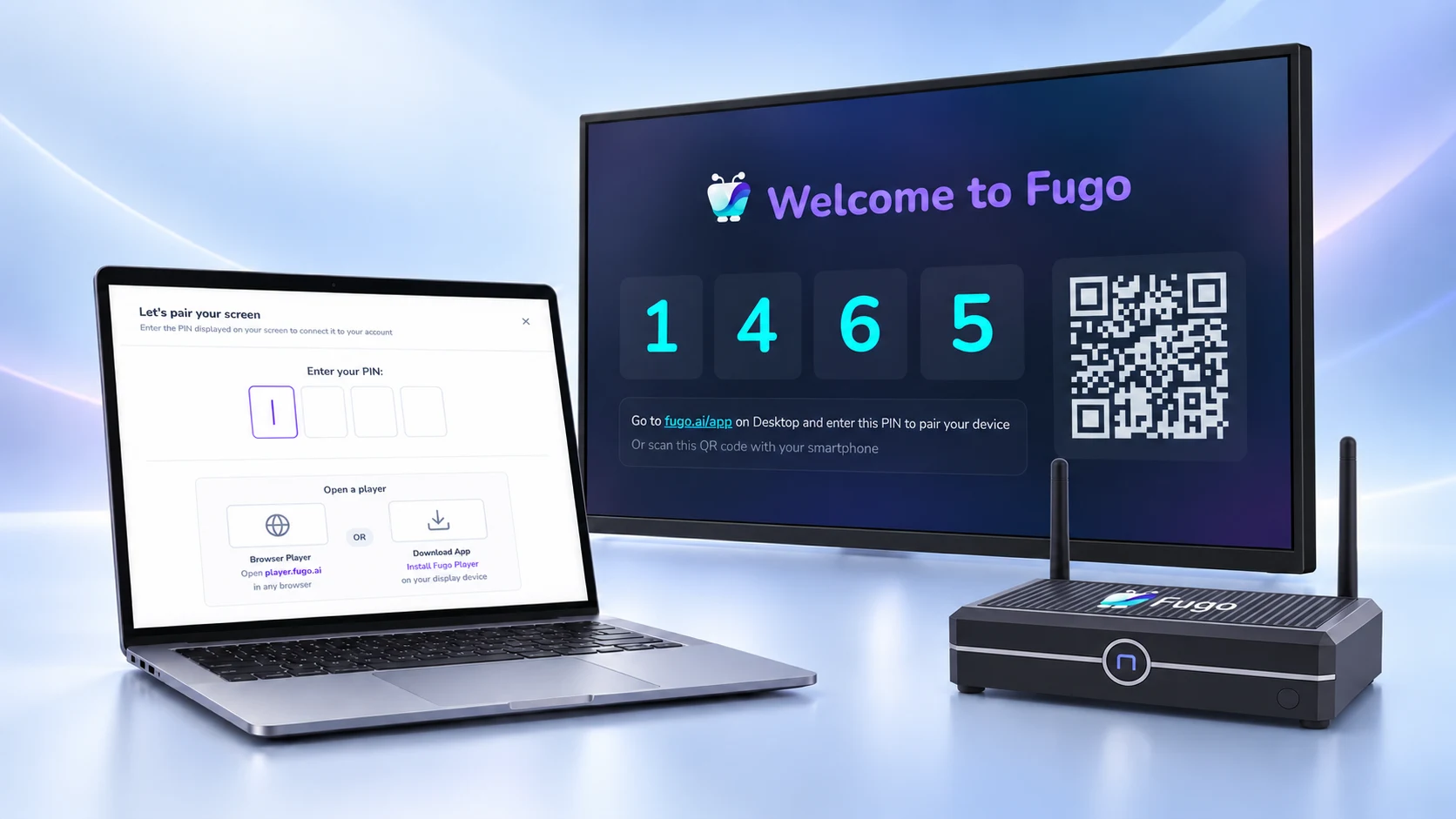
Fugo player on a TV displaying a 4-digit pairing PIN splash screen
1

Plug in and power on

Connect power and your displays over HDMI or USB-C, then turn the player on. Fugo auto-launches on boot — press ESC to minimise it, close the app, and connect Wi-Fi or Ethernet. Relaunch Fugo and it shows a splash screen with a 4-digit PIN.

Fugo CMS screen pairing modal ready to receive a 4-digit PIN
2

Pair your screen in Fugo CMS

From your laptop or PC browser, log into Fugo CMS, click Create → Screen, and enter the 4-digit PIN from the player. Give the screen a name and location so you can find it in Map View, and it appears on your Screens page ready to publish.

Fugo CMS screen settings with kiosk mode and advanced options
3

Enable kiosk mode and publish

Once the player is paired, turn on kiosk mode from the screen’s Settings tab in the CMS to lock the player to signage. Then build playlists, schedule content, and manage every player remotely — no more trips to the screen.

Fugo software

A full digital signage software suite

The Fugo NUC delivers reliable, always-on playback of the Fugo app on screen, while Fugo CMS gives you everything you need to create, publish, and manage content.

Fugo media library showing uploaded images and video content

Content sources

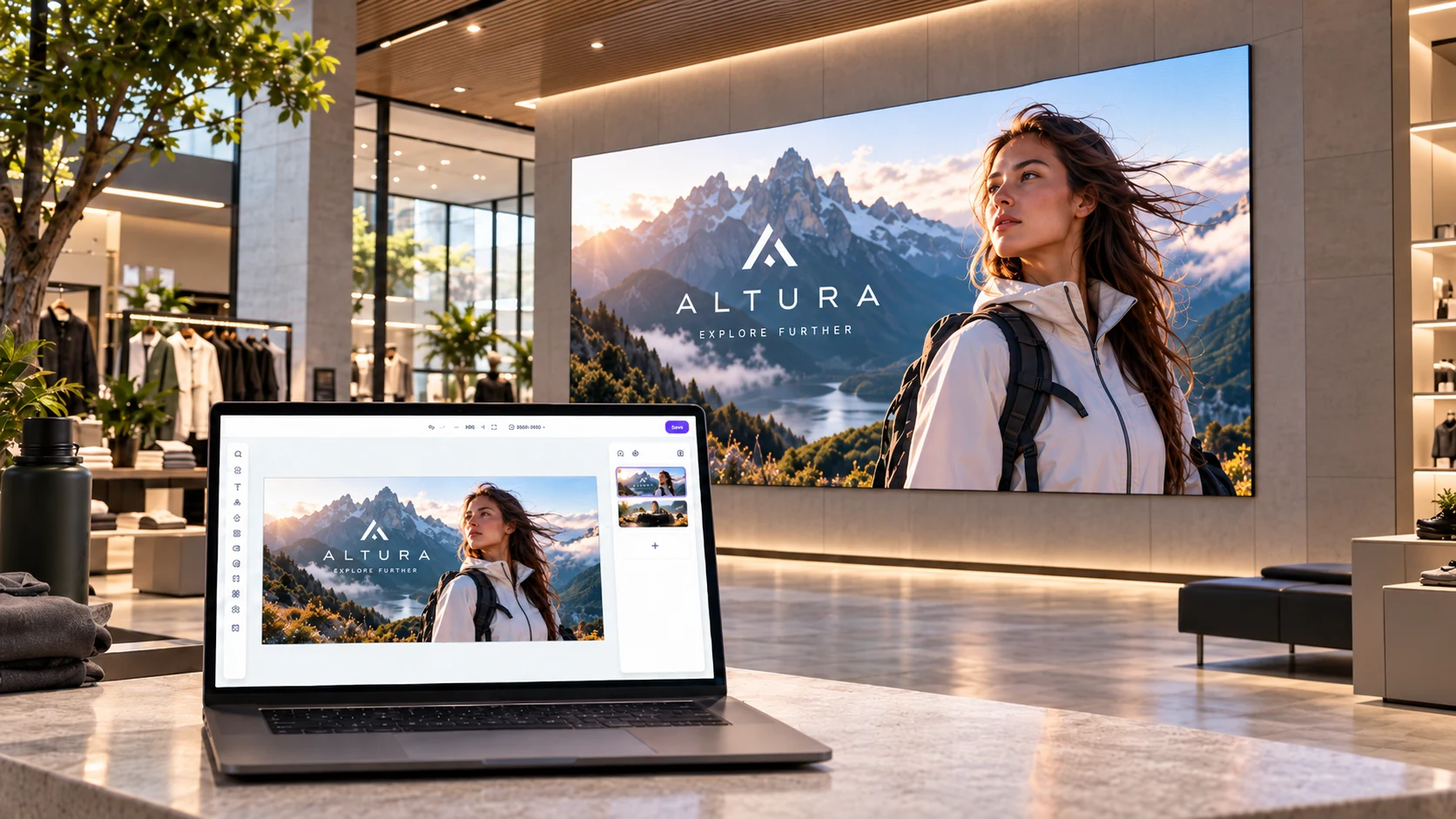
Create screen-ready slides in Design Studio, upload images and 4K video, or pull content from the systems where it already lives via our app store. Live social walls, TV dashboards, and digital menu boards all play natively on the NUC.

Fugo Screens page grouping players by property for central management

Central screen management

Group, tag, and monitor every Fugo NUC and screen from a single cloud dashboard. Filter by property, player type, or online status to run a large signage network across sites without touching the hardware.

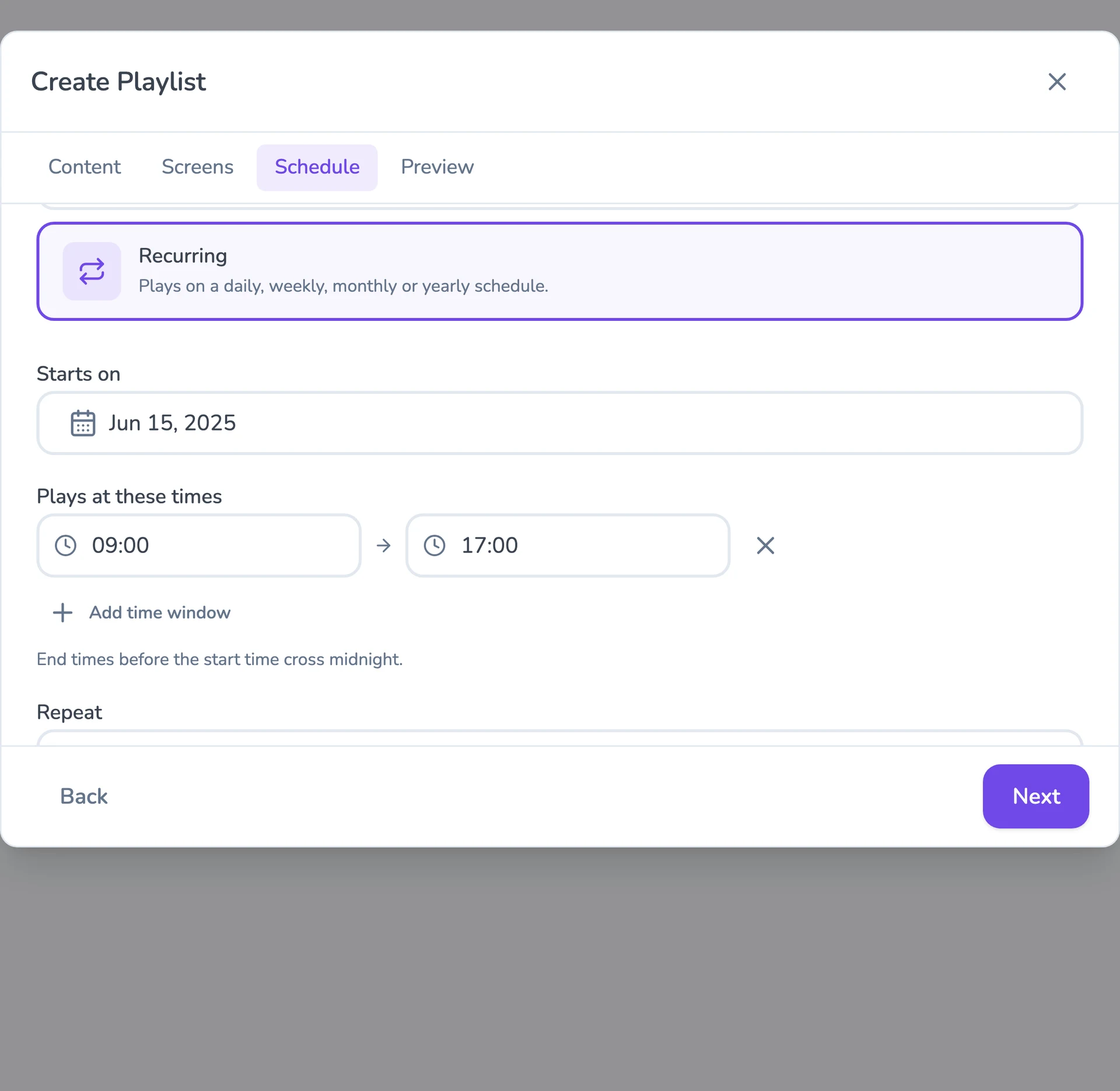
Fugo playlist scheduling with start and end dates

Flexible scheduling

Plan recurring content well ahead with start and end dates, or push urgent messages across the network with priority takeovers. Content plays reliably on the NUC even if the connection drops, then resyncs automatically.

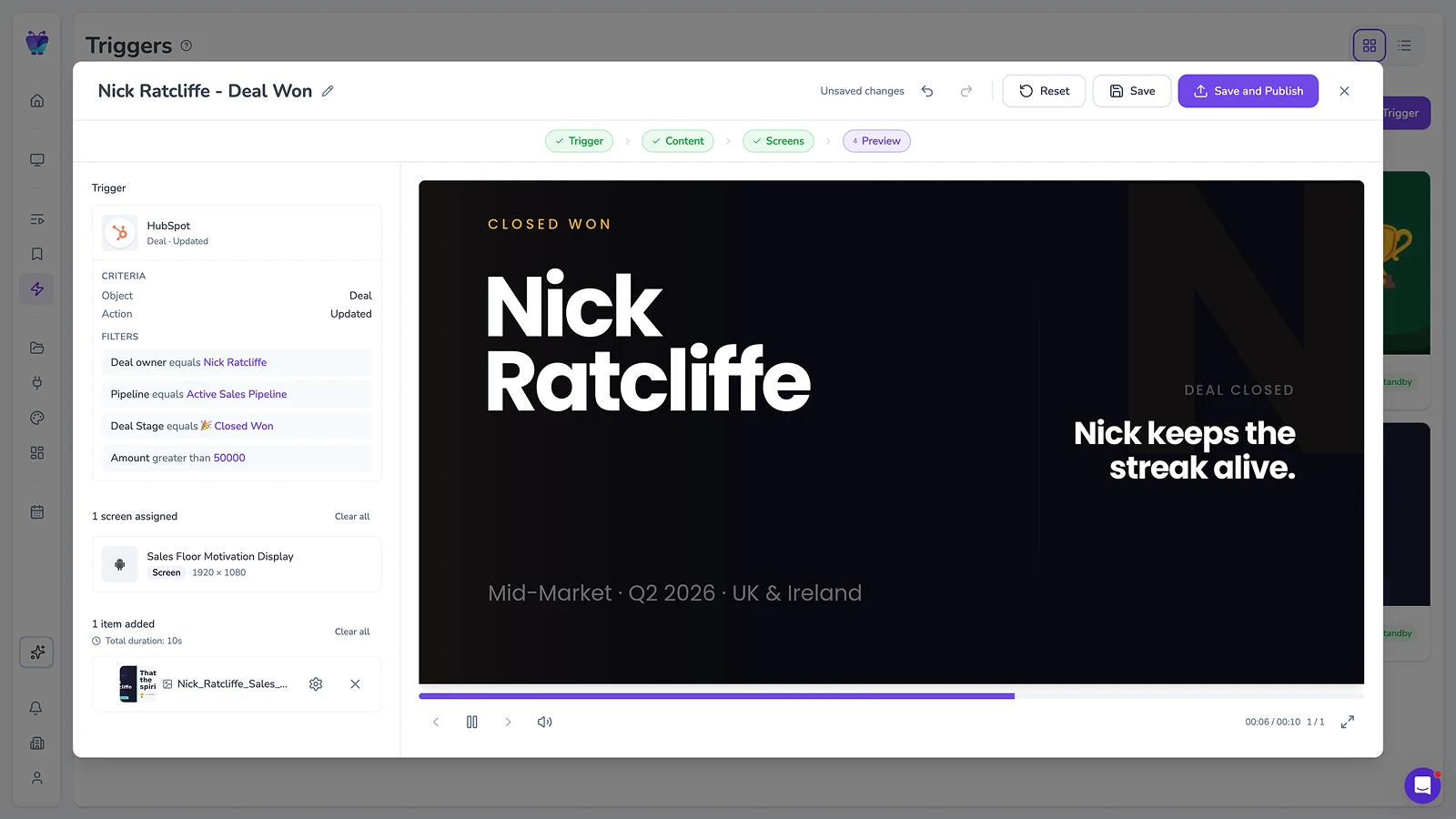
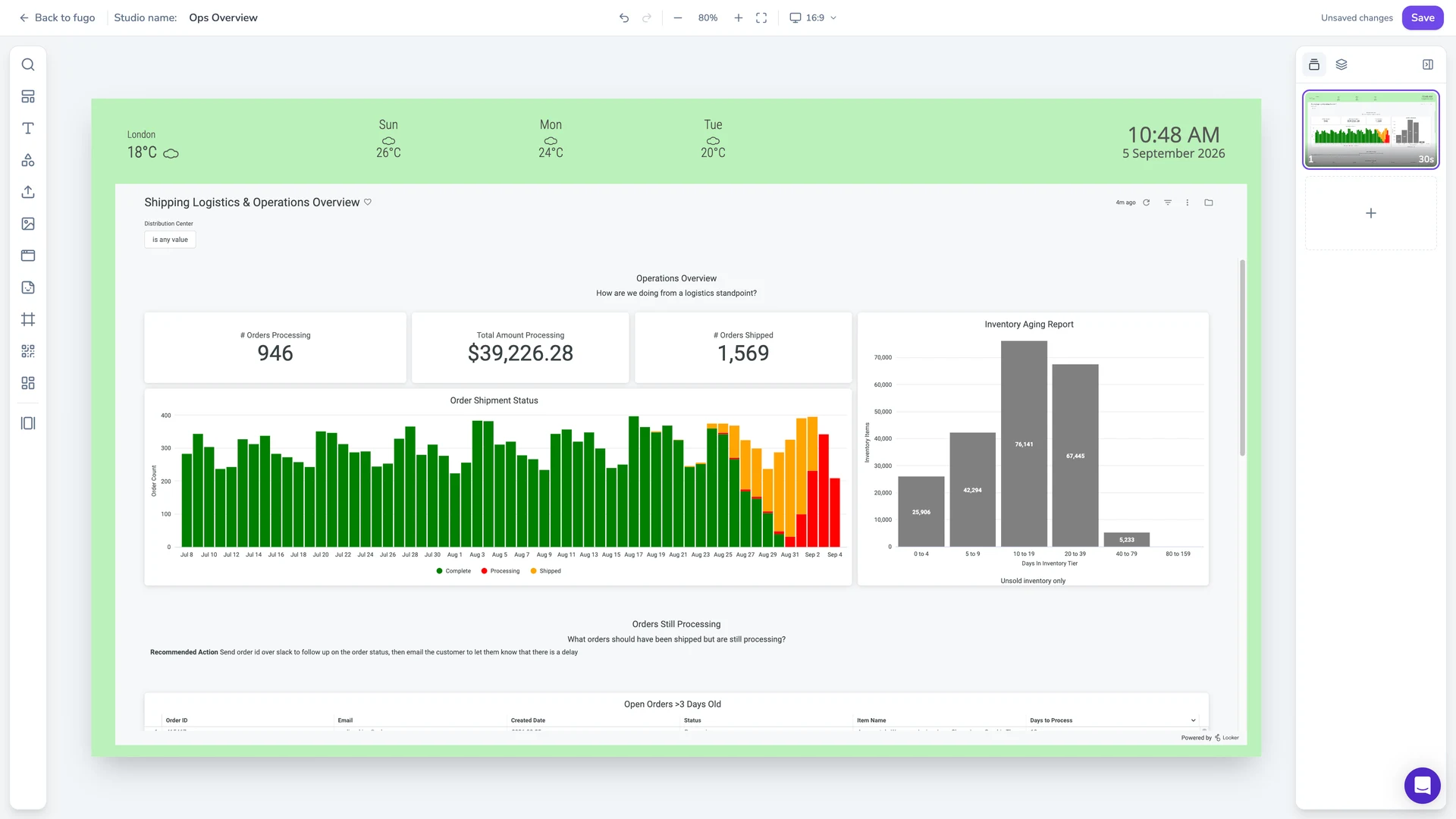
Fugo dashboards page showing connected BI tool dashboards

Live data and TV dashboards

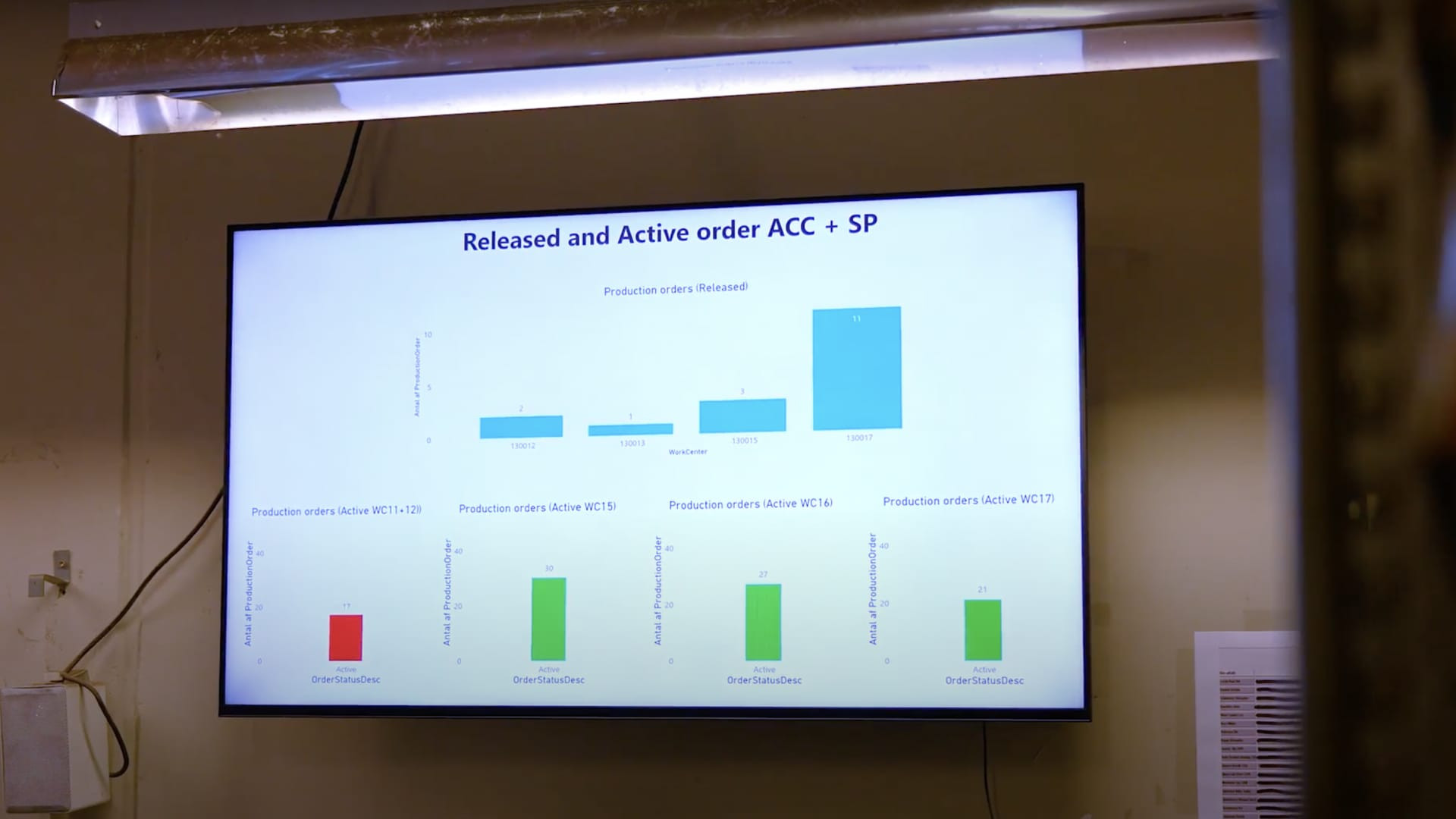
Put real-time KPIs on screen with TV dashboards for Power BI, Tableau, Looker, and more. The NUC’s dedicated hardware keeps data-heavy dashboards rendering smoothly on always-on displays.

Built for video walls

Drive a video wall from a single player

With 1× DisplayPort and 2× HDMI outputs, the Fugo NUC is Fugo’s recommended player for multi-screen video walls — designed and configured directly in the CMS.

Fugo Design Studio with a video-wall layout spanning multiple panels

Design once, span every panel

Build a single canvas in Design Studio at your exact video-wall resolution, then let Fugo stretch it seamlessly across all the joined panels. No per-screen slicing or third-party software.

Fugo screen settings advanced tab with video-wall configuration options

Configure and tune from the CMS

Set up the wall in the Intel Graphics Command Center, then fine-tune orientation and layout from the screen’s advanced settings. Note: DisplayPort-only screens need a DisplayPort-to-HDMI cable to join the wall.

Compare players

Not sure the Fugo NUC is right for you?

See how the Fugo NUC compares with the Fugo Chromebox and other supported players before you buy.

Fugo NUC vs Chromebox

The Windows-based Fugo NUC leads on storage, security, and video-wall support; the Chromebox is a lighter, lower-cost option for single-screen deployments. Match the player to how demanding your signage is.

Pick the right player

Compare displays, connectivity, operating system, and management needs across every Fugo-supported player on a single page, so you can standardise your fleet with confidence.

Fugo NUC FAQs

What’s included with the Fugo NUC?

Each Fugo NUC ships as a dedicated signage player running Windows 10 IoT Enterprise LTSC with Fugo pre-installed and set to auto-launch on boot. It has an Intel Celeron N5105 processor, 8 GB RAM (expandable up to 32 GB), a 128 GB SSD, Gigabit Ethernet, and Wi-Fi 5. A Fugo subscription is required to run content — start a free trial or contact sales.

How many displays can the Fugo NUC drive?

The Fugo NUC drives up to 3 displays from a single device — via 1× DisplayPort and 2× HDMI, plus USB-C. Video walls are configured through the Intel Graphics Command Center. Note that DisplayPort-only screens need a DisplayPort-to-HDMI cable for video walls.

Can the Fugo NUC power a video wall?

Yes — the Fugo NUC is Fugo’s recommended player for video walls. Connect each screen to the player, launch the Intel Graphics Command Center to configure the wall, then design your content on a single canvas in Design Studio and Fugo spans it across the joined panels. See the Fugo NUC setup guide for the full walkthrough.

How much does the Fugo NUC cost?

The Fugo NUC is $500 / €460 / £400 per device. For bulk orders, speak to your Customer Success Manager or contact sales@fugo.ai for a quote.

Does the Fugo NUC ship with kiosk mode on?

No — the Fugo NUC ships with kiosk mode off so you can configure it after pairing. Once your screen is live, enable kiosk mode from the screen’s Settings in the Fugo CMS to lock the player to signage. See the Fugo NUC setup guide for the full walkthrough.

How does the Fugo NUC fit into Windows IT?

The Fugo NUC runs Windows 10 IoT Enterprise LTSC, a long-term-support build of Windows built for fixed-purpose devices. It slots into the same Microsoft and Windows IT policies, imaging, and endpoint tooling your team already uses, so managing a signage fleet doesn’t mean introducing a new platform.

How is the Fugo NUC different from a consumer streaming stick?

A consumer stick runs a media-streaming OS that can interrupt playback with background apps and updates, and typically drives a single screen. The Fugo NUC is a purpose-built Windows player with more storage and security, remote kiosk-mode management, and support for up to 3 displays and video walls — the right choice for demanding, always-on deployments. Compare it against the Chromebox on the player comparison page.