







In 2021, three in 10 frontline workers either received mental health services or thought services were needed but did not seek out care. Another 25% of workers don’t even know if their employer offers mental healthcare benefits, including flexible work arrangements, EAPs, or mental health days.
Considering 80% of the global workforce is comprised of frontline workers, and the worldwide labor force reached 3.73 billion in 2025, this means up to 895.2 million deskless workers may be in desperate need of mental healthcare.
The question is, what’s stopping them from getting it? And what can you do to help address their needs?
It starts by understanding where the hold-up is.
Which, when you look closer, is simply because:
Frontline mental health is easy to overlook
Frontline workers often face unique mental health challenges due to the operational demands of their roles, necessitating culturally competent mental health care.
This is due to three major reasons:
Deskless employees (quite literally) don’t have desks
Retail staff, healthcare workers, manufacturing professionals, hospitality teams, and logistics professionals rarely, if ever, sit with their inboxes or Slack channels open. That’s simply because the vast majority of company communication systems are not built for them.
This means your frontline workers have less visibility into company resources and updates, including mental health resources.
Frontline workers may have little to no physical access to care
According to KFF, some of the main reasons for frontline employees not seeking mental health care include:
- Being too busy (27%)
- Afraid or embarrassed (17%)
- Couldn’t get time off work (14%)
The through-line that you’re probably picking up here is that constraints of frontline work often prevent equitable access to much-needed care.
Frontline work is notoriously understaffed, which leaves very little time to look through benefits or set up online portals. They may not want to look through mental health resources in the presence of others while on break, such as on their phones or calling a hotline. And with fewer natural breaks or quiet spaces, they likely won’t have the bandwidth to try logging into employee portals themselves anyway.
Which brings us to the next point…
High-friction software prevents at-will access for employed adults
As we already mentioned, frontline workers don’t have much time to sit while at work. But if they do want to look for mental health resources associated with their job, they may need to log into specific dashboards, platforms, or software tools.
Employees who may have only received training once might not know how to log into HR portals and retrieve buried resources. Or, setting up a visit and requesting reimbursement requires an email address or an intranet tool they don’t regularly use.
So even if you do have mental health services available, they may not be accessible to your frontline service members. This means the problem will only continue to get worse.
The operational impact of unmet frontline mental health needs
You’re likely already familiar with the cost of unmet healthcare needs. But with the frontline mental health crisis flying so far under the radar, it may be difficult to understand the true impact of delayed care.
For example:
- Higher turnover and absenteeism. Studies show that approximately 50% of millennials, and 75% of Gen Z-ers, have left jobs due to mental health reasons. Failing to address frontline service issues now can greatly increase your turnover rates and cost millions in training and acquisition costs per year.
- Increased safety risks in physical environments. OSHA estimates that injuries and illnesses cost US employers roughly $1 billion per week in workers' compensation alone. This heavily plays into the mental health of your frontline teams. Think about it: if frontline employees feel burned out or emotionally depleted, their ability to follow safety protocols deteriorates. This puts your staff and customers at risk, not to mention exposes your organization to costly liability.
- Lower engagement and morale. Employees who feel unsupported on the frontline will ‘quiet quit’ faster than any policy can reverse. Case in point, Gallup research finds that only 20% of employees worldwide are actively engaged at work. This disengagement costs the global economy an estimated $8.9 trillion per year.
- Inconsistent customer experiences. Studies show that 86% of customers leave a brand after just two bad experiences. If frontline employees are struggling, service quality may also become unpredictable. And in a world where a single negative interaction can go viral, the mental health of your individuals can be a brand risk you can't afford to ignore.
The good news is, these drawbacks are largely avoidable — provided you re-imagine your mental health support system with frontline workers in mind.
Building an effective frontline mental health support system
Massive Notion pages and expansive online ebooks simply won’t cut it for the average frontline workforce.
If you truly want to help deskless employees find the care they need, you’ll need to build a support system that is accessible, simple, and visible.
First, accessibility. And we don’t just mean after hours. If your team can easily access resources during the workday, they’ll be more likely to schedule visits and take advantage of your resources. If you don’t already have access to resources on-site, now is the time to switch things up.
Next, make mental health resources simple to understand and act on. Your employees don’t need all the specific health codes and legalese (at least, in the beginning). Instead, make it obvious that your business offers support, and explain how they can take action in a few steps or less.
Finally, make your resources more visible in the employee’s physical environment. Publicly available signage, cards, and digital screens make sense here. This also ensures that your community resources are quick and easy to access. That way, they can be reinforced consistently, and not just during campaigns (like
In other words: the more access you provide to your frontline mental health program, the more quickly you can resolve behavioral health crises.
10 Practical ways to support deskless employee mental health
Supporting frontline service workers with better access to mental health care requires careful, intentional design.
Fortunately, we’ve done the heavy lifting for you.
Here’s what you need to get started:
1. On-site or instantly accessible support options
Rather than burying mental health resources in specific guides or resource documents, make them front and center in the place your employees spend the most time — on the floor.
You have a couple of options for setting this up:
- Hang up posters (or create digital bulletin boards) that promote access points like HR contracts and counseling services.
- Create tear-off resources such as business cards or flyers that employees can discreetly take with them both on and off the clock.
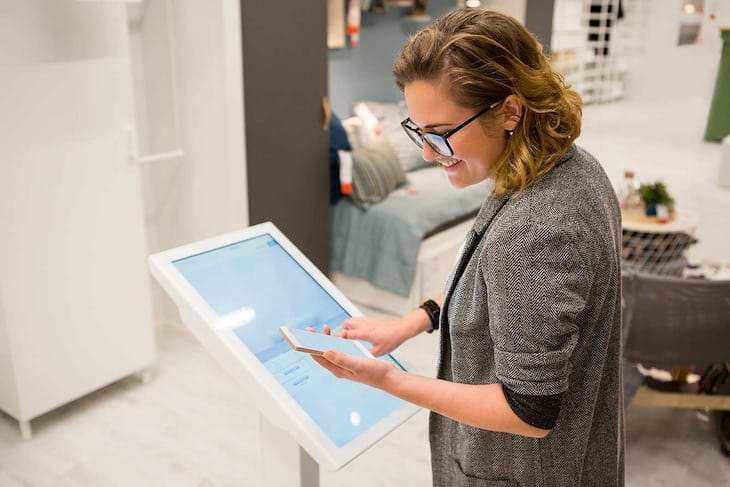
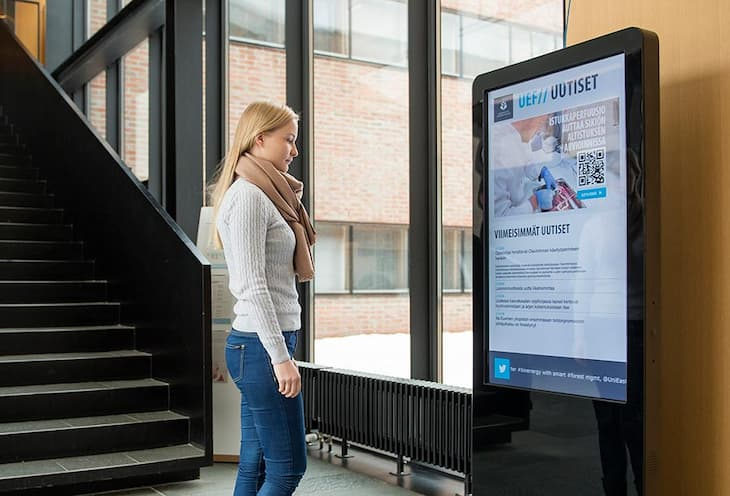
- Interactive screens or kiosks with forms that allow employees to quickly and discreetly request mental health resources. These may be located near bathrooms, in break rooms, and in other accessible locations. That way, your frontline staff can request meaningful care without needing to log into backend systems or speak directly with HR.
- Create accessible digital signage that displays a playlist of mental health content on key screens, like breakrooms and other employee-only spaces. Then, create an embeddable company TV channel so employees can see the same exact resources from anywhere.
2. Clear escalation paths for support
You may wish to prioritize certain mental health requests to prevent severely ill employees from greater harm.
For example, if an employee is struggling with thoughts of suicide, you may wish to fast-track them to psychiatric care. Other considerations, such as professionals looking to overcome trauma or deal with homelessness, may require more physical resources in the beginning.
One way to automate this in your back office is to set up triggers and automations that alert you whenever someone needs immediate treatment. For example, whenever an employee submits an EAP form via kiosk, a message stating “an employee has requested care” flashes across a dedicated screen or dashboard in your administrative office. This encourages HR professionals to quickly coordinate care and follow up with this person in a timely, HIPAA-compliant manner.
3. Put up fewer barriers to scheduling appointments
Rather than leaving employees to “figure out” getting appointments on their own, create more accessible systems with the help of digital signage.
For example, you might embed a scheduling portal directly into a kiosk or interactive screen in a high-traffic employee area. Install these near places like locker rooms, time-clock stations, or building entrances. That way, any employee can walk up, tap a few buttons, and book an appointment or phone call in under a minute.
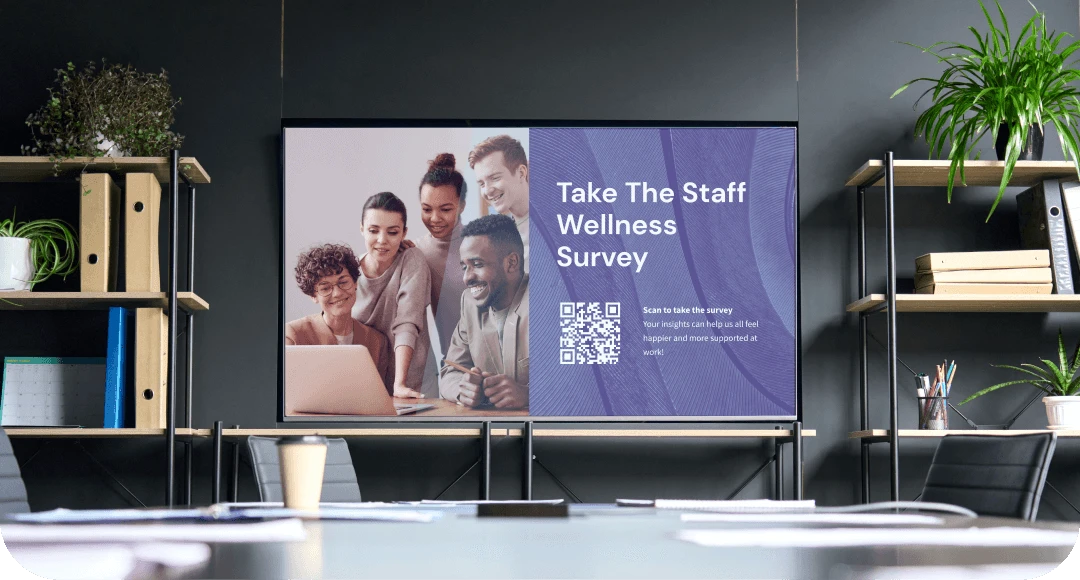
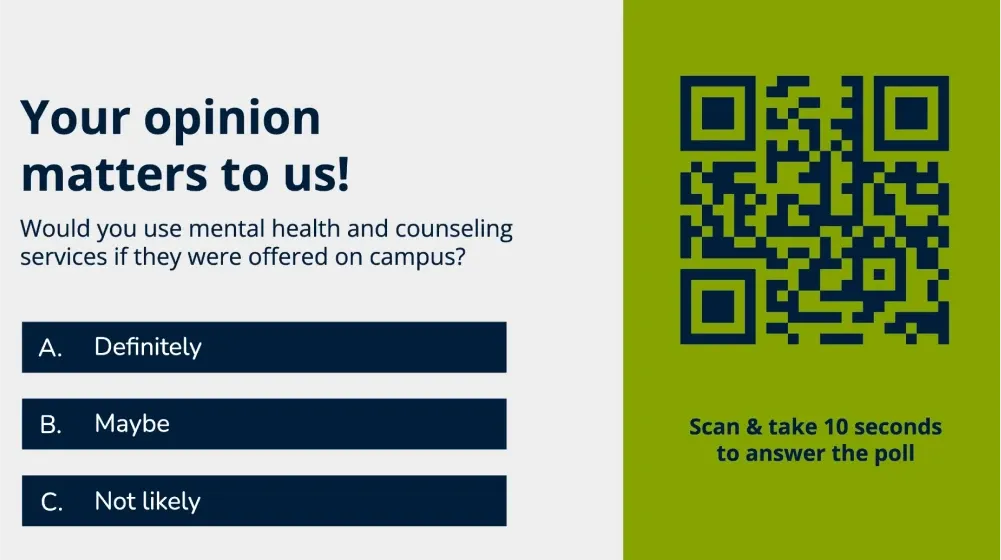
Another easy solution is to display QR codes on TV screens that link directly to your EAP scheduling page or telehealth provider. Employees can scan these with their personal phone and complete the booking privately (and at any time that works for them).
You might also pair QR codes with low-pressure messaging like “book a free session” or “chat with a confidential therapist in seconds” to normalize taking action and reduce any hesitation.
4. Structured breaks and workload management
Visible reminders that breaks are not only allowed, but expected, can help employees feel valued and understood by management teams. It can also make them more likely to fill out mental health forms and receive necessary care, if and when needed.
One way to do this is by displaying rotating content — think breathing exercises, mindfulness prompts, hydration reminders, and other encouraging messages — so the space itself reminds employees that recovery is part of their job.
Then, you might schedule automated shift-change messaging. You might remind outgoing employees to decompress, and incoming employees to pace themselves. This helps build mental health awareness directly into the rhythm of the workday.
The best digital signage screens work even in locations without reliable WiFi, meaning you can reach employees in basements, warehouses, back-of-house kitchens, and other tight or awkward areas where frontline workers often spend the most time.
5. Ongoing communication of available resources
Even the most well-designed mental health program will fall flat if your employees don't know it exists. Resources should be available 24/7, wherever your employees are, and updated on a regular basis.
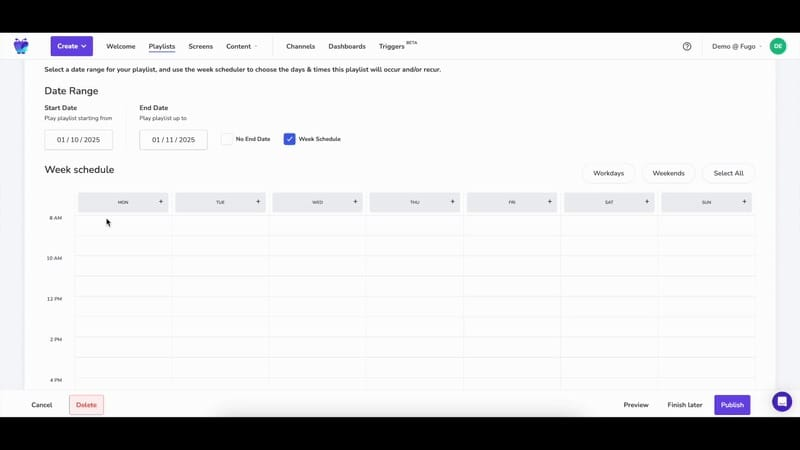
One way to do this is with scheduled content, which automatically sprinkles in mental health messaging across your digital signage throughout the day. Set them once, and your screens will update themselves automatically on specific dates, times, or holidays (or at least, until you decide to change the schedule).
You may also want to build a content calendar around key campaigns so your messaging is timely and relevant. For example, you may want to celebrate Mental Health Awareness Month, seasonal shift changes, or high-stress periods like the holidays.
6. Fill in the communication gap with a professional digital signage program
Even when mental health support does exist at your organization, employees may not know where to find it. Or worse, it doesn’t get talked about in places your employees can see it.
As you know, your frontline employees aren’t working in offices or cubicles. You might share information once or twice during onboarding sessions, or perhaps once-yearly training sessions. But this may or may not reach employees during their shifts. Or, the information slips their mind while focusing on other day-to-day tasks.
That’s why implementing digital signage in your organization can have such an immediate impact on your team.
The use cases are particularly strong:
- Share mental health resources in break rooms and common areas from a centralized content management platform managed across locations.
- Display simple, actionable wellbeing tips and other important details using pre-set templates or locked company designs.
- Schedule and rotate your messaging based on changing requirements, promotions, holidays, and specific campaigns.
7. Track the ongoing use of your mental health resources
The employee-facing side of your mental health resources is only half of the equation. Because if you can't see whether staff are engaging with them, you can’t address what is or isn’t working.
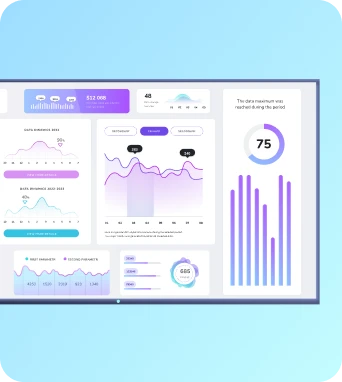
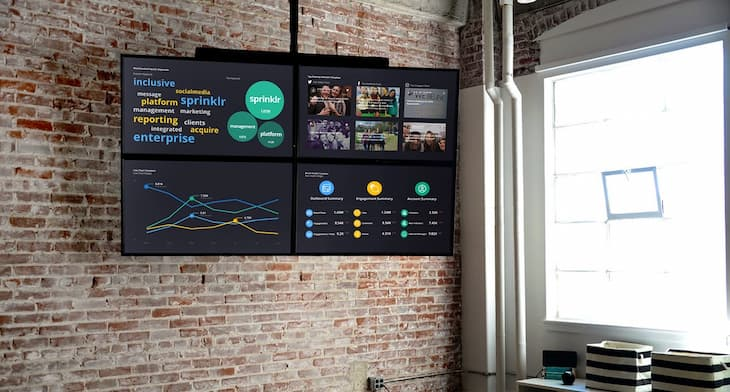
The first step here is integrating your internal dashboards to track accessed resources, frequency of access, and hotspot locations. This can help you identify places where engagement is high, versus where they need more encouragement or a different approach.
You can display these TV dashboards in administrative spaces to keep mental health utilization data visible to the people responsible for acting on it. When usage trends are always in view, they're harder to deprioritize.
Now, you can:
- Correlate resource usage with turnover, absenteeism, and productivity metrics over time
- Set up alerts or threshold notifications so that a sudden drop or rise triggers an immediate review
- Avoid expensive view-only licenses on BI platforms like Looker or Grafana
8. Mental health training for managers
Frontline managers are often the first to notice when an employee is struggling. So why are they the least equipped to respond? Without training, even well-meaning managers can inadvertently make things worse by dismissing concerns, reacting inconsistently, or not knowing what resources to point people toward.
The good news is, building that muscle doesn't have to mean pulling managers off the floor for a full-day workshop.
First, you might host live streams of mental health training sessions that managers can tune into from any screen or location in your network. Fugo, for example, supports HTML5 for live streaming.
Next, you can record sessions and schedule them as on-demand content across your signage network. That way, managers who missed a live training can catch up during slower periods without needing to access a separate learning management system.
Finally, use dedicated manager-facing screens in back office areas to offer QR codes with links to important content. This ensures your supervisors can access conversation guides, escalation protocols, and all currently available EAP resources.
9. Offer multilingual care for all users
It’s important to note that you’re English speakers aren’t the only ones you need to assist with mental healthcare. In fact, non-native English speakers dominate in a large portion of frontline industries, including healthcare, wholesale and retail trade, manufacturing, and hospitality.
It’s a good idea to offer multi-lingual resources that offer treatment and support even outside of the English language. For example, you may translate certain content slides into Spanish, English, and Portuguese. Cloud-based digital signage makes this easy to do with the ability to edit slides at any time.
You may also be able to set up apps and integrations that help provide translations and captions in real time (such as with videos).
Just make sure to choose a signage platform that supports multilingual or localized language features. Fugo, for example, supports nine languages.
10. Build a system, not a campaign
Mental health support for deskless workers is more of an ongoing system than a one-time initiative. So rather than thinking about it as a single campaign, look for ways to continuously provide support and refine your approach as your business needs change.
Make sure to focus on:
- Consistent visibility
- Accessible resources
- Reinforcement inside and outside the work floor
You can do all of this quickly with digital signage by signing up today for a 14-day free trial of Fugo.
Frequently asked questions about frontline mental health
Q: How do the best frontline mental health programs operate?
The best frontline mental health programs integrate services into primary healthcare settings, allowing for a holistic approach that addresses both physical and mental health. These services reduce stigma, offer rapid access to care, and prevent conditions from worsening.
Q: Is burnout a sign of poor frontline mental health?
Yes, burnout is often a cluster of symptoms and a precursor to more serious frontline mental health concerns. Thankfully, burnout can be managed with healthy coping strategies such as delegating work, taking breaks, and seeing a mental health professional.
Q: Why do I need mental health services for frontline workers?
Frontline mental health care provides psychiatric treatment and assistance to employed adults struggling with:
- The stress of homelessness or insecure housing
- Violence within families
- Physical or mental trauma
- Traumatic events such as homicide
- Families in crisis
- Behavioral health crises
You can also offer specialized programs with health care workers who have unique expertise. For example, you may provide programs designed to prevent suicide among veterans. Or, you offer support to women and children working to overcome trauma.
Q: How can digital signage help with frontline mental health?
You can use digital signage to support frontline mental health care services by highlighting resources, links, phone numbers, and changing details on a dynamic screen. That way, you can go on to:
- Identify problems in a person’s personal life
- Offer support to employees and loved ones in a safe and helpful manner
- Work to solve systemic issues, such as end homelessness, that improve outcomes for both employees and your business

