







While it’s had ups and downs over the last 40 years, it’s clear digital signage has earned its place as a serious business system. More and more organizations (very likely including yours) are curious about all it can offer — and what it can improve — for customers and employees in 2026.
To help you save time, we’ve collected the digital signage stories that are new and relevant to 2026. We also provide additional resources where you can discover more research, statistics, and case studies at your leisure.
But first: how we selected our top studies and reports
Out of the millions of case studies and research reports available, we narrowed our selection down based on the quality, methodology, and trustworthiness of each piece.
First, we scoured the internet for all research relevant to digital signage in 2026, and only selected those that provided unique or forward-looking information. Then, we narrowed down our list based on these strict requirements:
- Quality. Was the research or case study well-written? Did it find or show something surprising or interesting? Did the study provide plenty of metrics and KPIs to show progress? Or just vague statements about confidence and project delivery?
- Methodology. Does the research have the ability to deliver confidence in its methods? Does it list those methods in places that visitors can see? Would this methodology be simple and easy to replicate in another study?
- Truthworthiness. Can any of this research be corroborated by other providers? Does the individual, business, or organization have a strong history of providing quality content? Finally, who performed the research? Students essentially learning about signage, or industry experts looking to improve the industry with knowledge?
This methodology left us with the following list of digital signage research, case studies, and reports.
Digital signage research
Digital signage has moved from kitschy marketing channel to respected (and almost universal) communication technology. So it’s no surprise that organizational researchers have spent tens of thousands of hours researching signage presentation effects and communication possibilities.
The following resources provide more quantitative information about the present and future of digital signage.
The impact of digital signage on in-store shopping
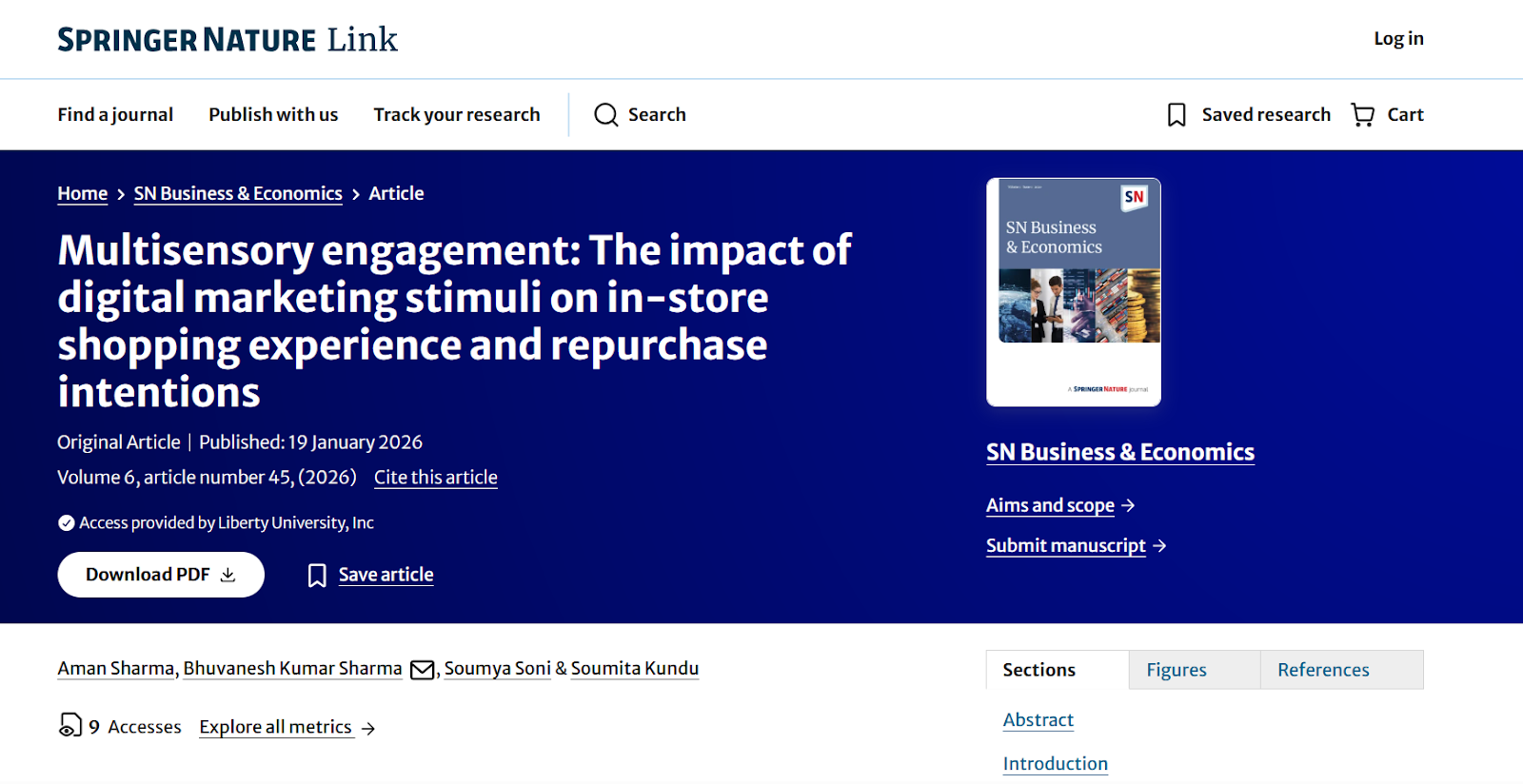
A study published in SN Business & Economics measured the impact of a visitor’s shopping experience and their intention to repurchase from specific stores. The study collected 692 survey responses from educated men and women from major Indian metro cities.
The study found four digital elements that had a positive impact on consumers’ likelihood to return:
- Background music
- Digital signage
- Sustainability messages
- Self-checkout kiosks
Dynamic signage also improved repurchase intentions by creating better shopping experiences, which strengthened customer loyalty.
Interestingly, some digital displays like video walls were found not to affect the customers’ shopping experience. But this may not be true in every installation. In the researcher’s words:
“Although these technologies capture attention, they may not enhance satisfaction or sales if not integrated effectively. Customers frequently prioritize ease and personalized service over digital displays, which can be disruptive if irrelevant.”
Study: Sharma, A., Sharma, B. K., Soni, S., & Kundu, S. (2026). Multisensory engagement: The impact of digital marketing stimuli on in-store shopping experience and repurchase intentions. SN Business & Economics, 6(2). https://doi.org/10.1007/s43546-025-01040-1
Signage in smart cities
Digital signage has become a core piece of infrastructure in smart cities, thanks to the many screens, sensors, and networks working together to serve citizens. This study highlights how networked displays can interact with other smart city components to act as “nodes” in urban communication spaces.
Here are a few key takeaways of the study’s findings:
Context-aware communication
Smart signage is now capable of changing content based on time of day, congestion levels, or local events. That way, public screens can help push alternative route suggestions during traffic peaks or directing crowds during emergencies.
Integration with urban infrastructure
When tied into transport networks and municipal open‑data platforms, signage can help public transport riders make more informed decisions at key decision points. For example, station entrances and street intersections.
Manage expectations in public spaces
Modern digital signage is at its most powerful when integrated with live data and service workflows. These real-time information flows can link to public or on-prem data sources, then share critical information about inventory, appointments, transit feeds, local alerts, and more.
Study: Shafique, A., Jiwane, A., Abid, N., Sareen, S., & Haque, M. (2026). Silent language of social equality: Signage in smart cities. In Elsevier eBooks (pp. 73–93). https://doi.org/10.1016/b978-0-443-33667-6.00007-0
Future trends for commercial displays
As commercial displays become more and more affordable, there will be more and more new technologies available to access. And at much, much lower prices.
This chapter “Future Trends for Commercial Displays” from SpringerLink examines technologies and design principles that will shape the next generation of digital signage and professional displays. It focuses on how advances in sensors, connectivity, and processing power will change what screens can show, how they react to their environment, and how they can be managed at scale.
Some of the upcoming technological advancements affecting commercial displays include:
- 360-degree cylindrical panels
- Large-area direct-view 3D systems
- Colored e-paper and sustainability
- Flexible dashboards with touchscreens, for use within automobiles
This study also discusses advances in tertiary technology that is required to make these tools work, such as anti-reflective and anti-smudge layers, polarization-preserving coatings and retardation films, and scratch-resistant, anti-chemical coatings.
Study: Olasoji, A. J., & Im, S. H. (2026). Future trends in advanced applications of commercial display technologies. In SpringerBriefs in applied sciences and technology (pp. 83–101). https://doi.org/10.1007/978-3-032-12843-0_7
The rise of elevator advertising
Elevator screens and digital signage are, these days, two peas in a pod. These tiny digital screens help capture “micro-moments” of everyday life, where they turn rides into opportunities to share building updates, local news, and other tightly targeted ads that don’t justify a full billboard buy.
This recent study on elevator advertising examines how riders respond to these messages in constrained environments like office towers and high-rise apartments. It also explores their viability in a post-pandemic world, looking at variables such as:
- Content type (informational versus promotional)
- Perceived intrusiveness
- Rride context (time of day, trip length)
Then, researchers connect these factors to tangible outcomes like ad recall, brand attitude, and perceived usefulness of the screen.
Here are a few interesting points to keep in mind:
Captive but time-poor attention
Elevator rides offer highly predictable, short bursts of attention where people have little else to do. This can help boost message exposure, but also force creatives to be concise and immediately relevant.
Local relevance matters most
Creating content that’s tied directly to the building or neighborhood (think events, maintenance notices, nearby promotions) is generally perceived as more helpful and less intrusive than generic national brand spots.
Format and frequency balance
Over‑repetition can quickly erode perceived value, even in a captive environment. To solve this, you can use elevator digital displays to create displays with:
- Short loops
- Large type
- Minimal motion
The researchers found that these specific adjustments helped content perform better than TV-style spots.
Study: Das, J. (2026, January 8). Elevator Advertising Market: Trends, technologies, and growth Dynamics. https://papers.ssrn.com/sol3/papers.cfm?abstract_id=6040875
New developments toward hologram technology
This unique study makes major strides toward advancing hologram technology by experimenting with e-paper displays. In the researcher’s words, this would result “in portable, low-power digital holography systems suitable for field applications and dynamic optical imaging scenarios.”
Here’s a quick breakdown of how the science works:
- E-paper is bistable, meaning it can hold an image without constant power. It’s also highly reflective.
- If you create computer-generated holograms and write them as fine‑scale patterns on the e‑paper, it will modulate reflected light to reconstruct three‑dimensional wavefronts. Aka, a holographic image.
- Because the e‑paper display is lightweight and battery-powered, it can also work for field use (think sales or military operations).
You can read the rest of the study for yourself below.
Study: Kumar, K., Gautam, S. K., Vikas, Kumar, S., Mathur, M., Das, M., & Jewariya, M. (2025). Amplitude shifting holography using electronic paper display. Optics and Lasers in Engineering, 196, 109414. https://doi.org/10.1016/j.optlaseng.2025.109414
Digital signage case studies
Case studies in digital signage may be a little less academic than research papers, but they’re by no means less valuable for exploring the crucial role of signage tech in customer experience, brand revenue, professional messaging, and more.
Below, we’ve gathered up some of the most poignant retail digital signage case studies so you can get a better idea of what people are doing in the industry (and how they’re changing the field).
💡Can’t get enough? Find more digital signage case studies here.
Food service: Controlling screens internationally on an enterprise scale
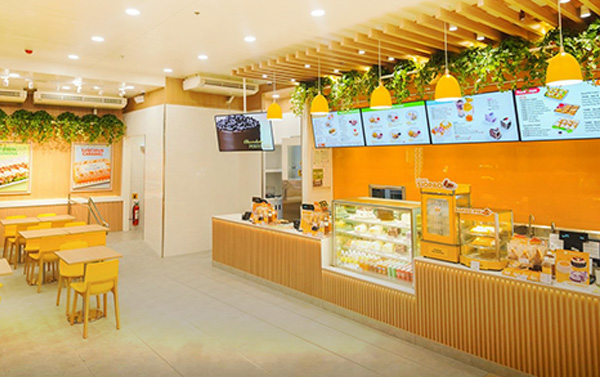
Digital Signage Today released a case study in January 2026 discussing how Goldilocks, a Filipino, can control screens across 900+ stores using a single interconnected platform. The company switched to SMP-2200 and SMP-2300 media players to control digital menu boards across hundreds of US locations. Not only did this increase customer engagement, but it also improved in-store customer experiences without adding additional pressure to store IT resources.
The Takeaway
Cloud-based signage control has become incredibly accessible, and is practically the ‘gold’ standard in most signage installations (pun intended). This case study also shows a clear ROI: Goldilocks saw a 20% to 30% increase of in-store visits and direct sales lifts simply by playing dynamic videos on the company’s Entrance Promotional Displays.
Nonprofit: Immersive customer experiences go public at the Cleveland Museum of Art

The Cleveland Museum of Art wanted to show a “behind the scenes” transformation of priceless artwork. To do this, they would need to invest in fine pixel pitch dvLED digital displays, as well as a universal dvLED mounting system, to create an interactive screen.
These screens played a major role in bridging the gap for visitors, which offered a behind-the-scenes look at conversation work with detailed imaging, restoration timelines, and explanatory content that would be impossible to convey on traditional placards. And since the content is centrally managed, staff can easily update displays as new projects begin or research findings emerge.
The Takeaway
Nonprofits can use digital signs to enhance spaces with more than basic wayfinding or announcements — and can create interpretive mediums that open up invisible or complex work to visitors. It’s simple and easy to create consistency and communicate expertise, build trust, and make specialized knowledge more accessible to a broad audience.
Manufacturing: Real-time visibility with Bendac and Fugo
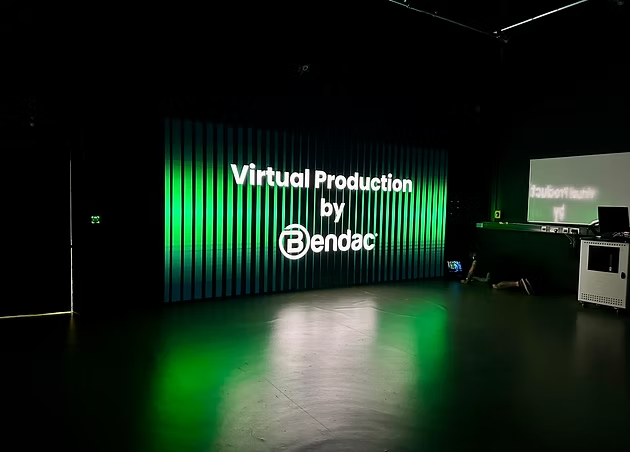
Bendac Group, a UK-based LED display manufacturer and integrator, partnered with Fugo to help customers create turnkey video systems The goal was to outfit its custom LED walls with screencasting, data dashboards and other management tools, all easily controlled through Fugo’s cloud platform.
With Fugo, the Bendac Group can sell signs more quickly by selling top-of-the-line technology alongside a world-class content management system (CMS). Now, customers in offices, healthcare clinics, and other teams can schedule content, set up dashboards, push announcements, and broadcast safety messaging on the same displays.
The Takeaway
Successful business deals in digital signage often require a ‘one-two punch.’ With Fugo, Bendac was able to expand its client base and sell full-ticket services to clients across the UK.
Healthcare and education: A new video wall for University Hospitals Authority and Trust (UHAT)
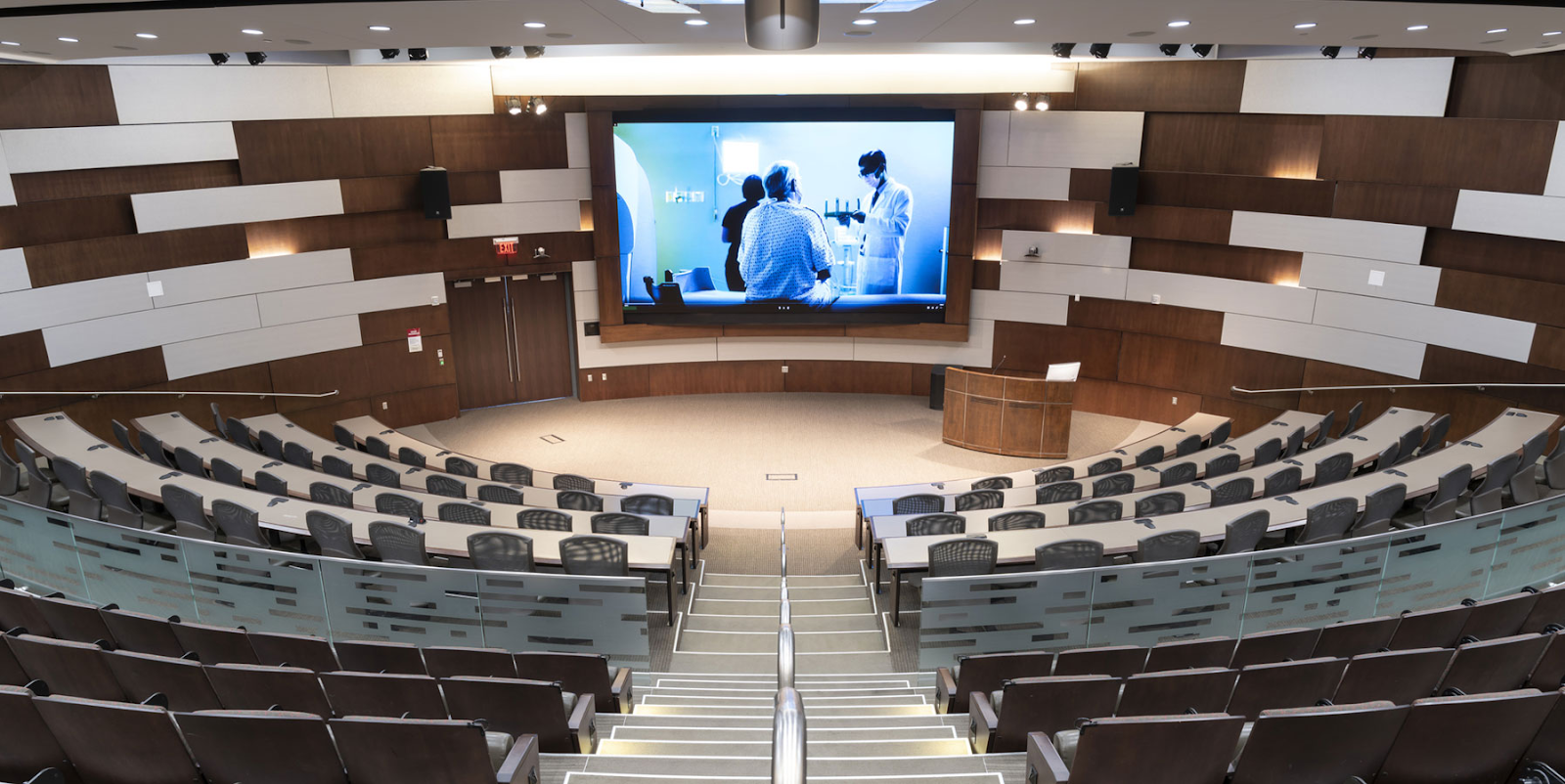
The Oklahoma Health Center, located in Oklahoma City, wanted to deploy a large Samsung video wall to create a visual focal point in the Rainbolt Family Auditorium. The initial installation had quite literally burned out, which caught the casing on fire and burned up the remaining wiring.
The OHC’s new video wall is roughly 36 cabinets at a 1.5-millimeter pixel pitch, which measures 19 feet by 10.6 feet. This lets visitors, patients, students, and staff members tap into the campus’s teaching and research mission. It also provides better educational opportunities to the college of medicine, clinics and hospitals, and allied health, dentistry, and pharmacy students.
The Takeaway
Corporate: Business intelligence for the masses at Struers
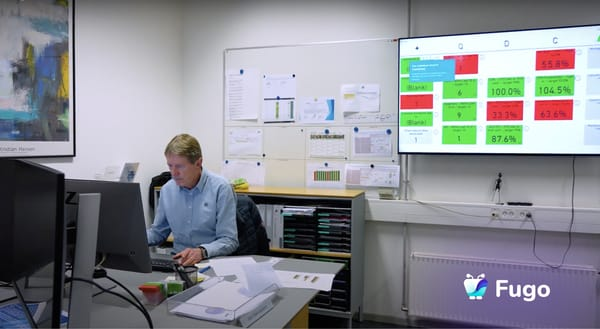
Struers, a global materials‑testing company, decided to turn its standard Sony displays into always-on business intelligence dashboards in offices and common areas. Using Fugo dashboards, the team can now see live sales, service, and support metrics in tools like Power BI and web‑based reports — without having to log into separate systems or pay for view-only licenses.
By centralizing screen control in a cloud platform, local managers can choose which KPIs and messages appear in each region or department. Now, the company can control data in 24 offices across 60 countries, which democratizes access to data and encourages informal discussion around shared goals.
The Takeaway
Digital signage becomes far more valuable when it acts as a front end for business intelligence rather than just a digital poster network. Making key metrics visible “in the room” for everyone (and not just those with dashboard logins) helps drive transparency, accountability, and faster, data-driven decision-making.
Digital signage reports
By ‘reports,’ we’re referring to overarching research that looks at the state of the industry rather than hyperspecific examples. Research pieces, for example, are typically occupied with a specific thesis. And case studies typically look at one or two organizations within a specific industry.
The following reports break down the performance of the entire digital signage industry, including where it’s at, where it’s going, and
Let’s get started.
Digital signage market size & share analysis: growth trends and forecast
Mordor Intelligence released its 2026 through 2031 forecast covering the state, growth, and future trends of specific signage variables.
It starts by comparing the features with a crucial role in digital signage:
- Solution type (video wall, video screen, kiosk)
- Components (hardware, software, and services)
- Deployment (on-premise, cloud-based, or hybrid)
- Screen size
- Location (In-store/Indoor versus outdoor
- End-use industry (retail, transportation, hospitality, corporate, etc)
- Geography
The market size of digital signage is projected to increase from $29.95 billion in 2026 to $44.6 billion in 2031. Cloud platforms show the fastest growth with an outlook of 12.54% by 2031. Kiosks and transporation hubs are also set to grow, especially within the Asian market.
The Digital Signage Landscape: Current State and Future Outlook
This whitepaper by Poppulo surveyed 252 respondents who worked at companies with 5,000 employees and were located within the United States. Each participant fits somewhere into the digital signage ecosystem: 25% were in IT, 21% were in operations, another 15% were in facilities management, and 12% were in marketing.
They asked a few different categories of questions around the overarching signage industry:
- What top companies look for in a digital signage provider? Value in pricing for hardware, security features, value in pricing for software, is a leader in digital signage, industry-specific expertise, specific focus on digital signage.
- How soon will you switch? More than half plan to switch providers in the next 12 months.
- What are your top use cases? For transportation, no-fly information, baggage details, safety messages and advertising. For healthcare, patient experience and education, digital menu boards, and local health updates. For corporate comms, performance dashboards, social media integrations, and meeting room signage. For university campuses, menu boards, emergency alerts, and study room bookings.
You can read more about what they discovered here.
The State of Digital Signage Report
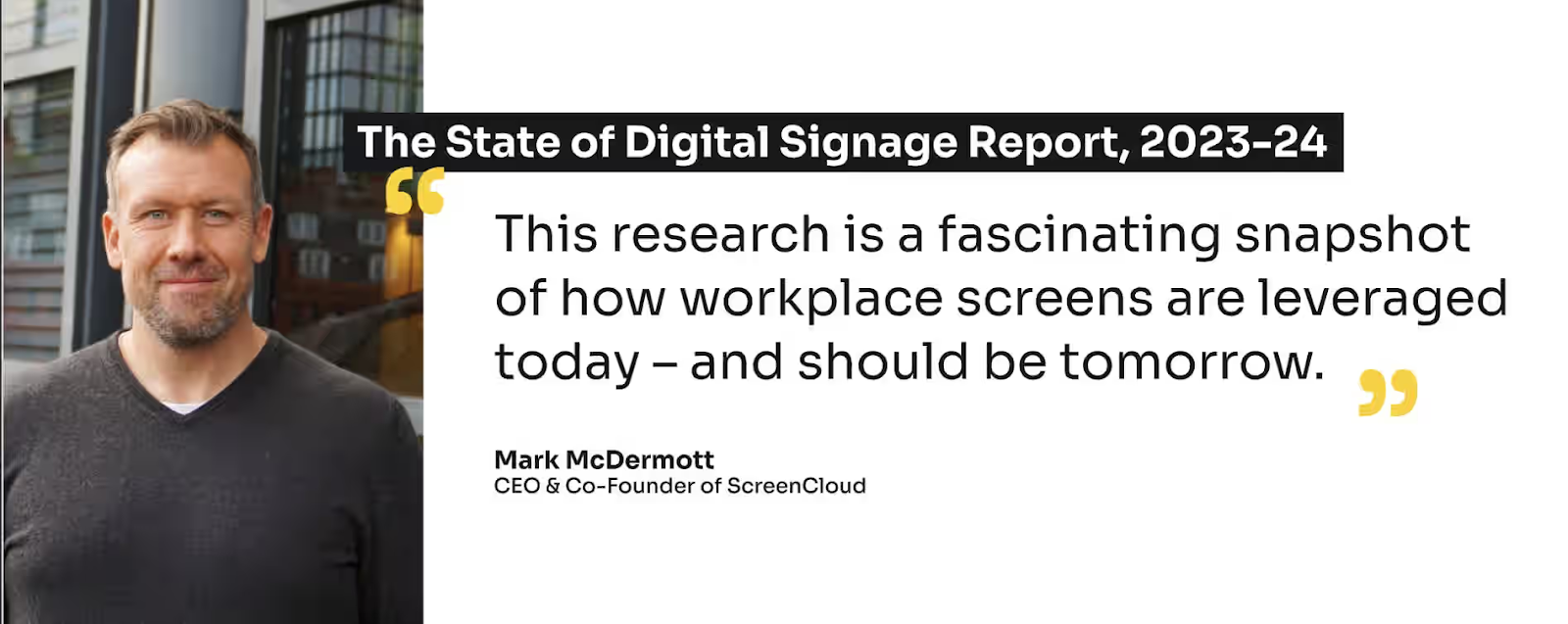
Google ChromeOS commissioned this 38-page report from Censuswide covering the changing expectations of employees and employers in digital signage. Report authors created a widespread survey polling over 2,400 employees and decision-makers about their digital signage habits — mostly within deskless workforces (think manufacturing, logistics, transportation, and supply chain organizations).
Each chapter covers three specific takeaways: or, “the good, the bad, and the ugly” of signage. It also provides very detailed information about screen locations, content types, ownership and governance, perception, and future plans for the technology.
Read this report if you’re interested in employee perceptions of digital screens and how they contrast with managers and company leaders (rather than customers or visitors).
Download The State of Digital Signage Report.
MarketsandMarkets™ Digital Signage Growth
MarketsandMarkets breaks down the fastest-growing segments of the digital signage market, separated by opportunity versus cost in the global market.
According to the researchers, the fastest-growing categories of each include:
- Offering: Software
- Display size: Displays larger than 52 inches
- Product type: Video walls
- Fastest-growing location: Asia Pacific, with a CAGR of 8.1%
You can browse 300 market data tables and 80 figures spread across 350 pages here.
Digital signage in the consumer finance industry
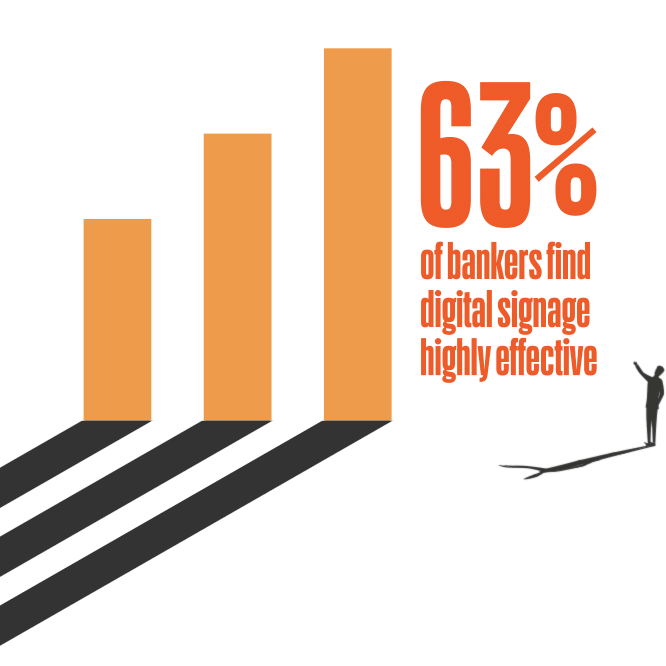
For signage professionals in the finance industry, this in-depth whitepaper is a wealth of knowledge. It provides detailed information and statistics about how consumers, teams, and finance departments interact with digital signage on multiple levels.
Some of the best quotes to pull from this whitepaper include:
- “Those who report their bank has digital signage are also more likely to report their relationship with the bank is a trusted relationship with long-term benefits compared to those who do not report signage in their primary bank. (31% vs. 20%).”
- “Customers notice digital signage primarily within the branch, especially in waiting areas. However, there is a discrepancy between bankers’ and consumers’ perceptions of signage location effectiveness. For example, bank branch windows are commonly used for digital signage, but only 30% of consumers notice them. This indicates a need for more strategic placement or different content for exterior-facing signs.”
- “A critical opportunity lies in increasing the volume and relevance of marketing content displayed on digital signage platforms. By enriching messaging with compelling visuals, targeted promotions, and tailored communications, banks can create more immersive and personalized customer experiences.”
Honorable mentions for digital signage research
No longer is signage just a “fun marketing opportunity” for enterprise brands with deep pockets. More and more research shows how even small organizations can use screens to improve communication, streamline operations, and generate ROI.
But we’ve only covered a small portion of what’s out there. Where does the SMB marketer go to learn more?
We’ve collected and summarized some additional resources so you don’t have to.
This includes public-facing repositories like:
- Digital Signage Today. A news source and aggregate site covering digital sigange since 2007. For marketers, this is an excellent resource for keeping up with industry news, browsing the occasional case study, and keeping up with digital signage events. It’s also especially useful for vendor comparison pieces, “how‑to” deployment articles, and curated lists (for example, roundups of leading software platforms for 2026).
- Sixteen:Nine. A commentary site established by industry veteran Dave Haynes, with most of its focus on signage deployments, vendor strategy, and overarching business insights. It’s also a great resource for gaining qualitative insights: think interviews, opinion pieces, and critiques around specific brands or software installations.
- Google Scholar. A searchable index of academic and industry-adjacent research. With Google Scholar, you can find peer-reviewed articles on topics like the effectiveness of DOOH, in‑store media, and how audiences communicate.
More digital signage resources for marketers
While we’ve already covered several case studies, research, and industry reports, we’ve truthfully only scratched the surface of digital signage. And for ambitious marketers curious to learn more about their practicality, it may be useful to explore additional resources.
Here’s where you can get more information about digital sigange trends, statistics, and news:

