
Use your canva designs on your screens
Fugo has no Canva plug-in, and you don’t need one. Export your design from Canva as a PNG, JPG, MP4 or PDF, upload it to Fugo, and add it to a playlist. Takes about two minutes. If you’d rather stop hopping between tools, Fugo’s Design Studio does most of what you use Canva for, and your screens update on their own.
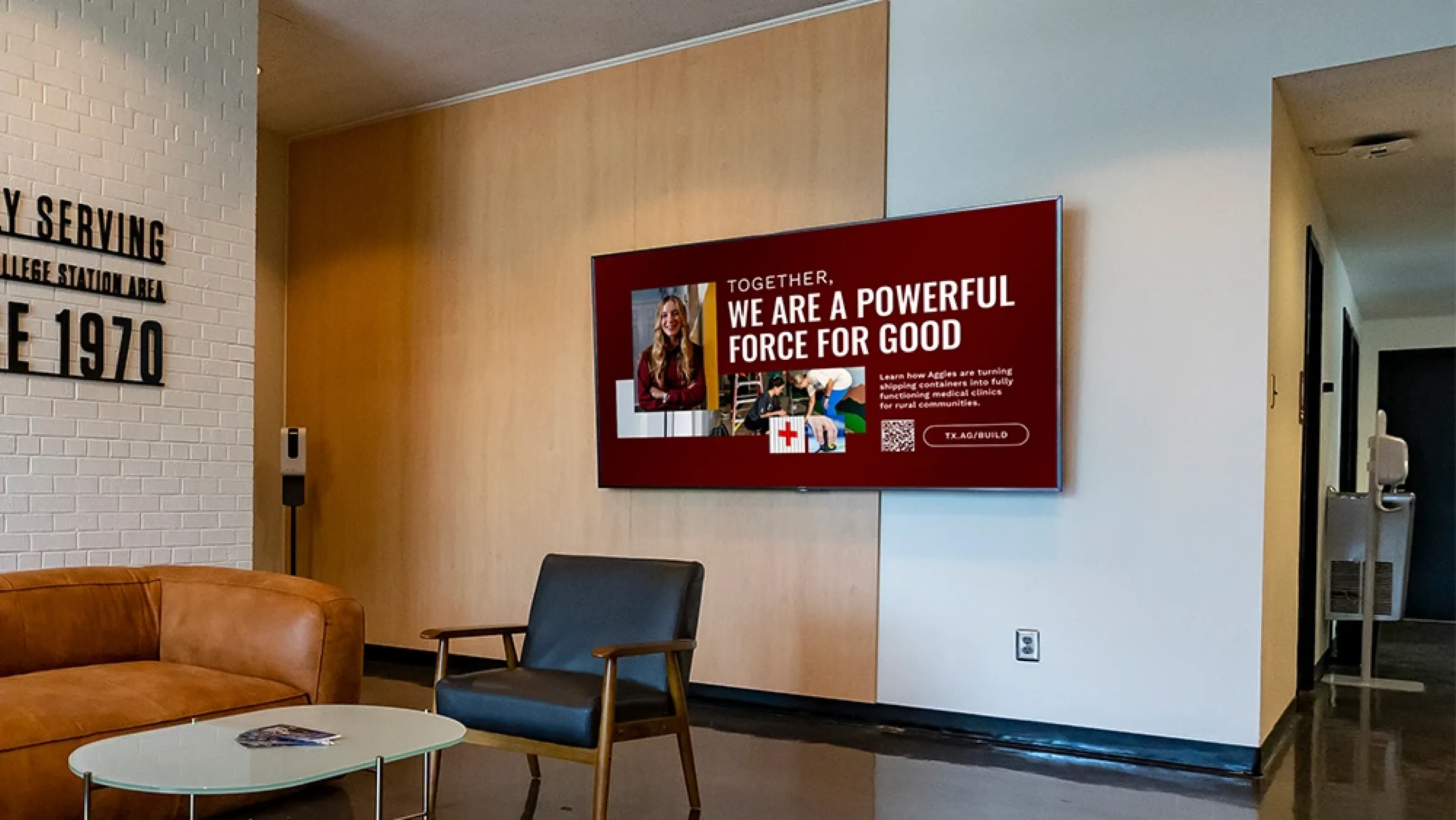
Yes, your canva work plays on Fugo
Your team already knows Canva. Nobody wants to hear their designs are stuck there.
They aren’t. Canva exports standard files, and Fugo plays standard files. Export, upload, schedule. That’s the whole job. It works the same for a single reception screen and for 200 screens across ten sites.
Being straight with you: Fugo does not have a Canva app that pulls designs in automatically. Change a design in Canva and you’ll re-export it and upload the new file. Some signage tools do offer that sync. If it matters to your workflow, ask us on a demo and we’ll tell you honestly where we stand.
Getting a canva design onto a screen
Export it at the right size
In Canva, use Share → Download. Pick PNG or JPG for a still design, MP4 for anything animated. Set the canvas to 1920 x 1080 for a landscape screen or 1080 x 1920 for portrait, so nothing gets cropped.
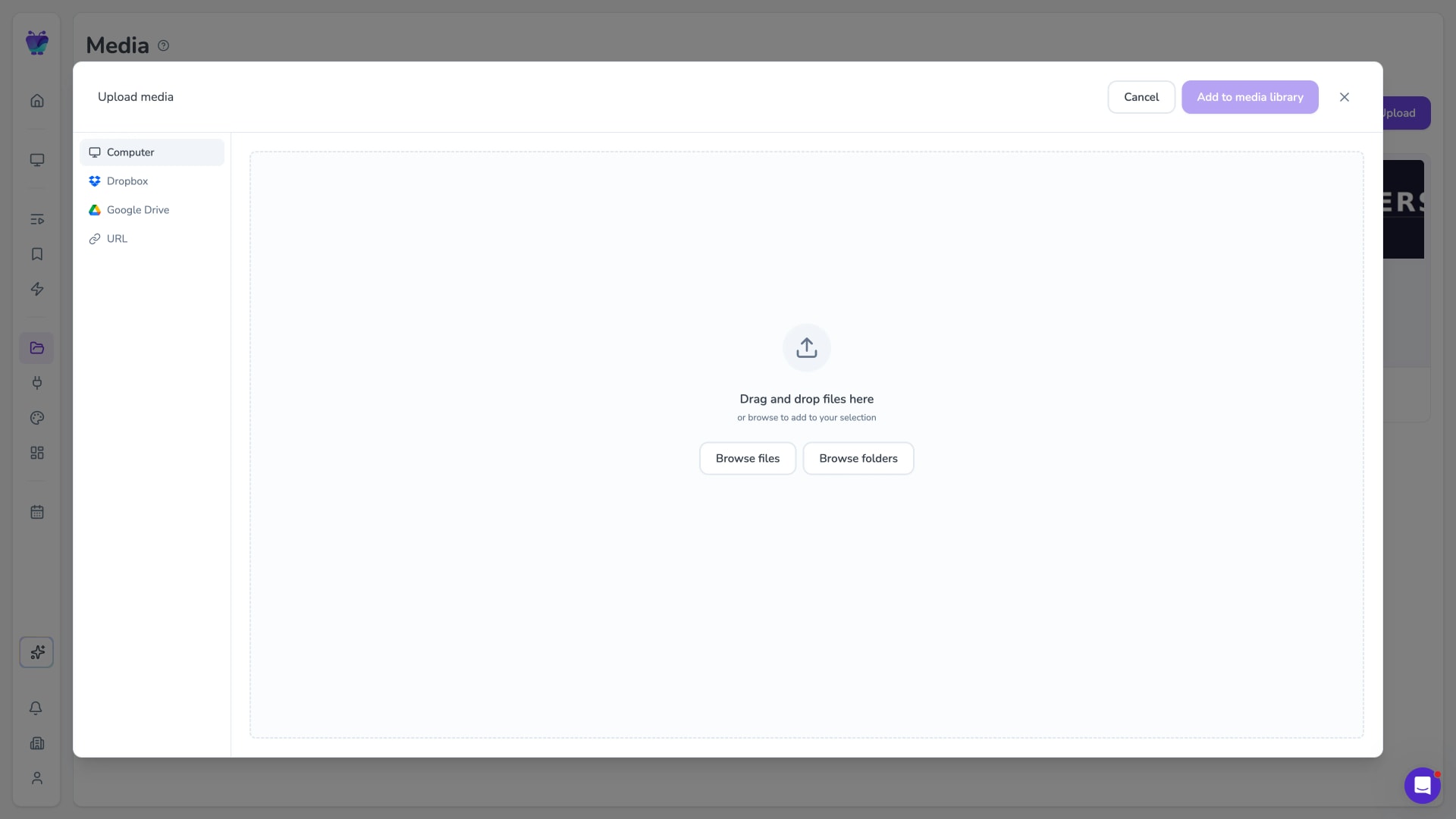
Upload it to Fugo
Open your media library and drag the file in. Images, video and PDFs all work.
Drop it in a playlist
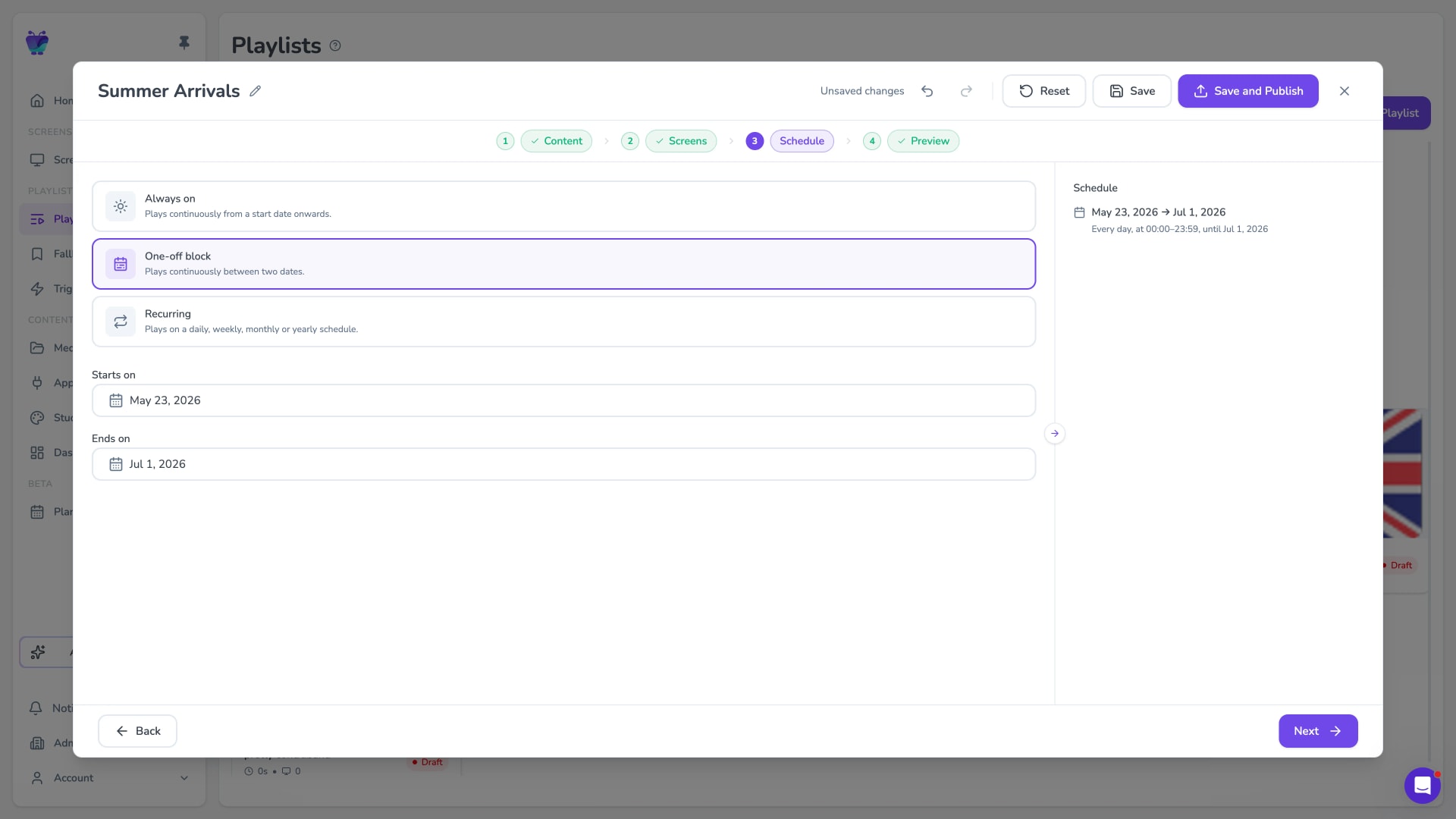
Add the file to a playlist, set how long each item stays up, and pick the screens. Save.
Schedule it if you need to
Day-parting means a breakfast promo runs until 11am and the lunch design takes over after. Same screen, no one touching it.
Push it out
Your screens pull the update over the network. Nobody walks round with a USB stick.
Where canva starts to creak on screens
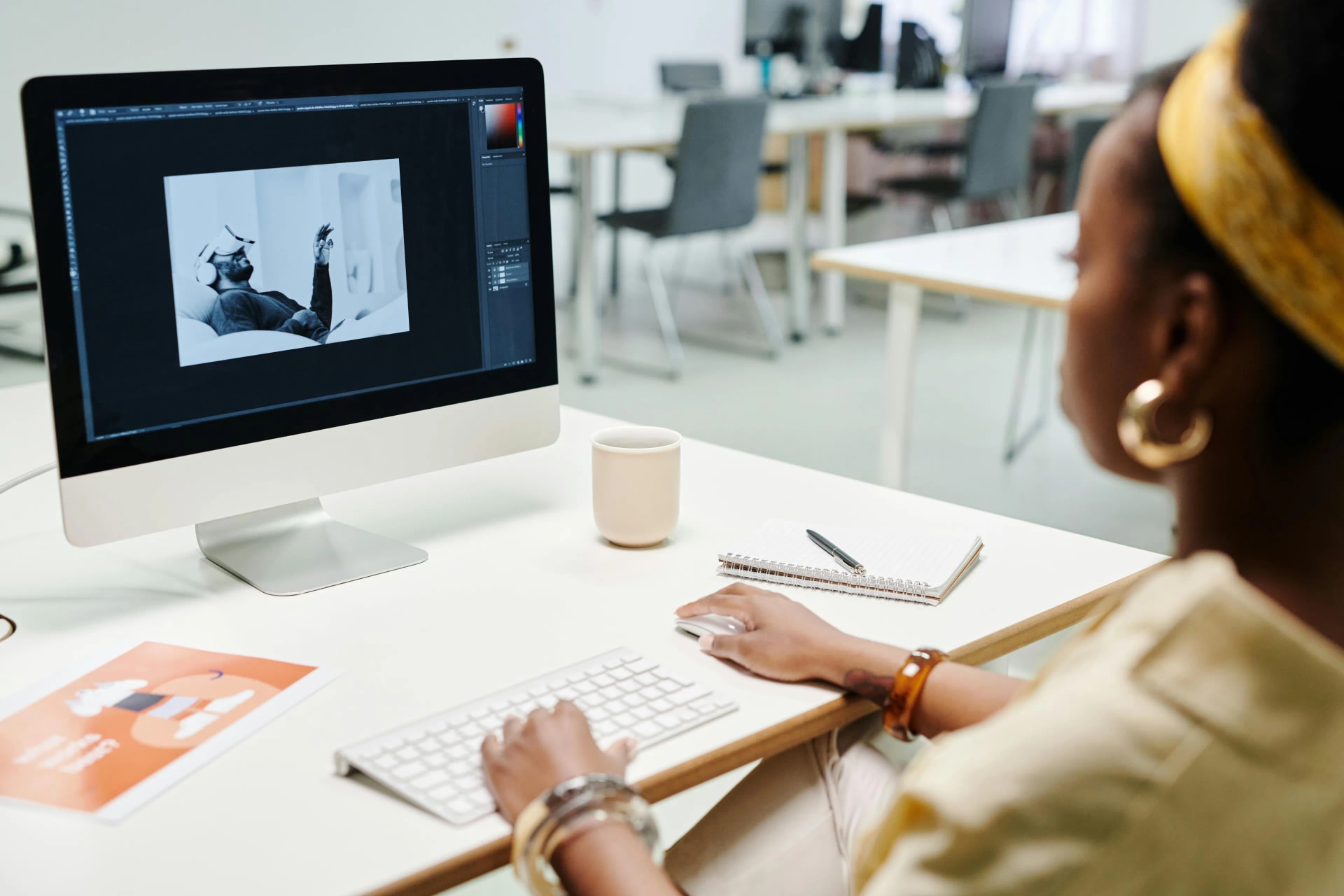
Canva is a design tool. It was never built to run a screen estate. The gaps show up fast:
Every edit means a re-export. Small change, full round trip.
No scheduling. Canva can’t run one design at 9am and another at 4pm.
No live data. A price, a KPI, a meeting-room name — Canva bakes those in as pixels. They’re stale the moment you export.
No screen visibility. Canva can’t tell you a screen in the Leeds office went dark last night.
Sharing gets messy at scale. Ten sites, ten folders, ten people with slightly different versions.
What Fugo adds on top
Design Studio
Build and edit signage content in Fugo, no export step. Templates included.
Playlists and scheduling
Sequence content, day-part it, set it and leave it.
Live widgets and dashboards on TV
Pull real numbers in instead of screenshotting them.
Remote multi-site management
One place for every screen, every location.
Uptime monitoring and remote recovery
See a screen fail, fix it without a site visit.
Canto DAM integration
If your brand assets live in Canto, pull approved files straight through.
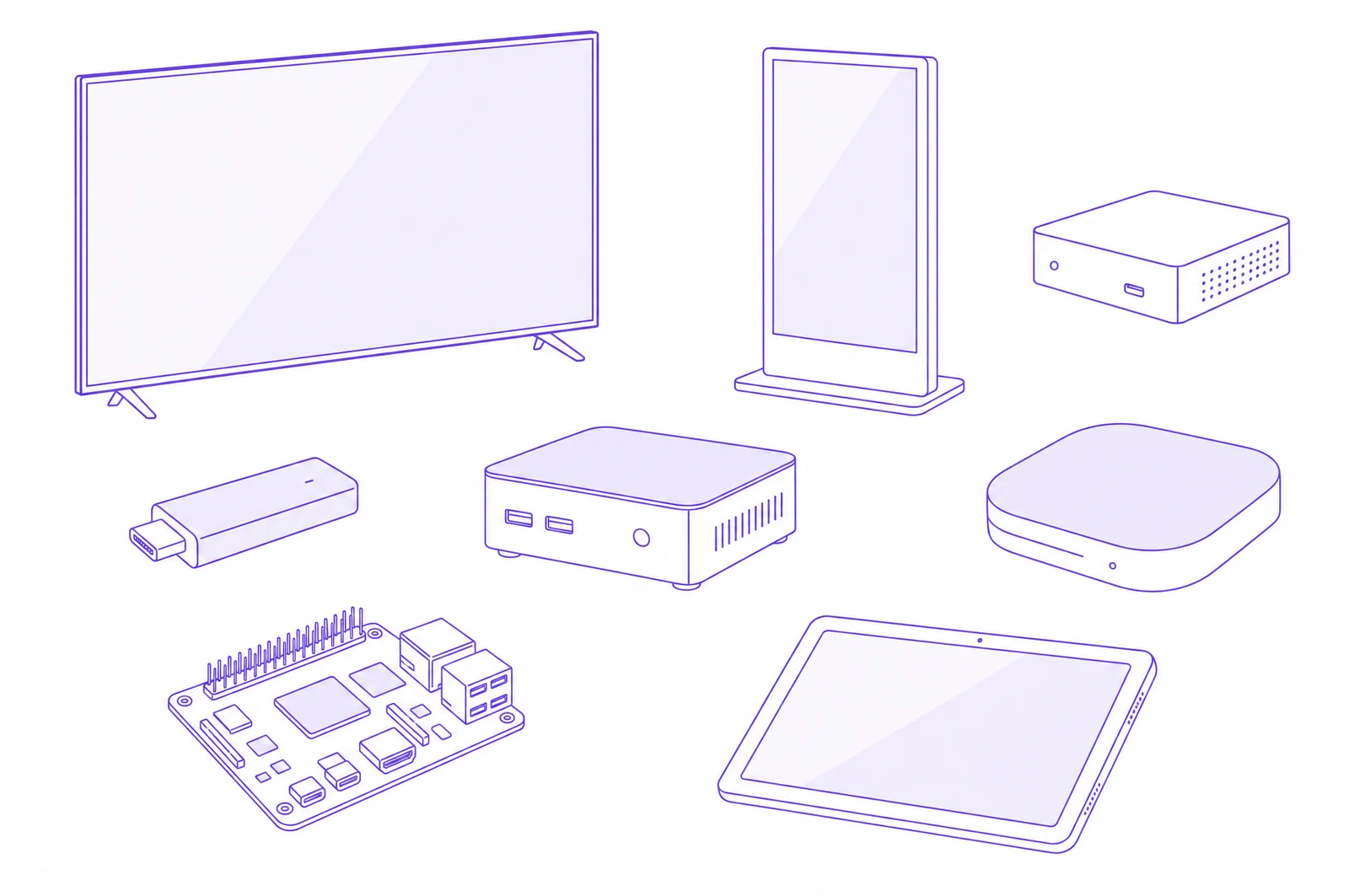
Runs on the screens you’ve already bought
Fugo is hardware-agnostic. Your exported Canva file plays the same on all of it: Amazon Fire TV and the Fire TV Signage Stick · Google TV Streamer · NVIDIA Shield · Android devices · Samsung Tizen and LG webOS built-in SoC displays · Windows and ChromeOS.
No proprietary box. Pricing is per screen, so you scale one screen at a time. Fugo is SOC 2 Type II certified, which the IT team will want to know before anything goes on the network.
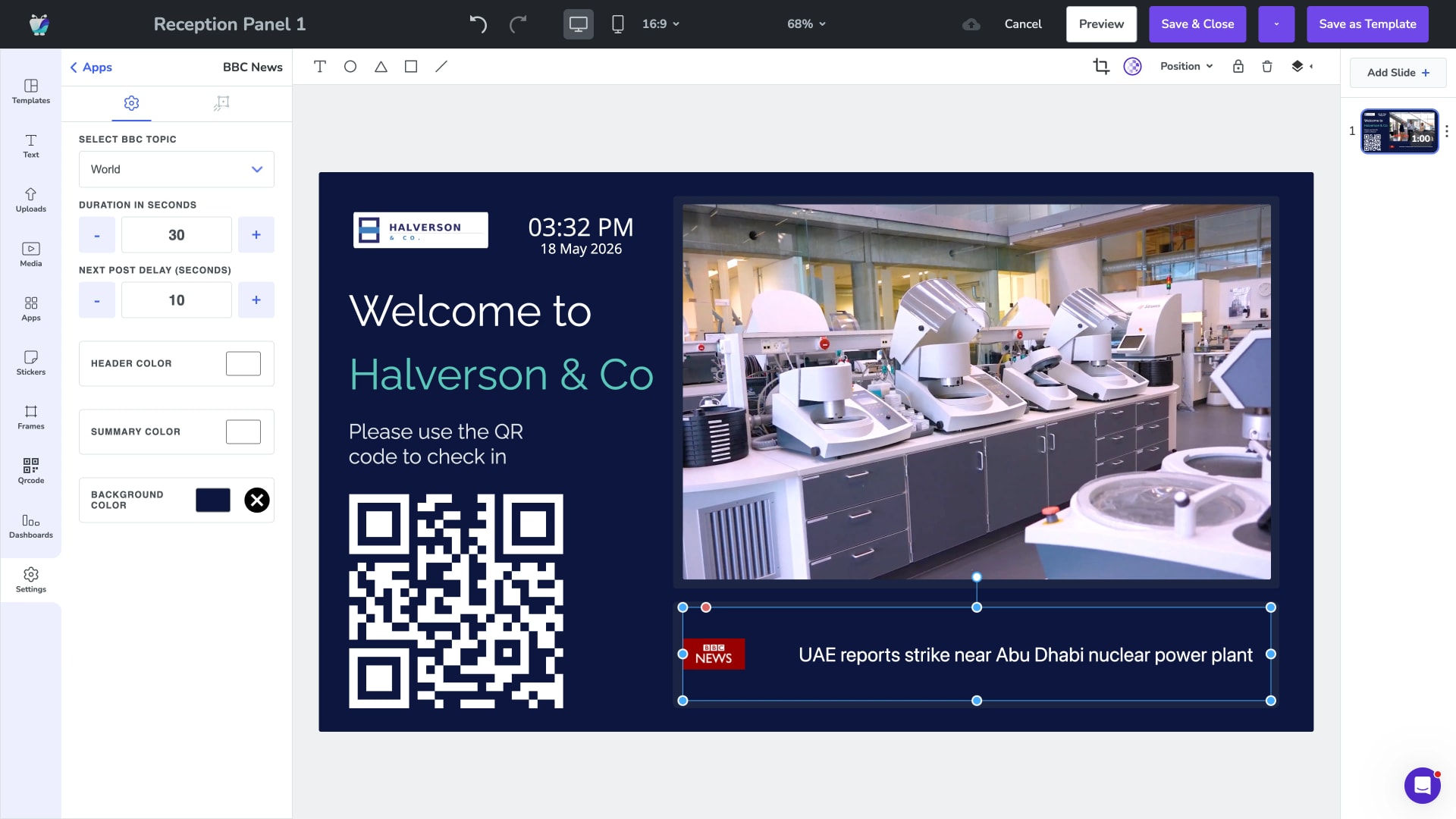
Canva or fugo’s Design Studio?
Use Canva when it’s a one-off, you love the templates, or the design is going to print as well as a screen.
Use Fugo’s Design Studio when the content changes often, needs live data, has to be scheduled, or has to be consistent across a lot of screens. You skip the export-upload loop entirely.
Plenty of customers do both: brand-led pieces in Canva, everyday operational screens in Fugo.
See it on your own screens. Bring a Canva export to a 20-minute demo and we’ll get it playing while you watch.