


In October, the Bakehouse Chicago, a bakery with three locations across the city, used an AI-generated image to promote its fall menu. It ended up in a Chicago Tribune report on AI food photos on menu boards.
"We always designed it ourselves, but we are business owners, not designers, so we tried AI to help us with the design. It was quick, easy and saved us time, which is the one thing we don't have much of," Angelica Romero, one of its owners and bakers, told the Chicago Tribune.
Then two customers said the food was "excellent" but, because of the AI image, left three-star Google reviews.
"That made us stop and think," Romero said. "Our bakery is all about being family-owned, handmade and made from scratch. We realized the menu did not really match those values."
The owners decided to redesign it themselves and hire a professional designer for the whole menu, not just the seasonal drinks. Their apology was written by hand: "From now on, we won't use AI at all. Instead we'll use this paper and this marker."
The Tribune's report, by Zareen Syed, found a growing number of restaurants and cafes using AI-generated food photos on their menu boards and promotional signage, with some customers and industry professionals growing weary of them.
The bakery did nothing unusual. It used a quick tool to save time, and customers who liked the food marked it down anyway.
What diners are objecting to
Much of the criticism is about trust. Jay Goldberg, operations manager at Chicago Culinary Kitchen in Palatine, told the Tribune that AI is "a fine tool for people that don't necessarily have the time or the creativity to make their own graphics or flyers, but the second you're going to just bait and switch me with your food, I don't trust you as a business and I wouldn't eat that food."
For some passersby, the image decides whether they walk in at all. Leonard Pierce, a crossing guard in Chicago, walked past a Thai restaurant whose posters showed taquitos that were rolled too evenly and looked a bit like hot dogs. He said the images were the only reason he didn't go inside.
"If they won't show me what their real food looks like, I don't want to eat it," he said.
Hailey Club, a baking and pastry student, put it more bluntly: "Most places that have AI, I just keep walking. Because if your food doesn't look good enough to have a real picture of it, why would I eat here?"
The same reaction has turned up elsewhere. In September, The Guardian reported on Grind & Unwind, a San Francisco cafe whose AI-generated menu sign drew graffiti on the storefront.
The owners took the signage down and, according to SFGate, spent an estimated $700 painting over the graffiti.
Hunter Lewis, editor in chief of Food & Wine, told the paper: "The American dining public is smart." He added: "They know what they want, and they know what is real."
Not everyone notices. The Tribune spoke to an older customer leaving a Loop sub shop whose window is covered in AI-generated sandwiches; he hadn't realized they weren't real.
The owner of Bella Cafe in San Francisco told the Guardian she had received no complaints about her ChatGPT-designed signs.
The Tribune found reactions on the street more varied than online, with an evident generational gap. Still, a restaurant can't choose which customers will look closely, and at the Bakehouse the ones who did put their view in a Google review.
Why AI food photos tend to look wrong
Food is hard to fake convincingly. V.S. Subrahmanian, a computer science professor at Northwestern University, told the Tribune that an AI model asked for a quinoa and avocado salad has to get the texture of the quinoa, the curves of the leaves, the softness of the avocado and the wet center of a sliced tomato all right at once, and usually exaggerates them.
Jamie Soja, a Bay Area photographer who shoots for restaurants and delivery services, told the Guardian that in AI images "the color and texture and the ingredients look kind of off in the way that they're arranged," and that the lighting can look unnatural.
Chicago food stylist Mollie Hayward sees it as someone who knows how food performs: "Why does this cheese have five corners? Where is the melt on this cheese coming from?"
There is also a quieter problem. The Guardian reported on a 2024 study by Charles Spence, a University of Oxford professor of experimental psychology, which found people generally preferred AI-generated food images when they didn't know a machine had made them, and found them less appealing once told.
Spence also found that AI tends to add fat, such as butter on mashed potatoes, when asked to make food look more appealing.
Why restaurants use it anyway
Good photography costs money, and small operators are short of time.
"I do understand that good food photography is expensive and not every mom-and-pop restaurant is going to be able to have a major photo shoot for their menu," Hayward said.
Esam Hani, whose hospitality group put AI-generated posters on the windows of a Logan Square restaurant before it opened, told the Tribune that "if someone can't afford to pay a graphic designer, it is a tool for them."
The Guardian cited a 2026 National Restaurant Association report finding that 26% of restaurant operators use AI to help with marketing, inventory management, employee scheduling, optimizing menus and taking orders.
The rules haven't settled either. According to the Tribune, no US state or federal law specifically bans AI-generated images of food at restaurants, and whether they breach consumer protection law is still up for debate.
DoorDash offers one workable line. The Guardian reported that its AI photo tools are meant "to improve the presentation of an existing image of a dish," by adjusting lighting, color or background, and that its policies prohibit restaurants from creating or altering images of menu items in misleading ways.
The distinction it draws, between improving a real photo and misrepresenting the dish, works well for a menu board too.
What to show instead, starting with photos of your own dishes
Goldberg's answer to AI images was to post his own food every day to more than 20,000 Instagram followers, even when the photos aren't "pretty enough." "I've been very adamant about posting our food every day so people can see the real stuff," he said.
A menu board can work the same way, with a phone and a little planning.
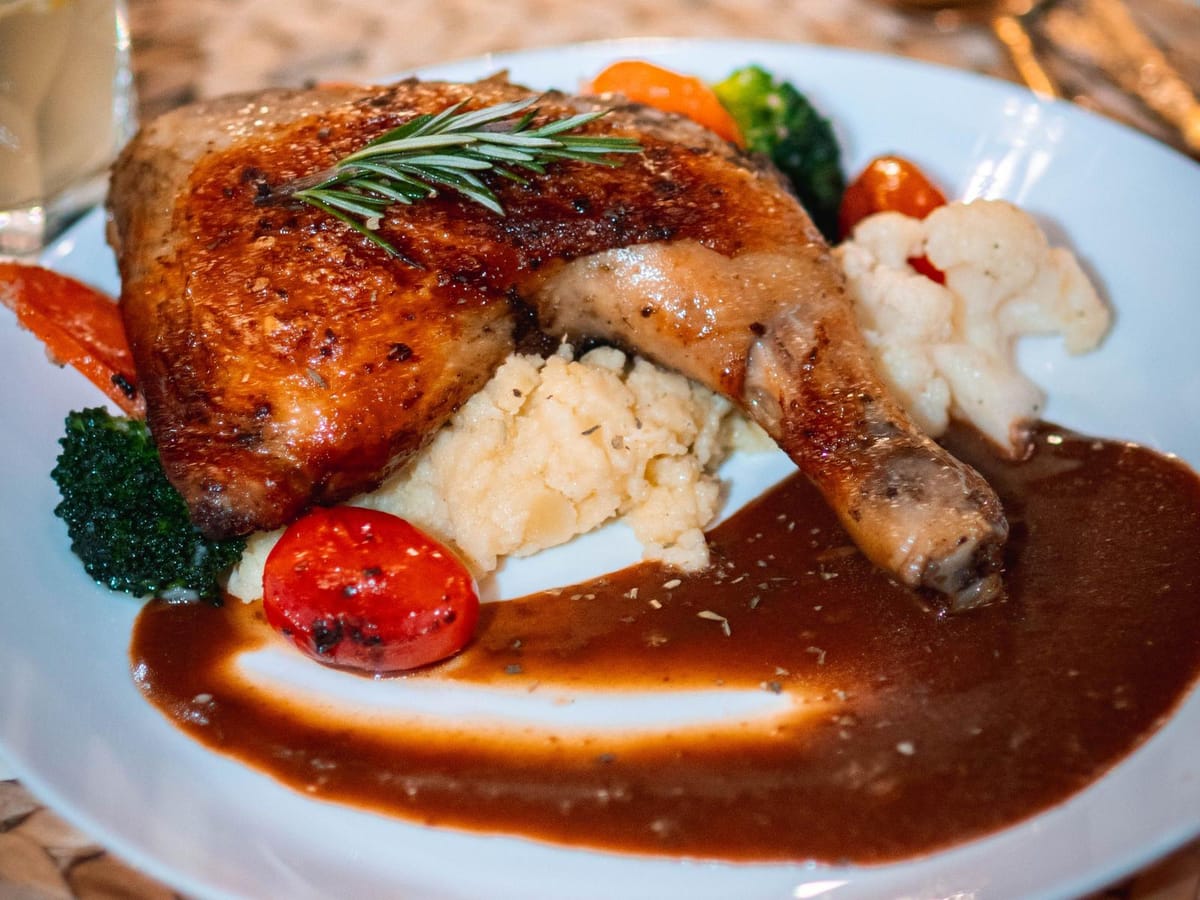
- Shoot the dish as it leaves the pass. Ask the kitchen to plate it exactly as it would go to a customer, on the same plate, board or box, with the same portion and garnish.
- Use daylight where you can. A table near a window, out of direct sun, gives softer and more honest color than overhead kitchen lights.
- Use a phone and a plain surface. Keep the background, angle and distance the same across a menu section so the board looks consistent.
- Take a few angles and pick the one that shows what matters. The filling of a sandwich, the layers of a cake, the size of a bowl next to a fork.
- Edit the light and leave the food alone. Cropping, straightening and brightening are fine. Adding cheese, removing a burnt edge or making the portion bigger turns the photo into the bait-and-switch diners complain about.
- Name files after the menu item. It makes the next update faster and keeps an old photo from ending up next to a new recipe.
If you don't have a photo of an item yet, leave it as text. Pierce said he would "honestly rather eat at a place that just types up their menu and doesn't have any images at all."
A clean text panel with a good description reads as honest, and you can add the photo once the dish has been shot.
Keep the board in step with the menu
A real photo can still mislead if the dish has moved on. Recipes change, suppliers change, a sandwich gets a new bun, a seasonal drink comes off the menu. The photo on the board needs checking whenever the dish changes, as well as at each redesign.
A short routine helps:
- Reshoot when the dish changes. New plating, new packaging, a new portion size or a swapped ingredient all mean a new photo.
- Take sold-out items off the board. Showing a dish you can't serve is a smaller version of the same trust problem.
- Show each daypart's own menu. A breakfast photo on the board at 3pm promises something the kitchen has stopped making.
- Replace placeholder images. Menu templates and stock libraries are useful for layout, but a stock croissant shows someone else's baking.
- Check every site. In a group with several locations, one screen still showing last season's photos undoes the work on the others.
Screens make this routine easier to keep up. On a printed board, a new photo means a reprint, which is one reason old images stay up longer than they should.
In Fugo, you can lay out items, prices, photos and dietary tags for digital menu boards and push a change to one location or all of them from the same dashboard.
The Digital Menu App lets you switch on Sold Out for an item when it runs out, and scheduling switches breakfast to lunch to dinner on its own.
Fugo's templates and its Unsplash and Pexels integrations are there to help with layout; the photos of your dishes should be your own.
FAQs
Is it illegal to use AI-generated food photos on a menu?
No US law specifically bans them, the Chicago Tribune reported, though whether they breach consumer protection law is still up for debate. Rules differ by country, and an image that misrepresents what you serve can still cause complaints and poor reviews.
Do customers really notice AI food images?
Some do, and they say so. Diners quoted by the Chicago Tribune and The Guardian described AI menu images as misleading or off-putting, and some said they walked past restaurants because of them. Others didn't notice at all. A 2024 study reported by The Guardian found people generally preferred AI food images until they were told a machine made them.
Can I edit my food photos before putting them on a menu board?
Adjusting brightness, color, cropping and background is common practice. Changing the food itself, such as adding toppings, enlarging the portion or hiding flaws, makes the image misrepresent the dish. DoorDash, for example, prohibits restaurants from creating or altering misleading images of menu items.
What should I show if I don't have photos yet?
Use clear text with good descriptions until you can photograph the dish. One diner told the Chicago Tribune he'd rather eat somewhere with a typed menu and no images at all.
Do I have to disclose that a menu photo is AI-generated?
The Chicago Tribune reported that no US state or federal law specifically bans AI-generated food images at restaurants. Some platforms label edits for you. The Guardian reported that DoorDash automatically adds an "AI-enhanced" label when a restaurant edits a photo with its AI tool. A label won't fix a picture that misrepresents the dish, and rules vary by country, so check your local advertising and consumer rules.
Swapping AI food photos for your own on screen
For a step-by-step build, see the Digital Menu Board App guide, and for planning the boards themselves, our guide to digital menu boards for restaurants.


