
Looking for a xibo alternative? Here's the honest comparison
Xibo has earned its place — the CMS is open source, the Windows player is free, and thousands of teams run it well. If you are here, something specific probably prompted it: a CMS upgrade that ate a weekend, a screen you cannot see or restart from where you are sitting, or a security review asking who owns the server. Fugo is a managed cloud CMS. You keep the screens; we run the platform. Here is what a Xibo player actually does, and where Fugo differs.
What xibo actually gives you
Verified from Xibo's own pricing and licensing docs, with no spin. For a small, stable, on-site network with in-house Linux skills, self-hosted Xibo can be the cheaper answer. This page is for teams where that stopped being true.
An open-source, self-hostable CMS
The Xibo CMS is open source and runs on your own web server and database. Xibo lists what that means in practice: backups, server maintenance, CMS upgrades, and a cluster plus load balancer for larger networks.
A free Windows player
Xibo Player for Windows is free of charge under the AGPLv3 or later. For a small, stable, on-site network with in-house Linux skills, self-hosted Xibo can be the cheaper answer.
Paid commercial player licences
Players for Android, LG webOS, Samsung Tizen and ChromeOS are sold as perpetual licences per device. Minor upgrades are included; major version upgrades cost extra per licence.
Xibo in the cloud, if you want it
Xibo's own managed hosting is charged per display slot and includes help-desk support and any player, open source or commercial. Xibo notes self-hosting is typically a higher total cost of ownership than a plan.
A 30-day licence check
Licences must revalidate every 30 days. A player with no internet needs the paid On-Premise Licensing Module, and a player that cannot get a licence stops downloading new content until it can.
Fugo vs xibo: the honest alternative, compared
One axis only — who runs the server, patches it, keeps it up and gets a dead screen back on. That is the whole trade.
Who runs the server | Fugo runs it (managed cloud) | You run it |
CMS hosting | None to host | Your web + database server |
Backups and maintenance | Included | Your responsibility |
CMS upgrades | Automatic | You schedule and run them |
Uptime monitoring | Via your own monitoring | |
Remote screen recovery | Remote recovery included | Via your own tooling |
Player licences | Included per screen | Free Windows; paid Android, webOS, Tizen, ChromeOS |
Major version upgrades | Included | Paid per licence |
Licence revalidation | Not required | Every 30 days |
Open source | Yes, AGPLv3 | |
Pricing model | Per screen, per month | Perpetual licences + hosting, or Xibo Cloud plans |
SOC 2 Type II | Yours to evidence when self-hosting |
See every screen, and bring a dead one back
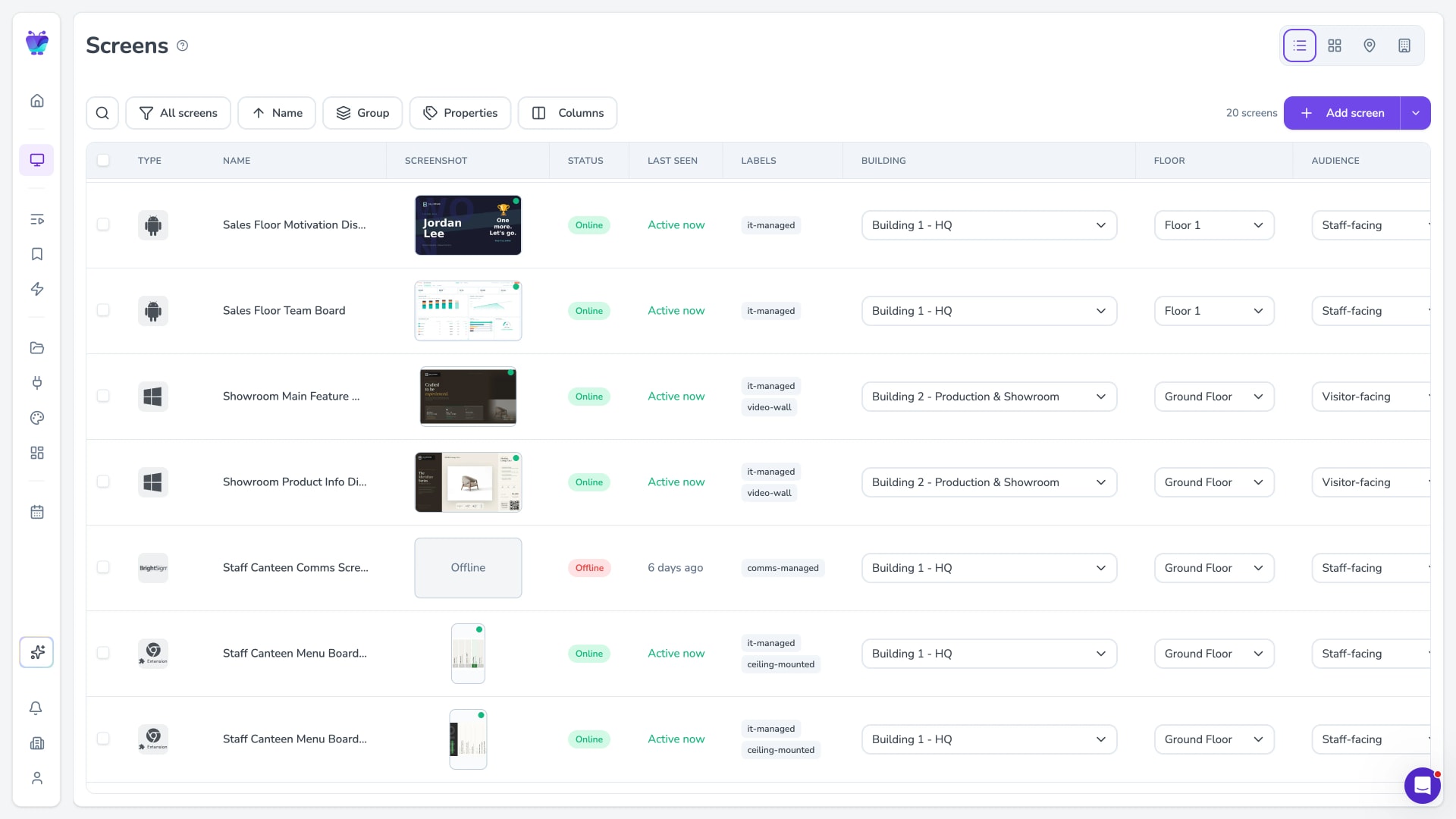
With self-hosting, a screen you cannot see is a screen you cannot fix from your desk. Fugo puts every screen and its status in one view.
Uptime monitoring tells you the moment a screen drops.
Remote recovery brings it back without a site visit.
Multi-site management and screen grouping keep large estates legible.
Live playback preview lets you check a lobby in another country from your desk.
No server, and your hardware stays yours
There is no server for you to own
Fugo is a managed cloud CMS. No web server, no database, no backup schedule, and no upgrade window in your calendar.
The hardware stays yours
Fugo is hardware-agnostic: Amazon Fire TV and Signage Stick, Google TV Streamer, NVIDIA Shield, Android devices, Samsung Tizen and LG webOS displays, Windows, ChromeOS and Linux. Devices you already run for Xibo can very likely run Fugo.
What migrating actually looks like
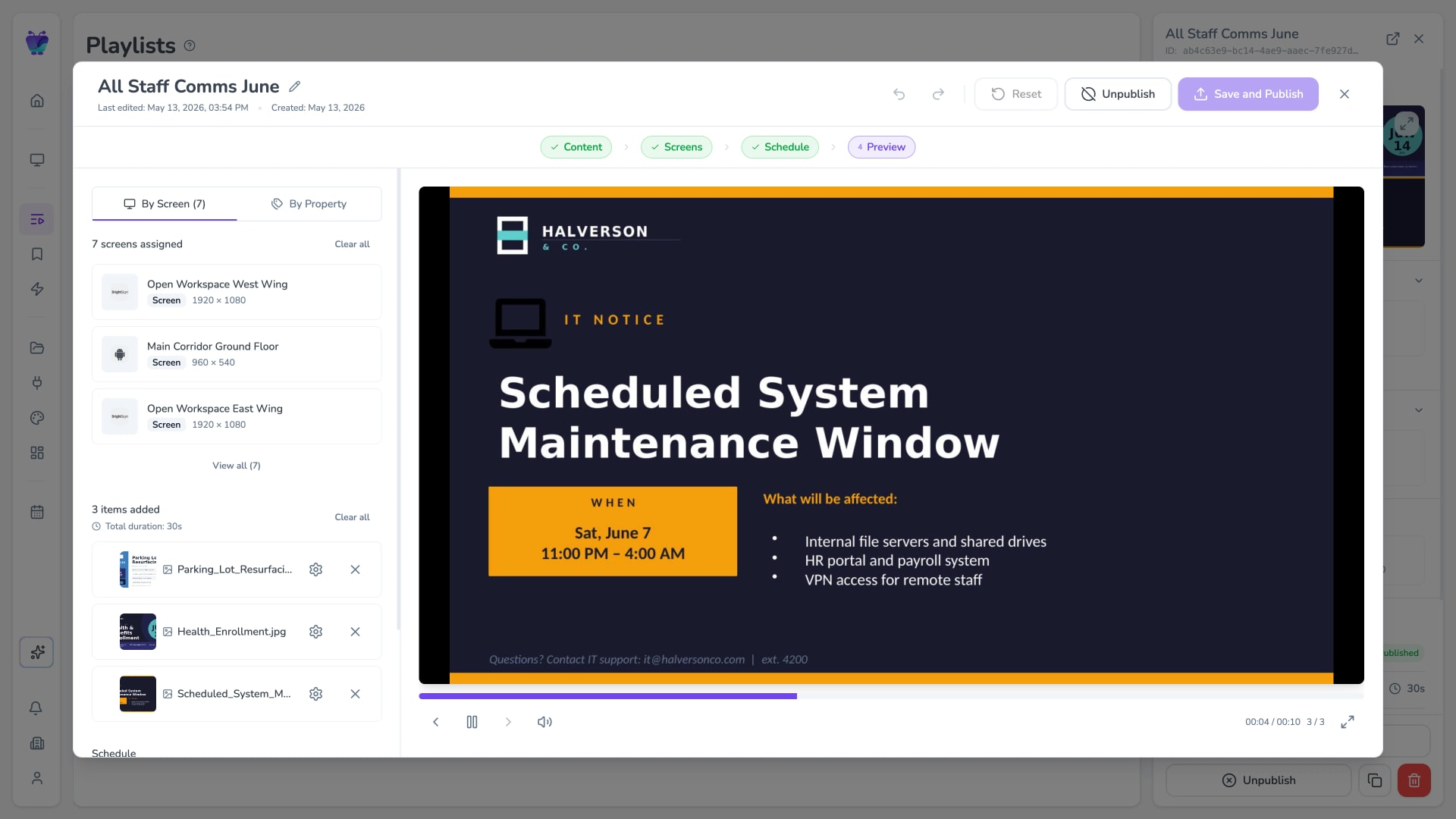
Short and honest. There is no automated Xibo layout importer, so the rebuild is manual — but it is quick, and you can de-risk it.
Keep your existing devices where they are compatible.
Install the Fugo app and pair each screen.
Rebuild playlists and schedules in Design Studio using templates.
Run both systems side by side on a few screens first, then switch the rest over.
The total cost, and the security review
The cost conversation, done properly
Xibo licences are cheap; running a CMS is not free. The honest total is server or VM cost, backups, patching time, upgrade time and out-of-hours cover, plus per-device licences and paid major-version upgrades. Fugo is per screen, per month, billed monthly or annually, with no server to run and no separate player licence to buy.
Built for security reviews
Fugo is SOC 2 Type II, with standard security documentation available for vendor reviews. With self-hosting, patching and hardening the box is your team’s name on the form.