

If you've ever attended a live sporting event, concert, or large gathering, you've likely encountered a massive screen showcasing vibrant visuals and close-up action—this is a Jumbotron. But what exactly is a Jumbotron, how much do they cost, and what's the difference between a Jumbotron and other large screens like video walls? Let's explore.
What is a Jumbotron?
A Jumbotron is a large-scale, high-resolution LED display specifically designed for use in stadiums, arenas, and outdoor entertainment venues. These screens offer unparalleled visibility and brightness, ideal for engaging large audiences through live video feeds, instant replays, advertisements, and dynamic informational displays.
How Much Does a Jumbotron Cost?
Jumbotron costs vary widely based on factors such as size, pixel pitch (resolution), brightness, weather resistance, and additional features like video processing and remote management capabilities. Smaller setups may range from $40,000 to $100,000. Major venues investing in large, high-definition Jumbotrons typically face costs from several hundred thousand up to several million dollars. For example, AT&T Stadium's Jumbotron cost around $40 million due to its immense size and advanced specifications.
Jumbotron vs. Video Wall: What's the Difference?
While Jumbotrons and video walls both deliver large-scale visual experiences, their key differences lie in:
- Construction: Jumbotrons are typically singular large screens optimized for outdoor conditions. Video walls consist of multiple, smaller screens seamlessly tiled together for flexible, often indoor configurations.
- Customization: Video walls allow greater flexibility in layout and resolution adjustments. Jumbotrons offer superior durability and weatherproofing suitable for large outdoor venues.
- Applications: Jumbotrons are ideal for stadiums and outdoor venues, while video walls are commonly used in indoor corporate, retail, and control room settings.
Exploring Mini Jumbotrons
Mini Jumbotrons retain many of the larger screens' benefits in a compact form factor, suitable for private, commercial, or specialized applications. They're particularly popular for home entertainment, private event spaces, and smaller commercial venues.
- Technical Components: Mini Jumbotrons utilize smaller LED panels with higher pixel density, ensuring sharp visuals even at closer viewing distances.
- Control Systems: These displays often integrate advanced video processing systems for seamless live feeds and content management.
Popular Mini Jumbotron Applications:
- Home & Man Cave Entertainment: Ideal for sports fans and home theater enthusiasts seeking a professional-grade viewing experience.
- Commercial & Retail Spaces: Enhances customer engagement in venues like sports bars, restaurants, and entertainment centers.
- Specialty Fixtures (e.g., Jumbotron Chandeliers): Combining decorative lighting with LED screen technology for aesthetic and functional appeal in upscale venues.
Real-World Examples:
- Madison Square Garden (New York): "GardenVision" consists of over 20 interconnected LED displays, delivering immersive fan engagement through multi-angle replays, real-time statistics, and advertising.

- AT&T Stadium (Texas): Features one of the world’s largest and most advanced displays, measuring 160 by 72 feet, with 1080p resolution for unparalleled viewing clarity.
- Staples Center (Los Angeles): Offers advanced scoreboard displays with additional under-scoreboard screens for courtside viewers, ensuring comprehensive visibility from all seats.

The Future of Jumbotrons
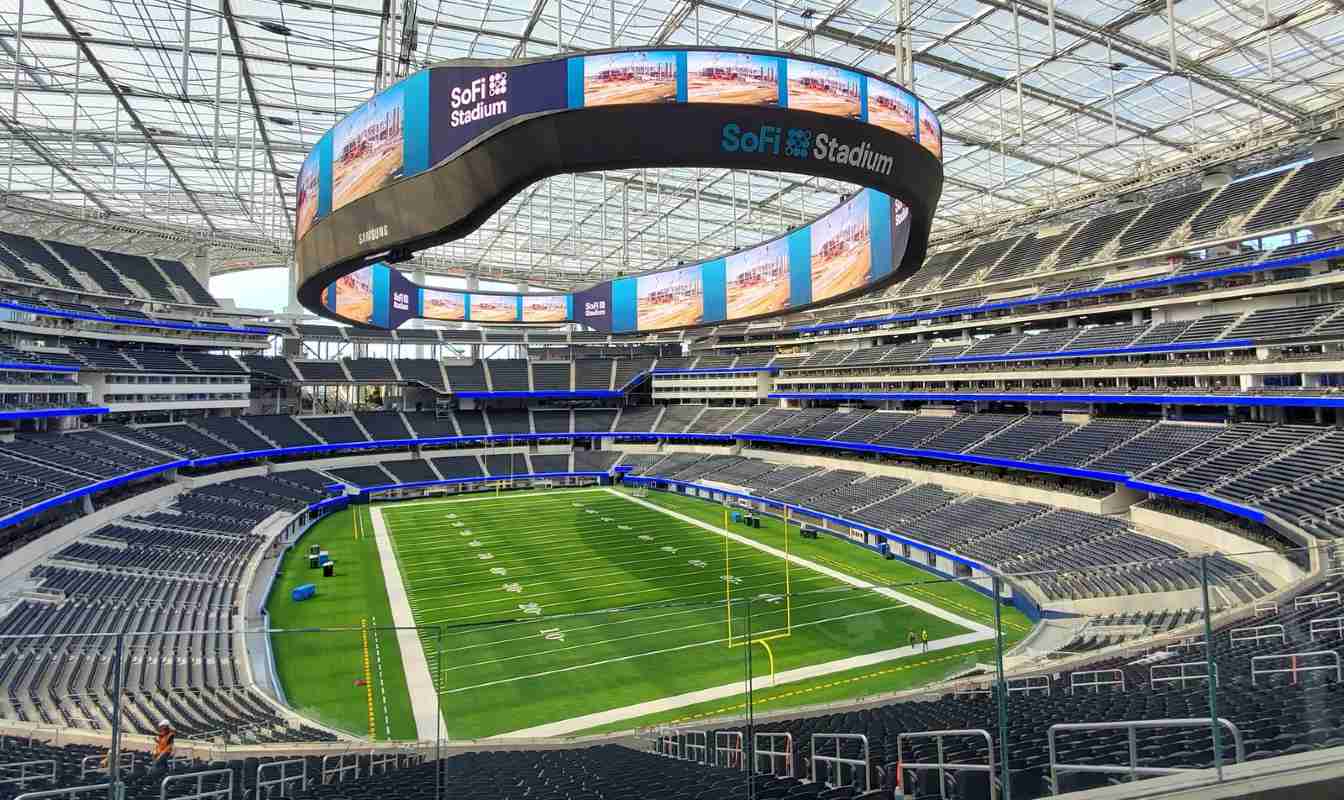
The future of Jumbotrons is marked by innovation, scale, and integration with emerging technologies. A prime example is the Samsung Infinity Screen at SoFi Stadium in Los Angeles, which features an unprecedented 70,000 square-foot, dual-sided 4K HDR video board. This state-of-the-art screen offers breathtaking clarity, immersive visuals, and a 360-degree viewing experience. Future trends include even higher resolutions, enhanced interactivity, augmented reality integration, and seamless content management through advanced platforms like Fugo.ai
FAQ: Technical Insights on Jumbotrons
What differentiates a mini Jumbotron technically from a full-sized Jumbotron?
Mini Jumbotrons typically use smaller, higher-density LED modules suited for shorter viewing distances, lower power consumption, and easier installation and maintenance compared to full-sized screens designed for long-range visibility.
What are typical pixel pitches for stadium Jumbotrons?
Stadium Jumbotrons usually have pixel pitches ranging from 6mm to 20mm. Smaller pitches offer sharper visuals suitable for close-up viewing, while larger pitches are more cost-effective for distant viewing.
Can a mini Jumbotron integrate with digital signage software like Fugo.ai?
Absolutely. Mini Jumbotrons commonly integrate seamlessly with advanced digital signage platforms such as Fugo.ai, enabling remote content management, scheduling, analytics, and customization to enhance viewer experiences.
What is the recommended resolution for a mini Jumbotron used indoors?
For indoor applications where viewers are closer, higher resolutions (4mm to 10mm pixel pitch) are recommended to ensure clear, crisp images even at short viewing distances.
How durable are Jumbotrons in outdoor environments?
Outdoor Jumbotrons are specifically engineered to withstand extreme weather conditions, including water resistance, dust-proofing, high brightness for visibility under direct sunlight, and robust construction to handle wind and temperature variations.
Enhance Your Digital Display Experience with Fugo.ai
Fugo.ai simplifies digital signage management, providing comprehensive tools for content creation, scheduling, remote management, and performance analytics. Optimize your Jumbotron or mini Jumbotron installation effortlessly.
Ready to take your digital signage to the next level? Start your free trial with Fugo.ai today!