
Bus stop digital signage
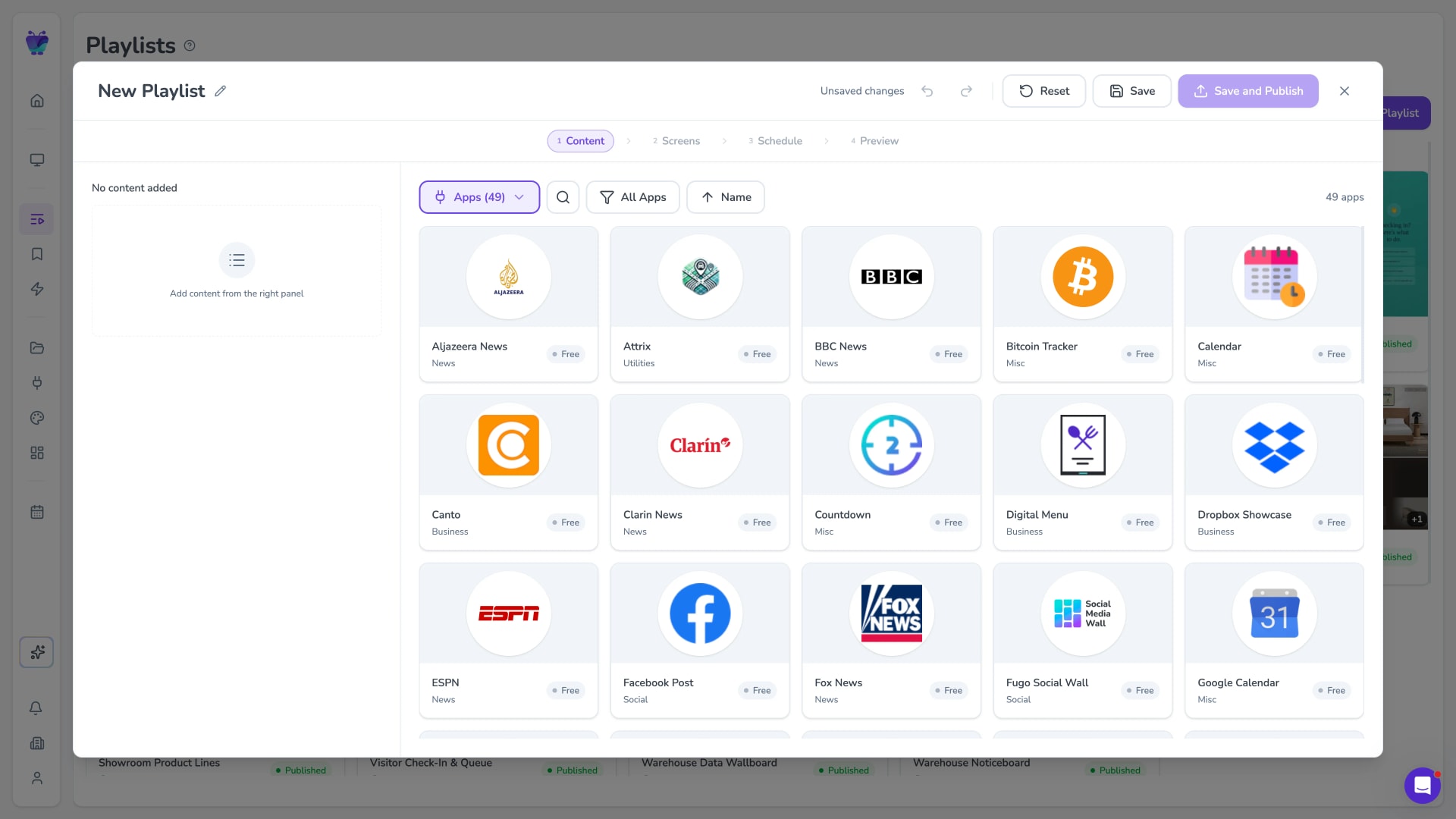
Fugo is the software that runs the screens at your stops and shelters. Show live bus times with the Transit app, publish timetables and service alerts from one place, and get an alert when a screen drops offline. You buy the outdoor-rated display; Fugo runs on the player behind it. Covering a whole network, not just the stops? Start at transport and transit digital signage.
Trusted by teams in 60+ countries


























What a bus stop screen has to do
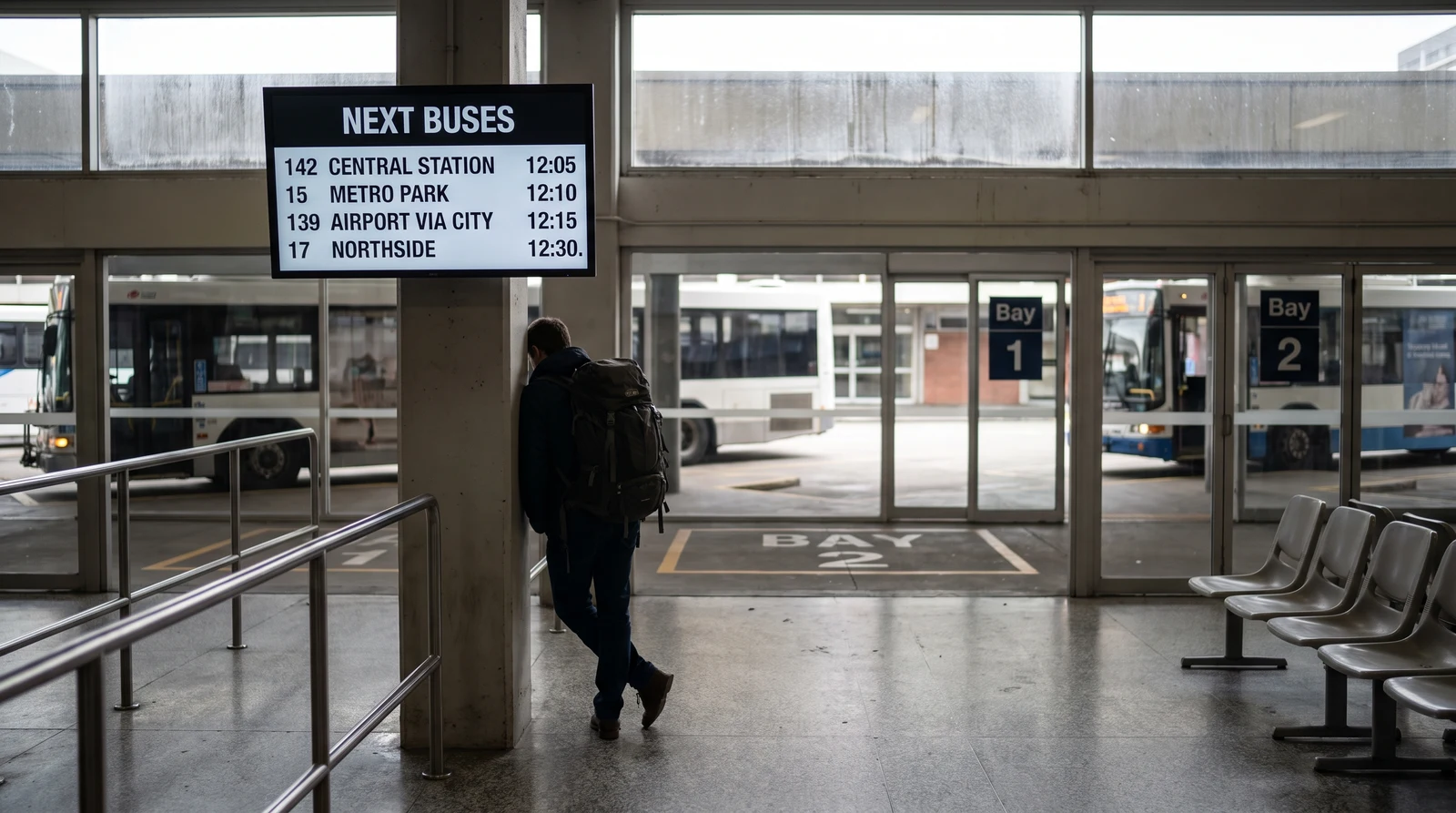
A screen at a stop has one job: tell the person waiting when their bus is coming, and tell them fast when something changes. Everything else is secondary.
That sounds simple until you have 40 of them across a borough. Then you have a fleet problem: content that has to stay current at every site, screens nobody visits for weeks, and a service alert that needs to reach every shelter on a route in under a minute.
The Fugo Transit app shows live arrival times for public transport near the screen's address, updated automatically for delays. It covers buses, trams, metros, city trains and regional and intercity services within about a kilometre of where the screen sits. Add it to a playlist and it keeps itself current.
What you can put on a stop screen
Live times are the headline, but a stop screen carries more than one message through the day.
Live bus times, on the glass
Show live arrival times for public transport near the screen, updated automatically for delays. If you already run your own live timetable or operations dashboard on the web, show that instead as a dashboard on TV — Fugo loads it by URL and refreshes it on screen.
Timetables, service alerts and notices
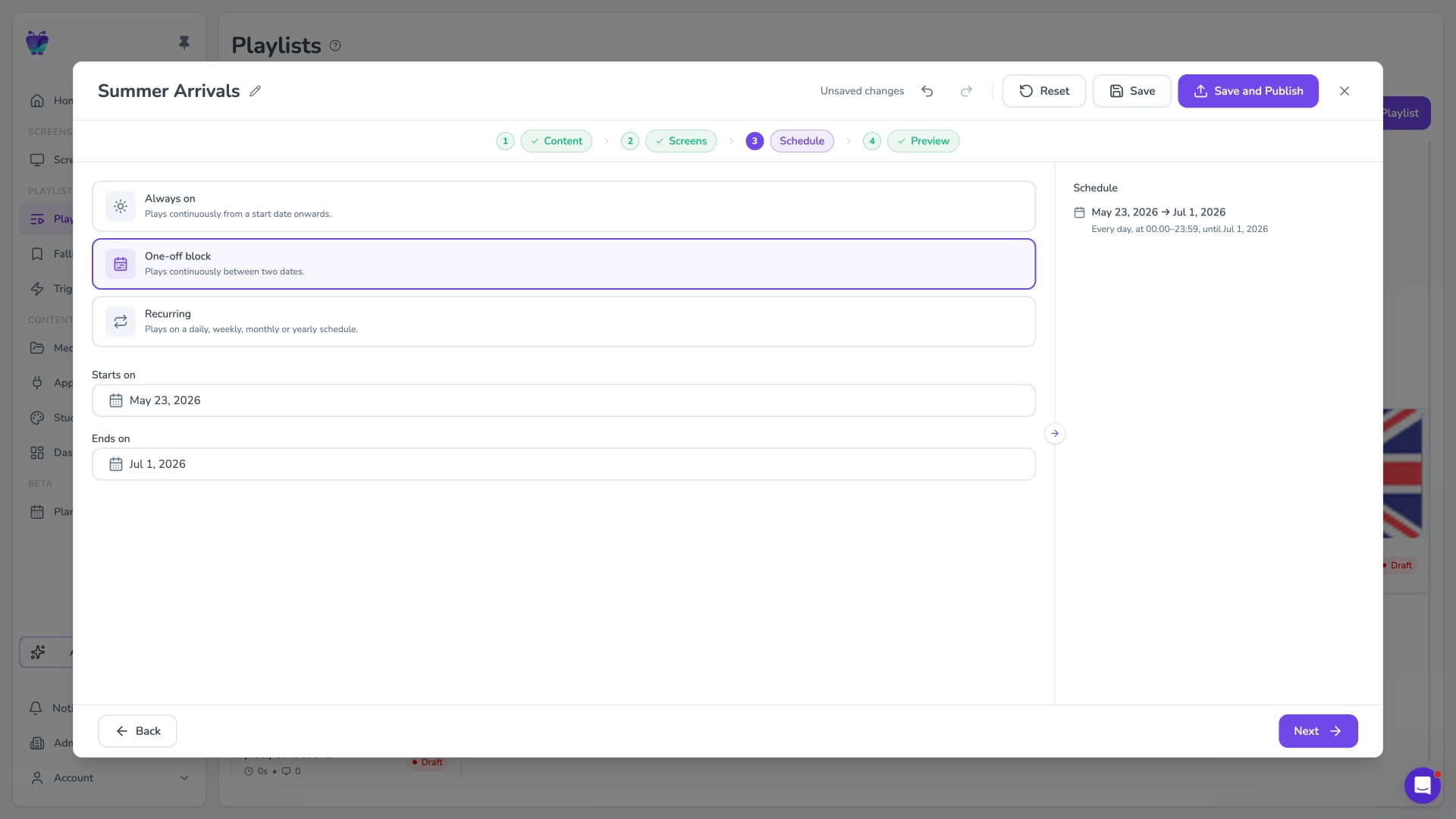
Build a timetable board or an alert card in Design Studio from a template, then push it to one shelter or every shelter on a route. Set a start and end time so a planned diversion notice appears the night before and clears itself when the works finish.
Advertising and community messages
Stops are dwell-time real estate. Slot paid or community content between the service information using playlists and day-parting, so the morning peak shows times and nothing else, and the off-peak carries the rest.
What Fugo does here, and what it doesn't
This matters when you are writing a spec, so here it is plainly.
What Fugo does
The content, the playlists, the scheduling and day-parting, the multi-site management, the screen health monitoring and remote recovery, and the live transit data through the Transit app.
What Fugo doesn't
Supply displays, enclosures, poles, power or connectivity. We do not make weatherproof cabinets or high-brightness panels, and we do not drive e-ink stop flags, which use their own low-power controllers. Fugo is hardware-agnostic software that runs on the player driving a normal screen. So the usual shape of a stop deployment is: your civils and enclosure supplier fits the shelter, your display supplier provides the outdoor-rated panel, and Fugo runs on the player inside it.
Keeping unattended shelter screens online
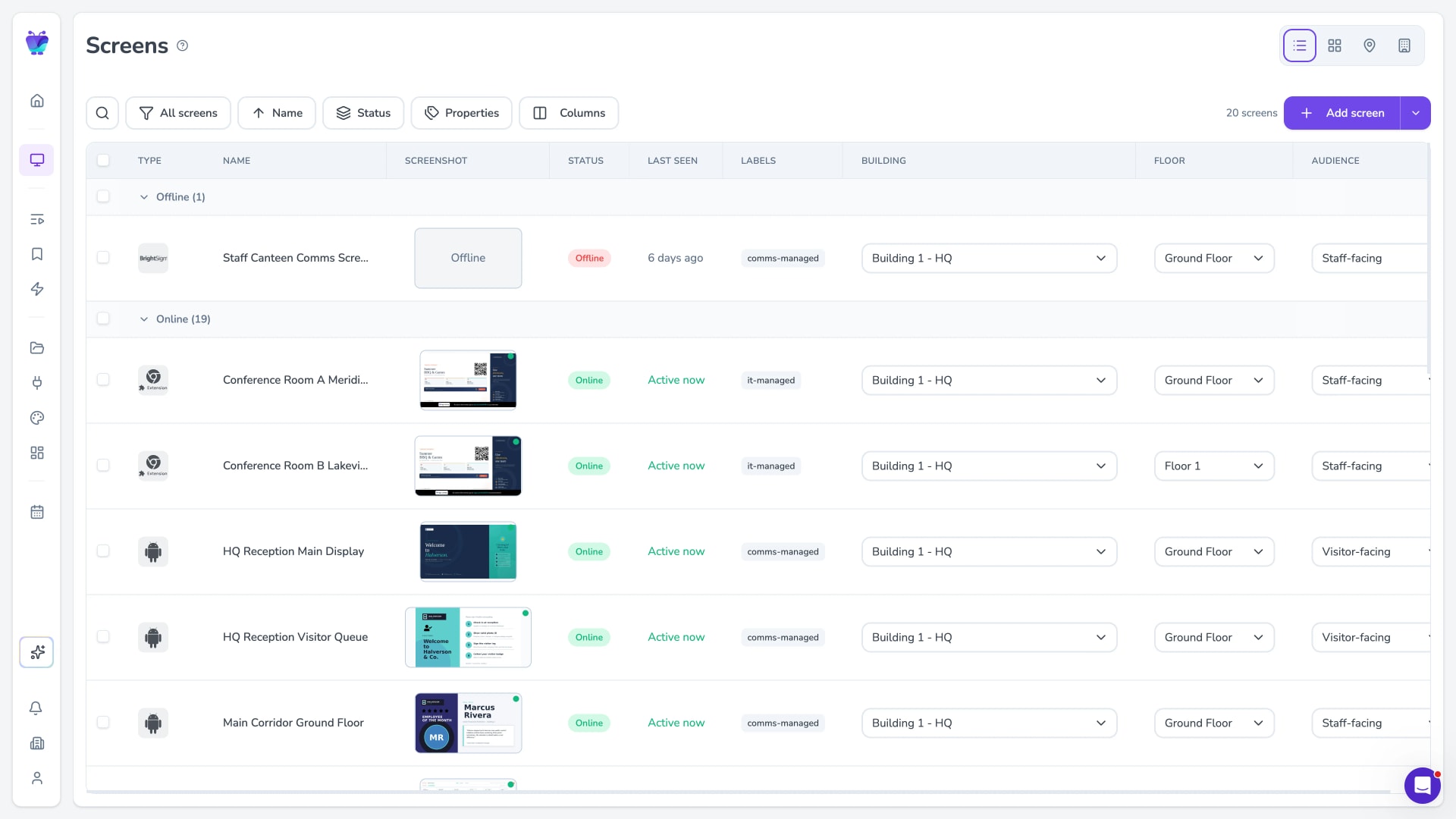
Nobody walks past a shelter screen with a laptop. You find out it is dead when a passenger complains, or you never find out at all.
Fugo's uptime monitoring shows you, per screen, whether it is online, what it is playing right now, and when it was last seen. You get an alert when one drops off. From the same dashboard you can restart a screen remotely or pull a screenshot to see what it is actually showing, rather than what it should be showing.
For a network of stops that is the difference between a quarterly maintenance round and knowing on the day.
Managing a whole network of stops
Group your screens by route, corridor, depot or district. Publish to one group, several groups or everything at once. A diversion notice goes to the affected route only; a network-wide alert goes to all of them.
Pricing is per screen, so a pilot at six stops costs what six stops should cost, and you scale from there. Fugo is SOC 2 Type II certified, which usually clears the security section of a public-sector procurement pack.
You buy the display, Fugo runs on the player
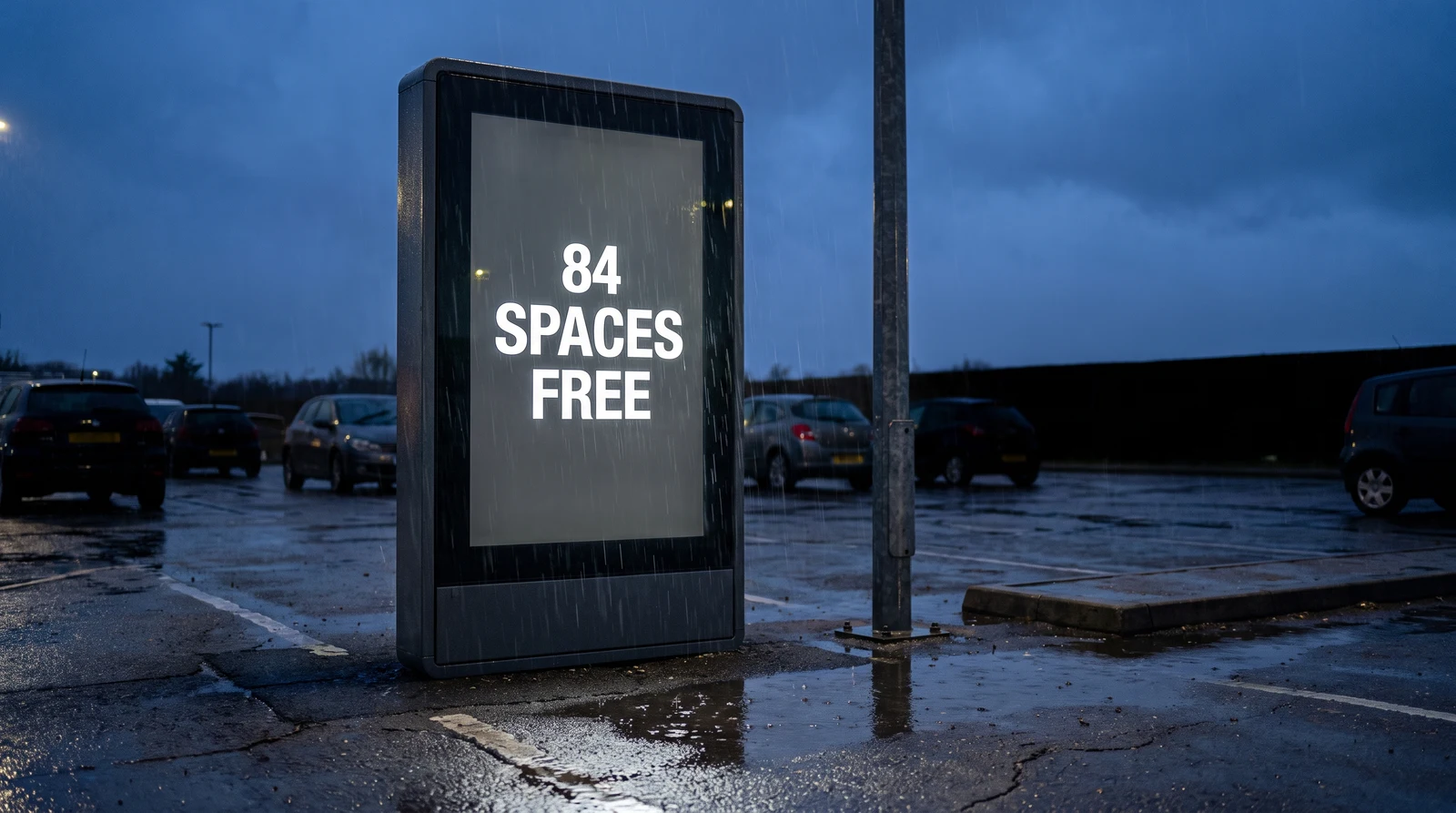
Fugo makes no hardware. You buy the outdoor-rated display and enclosure; Fugo is the software running on the player behind it.
Once the hardware is specified, Fugo runs on whatever player drives it: Amazon Fire TV or the Signage Stick, Google TV Streamer, NVIDIA Shield, Android, a Samsung Tizen or LG webOS screen's built-in player, or Windows and ChromeOS devices.
Choosing hardware for a stop or shelter
Buying guidance, not Fugo products. We do not sell any of this.
Brightness
Indoor TVs wash out in daylight. Stop and shelter screens are typically specified at high nit counts for sunlight readability. See high-nit outdoor displays.
Enclosure and IP rating
Roadside screens need an outdoor-rated enclosure with a sealed, often climate-controlled cabinet and toughened front glass.
Vandalism
Anti-vandal glazing and tamper-resistant fixings are standard at street level.
Power and connectivity
Most stops need power and network brought to them. Which option you use is a civils and telecoms decision, not a software one.
E-paper
E-paper signage is common for low-power stop flags showing static timetables. Fugo does not run on e-ink stop flags — if that is your whole deployment, Fugo is not your product.
Where else this works
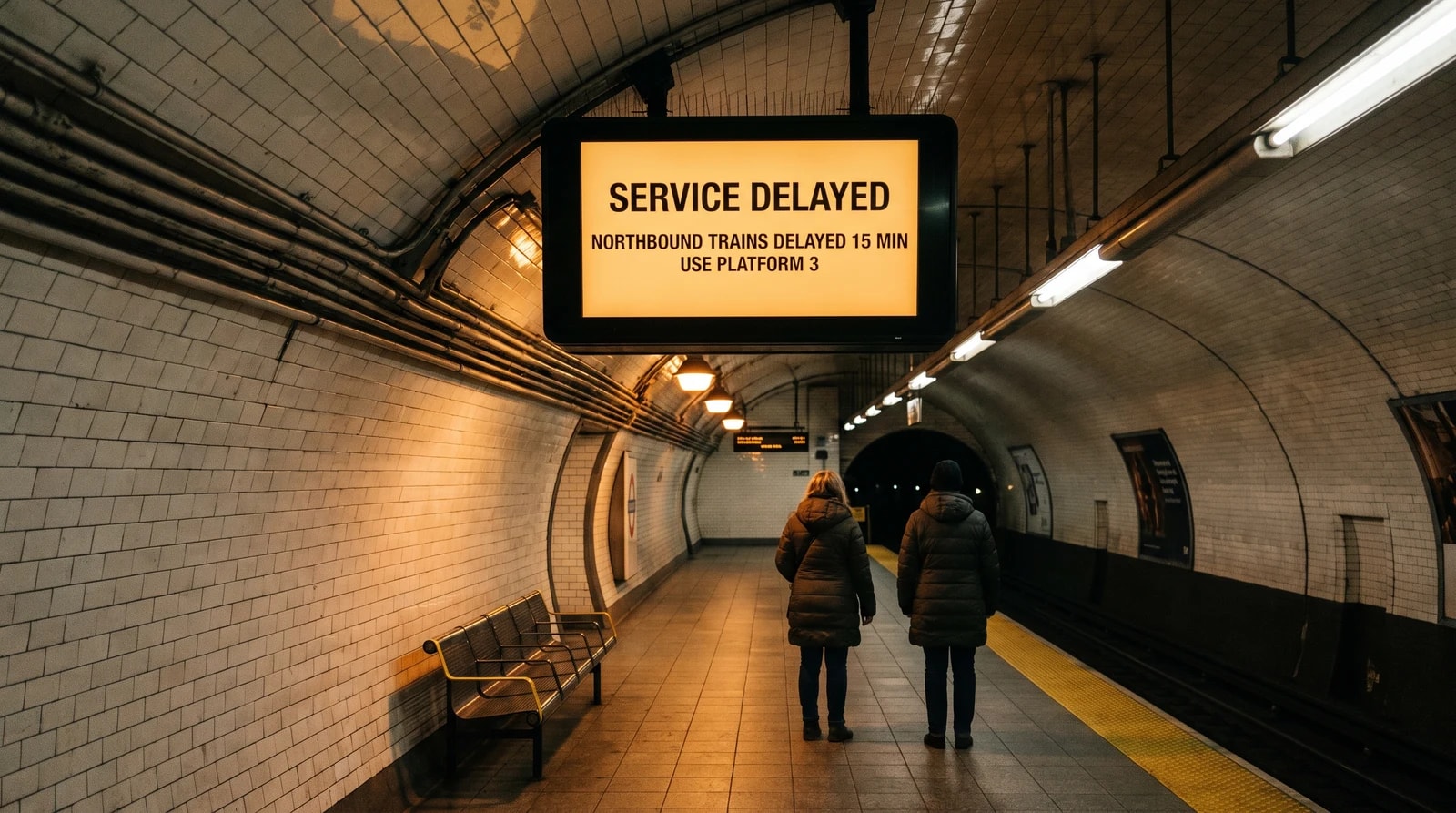
Stops and shelters are the start of it. The same publishing, scheduling and monitoring runs anywhere passengers wait.
One playbook, many transit settings
The same setup runs at bus stations and interchanges, park-and-ride sites, campus and corporate shuttle stops, and coach terminals. For a rail concourse or an airport, see airport digital signage. For screens exposed to weather generally, see outdoor digital signage. If you are planning across a whole network, start at transport and transit digital signage.