
Fugo

ChromeOS digital signage software

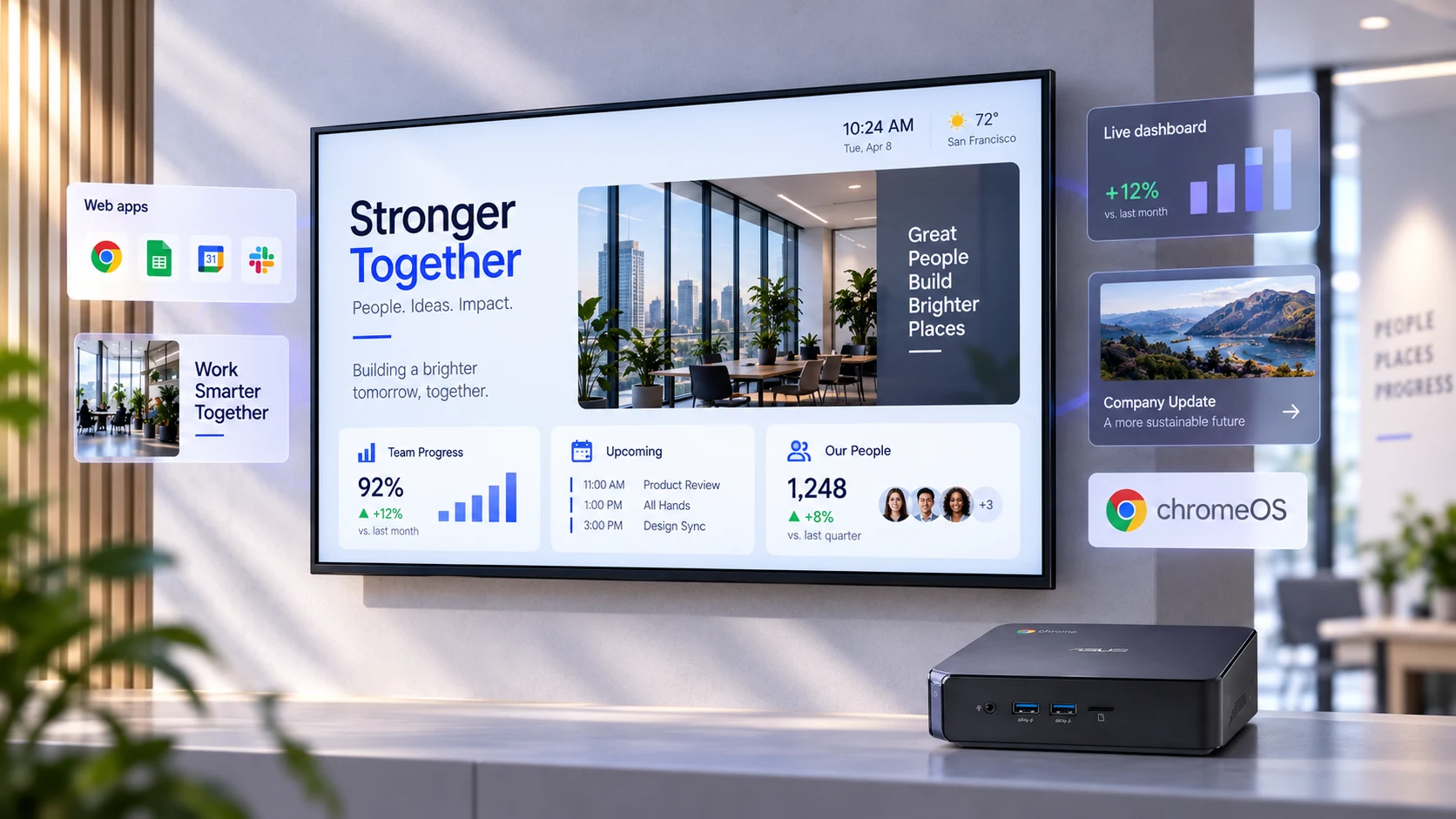
Run Fugo in ChromeOS kiosk mode — a single, secure, auto-relaunching signage app on any Chromebox or Chromebase. Auto-updating and centrally managed from the Google Admin console, it’s an ideal fit for Google Workspace teams.

ChromeOS-powered digital signage panel outside an office meeting room showing room availability and booking status
Why ChromeOS for signage

Secure, self-managing screens for Google workspace teams

Chrome devices run best in kiosk mode — one locked-down app that relaunches itself and stays current without a technician on site.

Always up to date

ChromeOS patches itself in the background on a rolling release cycle, so every screen runs the latest, most secure build. There’s no manual updating to schedule and no version drift to chase across a fleet.

Central Google admin management

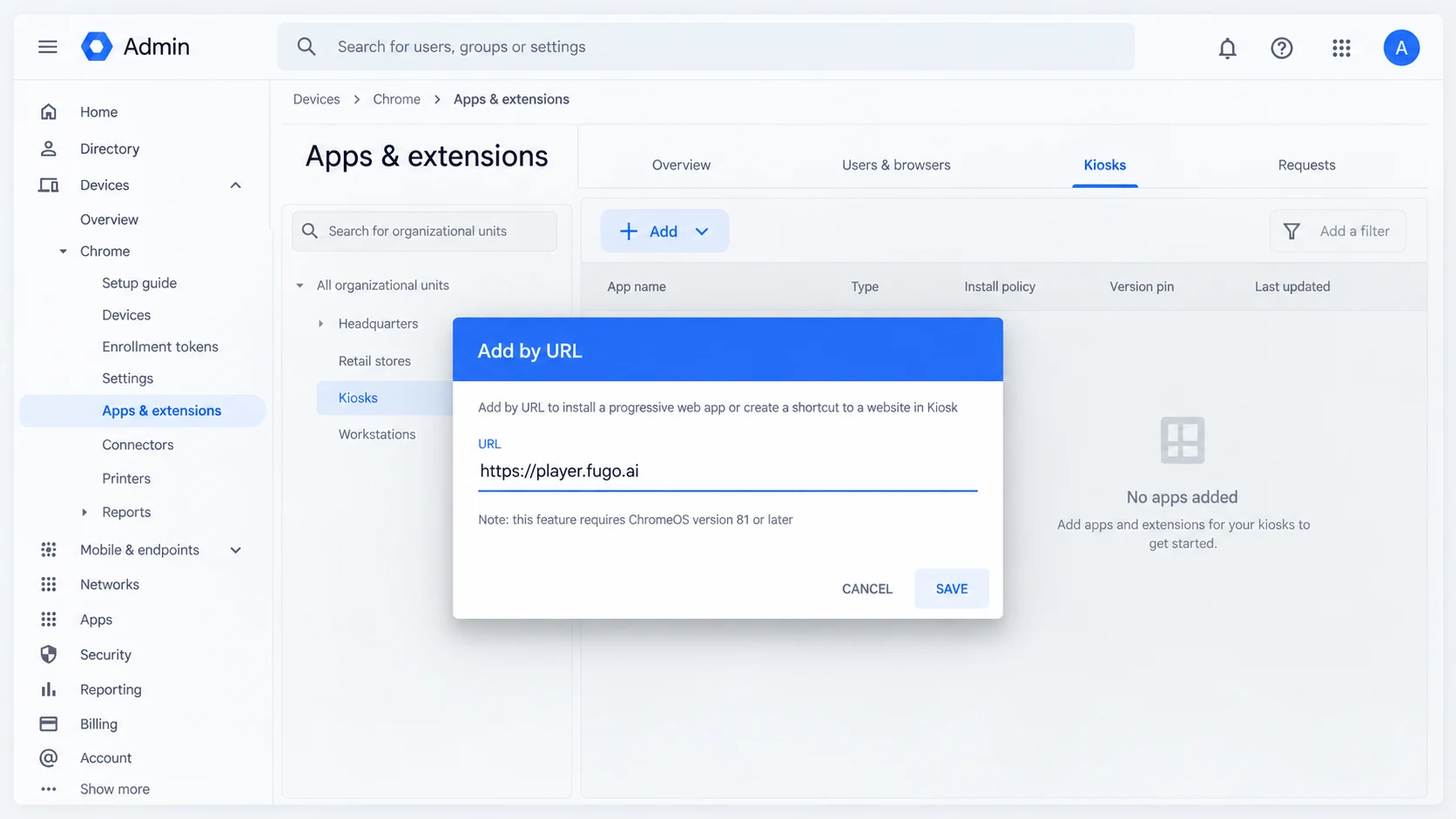
Enrol, configure, and monitor your whole fleet from the Google Admin console. Push the Fugo kiosk app to an organizational unit, set screen on/off schedules and scheduled reboots, and watch device health across every location from one place.

Enterprise-grade security

A verified boot chain, process sandboxing, and a locked kiosk app keep public-facing screens hardened against tampering. Chrome Enterprise policies let you disable USB, block navigation, and control exactly what each device can do.

Fast, reliable boot

Chromeboxes boot in seconds and relaunch the Fugo kiosk app automatically after a power cut or scheduled reboot. Screens come back to your content on their own — no blank displays and no on-site restart.

Supported devices

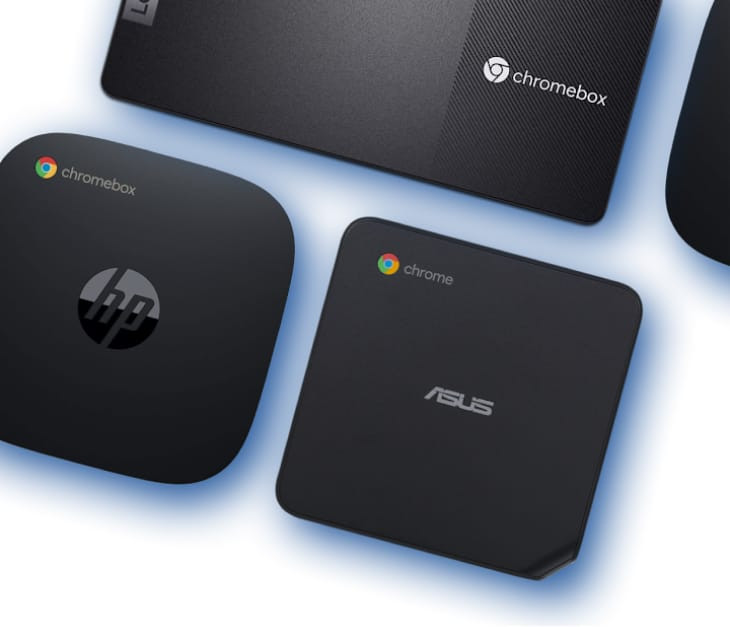
Recommended ChromeOS devices for Fugo

For new purchases, choose a device with a Chrome Enterprise license (or Kiosk & Signage Upgrade) and at least a year until its Auto Update Expiration — 3 years or more preferred. Prefer a pre-configured box? The Fugo Chromebox ships signage-ready.

Chromeboxes

  • Fugo Chromebox (pre-configured)
  • ASUS Chromebox 4
  • CTL Chromebox
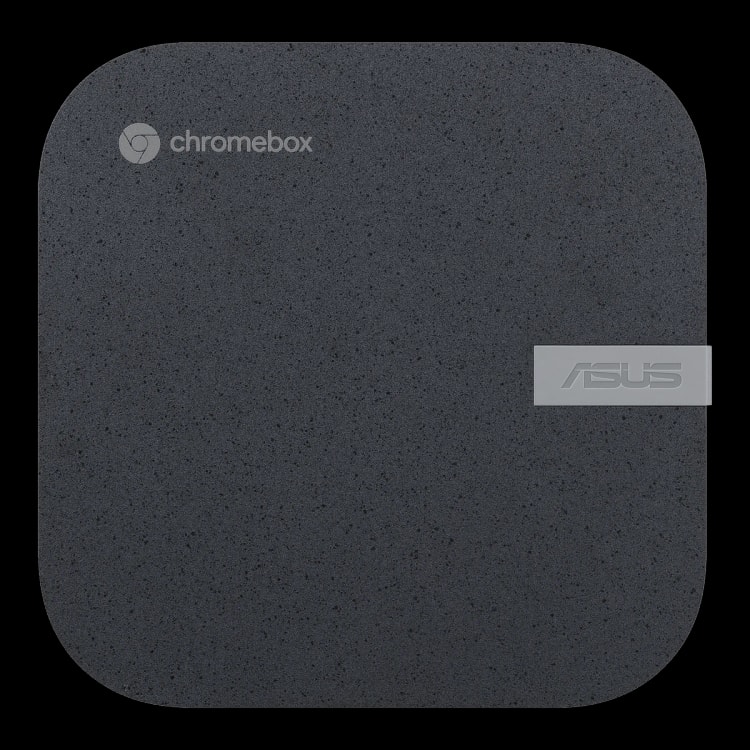
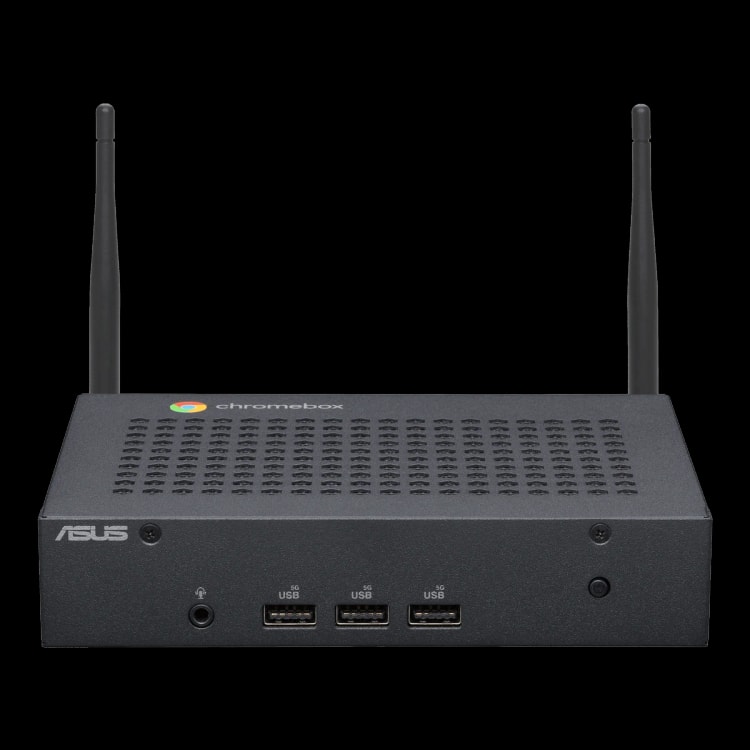
  • ASUS Fanless Chromebox
  • AOpen Chromebox Commercial 2

Chromebases & signboards

  • AOpen Chromebase Mini
  • AOpen C-Tile
  • AOpen Chromebase Commercial
  • Ideal for touch and self-service kiosks

Minimum requirements

  • Chrome Enterprise license (or Kiosk & Signage Upgrade)
  • ≥1 year until Auto Update Expiration (3 yr+ preferred)
  • Dual-core CPU+ (quad-core preferred)
  • 2 GB RAM+ (4 GB preferred), 8 GB storage+ (32–64 GB preferred)
Setup

Deploy Fugo as a ChromeOS kiosk app

There’s no direct download — Fugo is pushed to your Chrome devices as a managed kiosk app from the Google Admin console.

Fugo CMS connections settings for integrating Google Workspace and SSO
1

Enrol your device

Enrol the Chromebox or Chromebase into your Google Admin console with a Chrome Enterprise license. Connecting your Google Workspace domain lets you manage the device — and the Fugo kiosk app on it — centrally from day one.

Fugo App Store page where apps are added to a signage deployment
2

Add Fugo as a kiosk app

In the Admin console, set the Fugo kiosk app for the device’s organizational unit so it auto-launches and relaunches on boot. Fugo installs the same way you add any app in Fugo — from the App Store — then runs full-screen and locked down.

Fugo CMS screen pairing modal ready to receive a pairing PIN
3

Pair and manage remotely

Launch the kiosk app to reveal a pairing PIN, connect the screen in Fugo CMS, then schedule playlists and monitor every device from the cloud. Remote screenshots and over-the-air updates keep the whole fleet in sync without a site visit.

Signage software suite

Full-featured digital signage software on every ChromeOS screen

ChromeOS gives you a reliable, self-managing player — Fugo CMS gives you everything you need to design, schedule, and manage content across the fleet.

Fugo Design Studio blank landscape canvas for building signage content

Design content in the browser

Build slides in the Fugo Design Studio, upload media, or pull from tools where your content already lives. Landscape, portrait, and multi-zone layouts all play natively on ChromeOS, so screens look on-brand without extra software.

Fugo screens page grouping devices by property for central management

Central screen management

Group, tag, and monitor every Chromebox and Chromebase from one cloud dashboard. Filter by property, player type, or online status to manage a large ChromeOS network without logging into each device.

Fugo playlist scheduling view for planning when content plays

Flexible scheduling

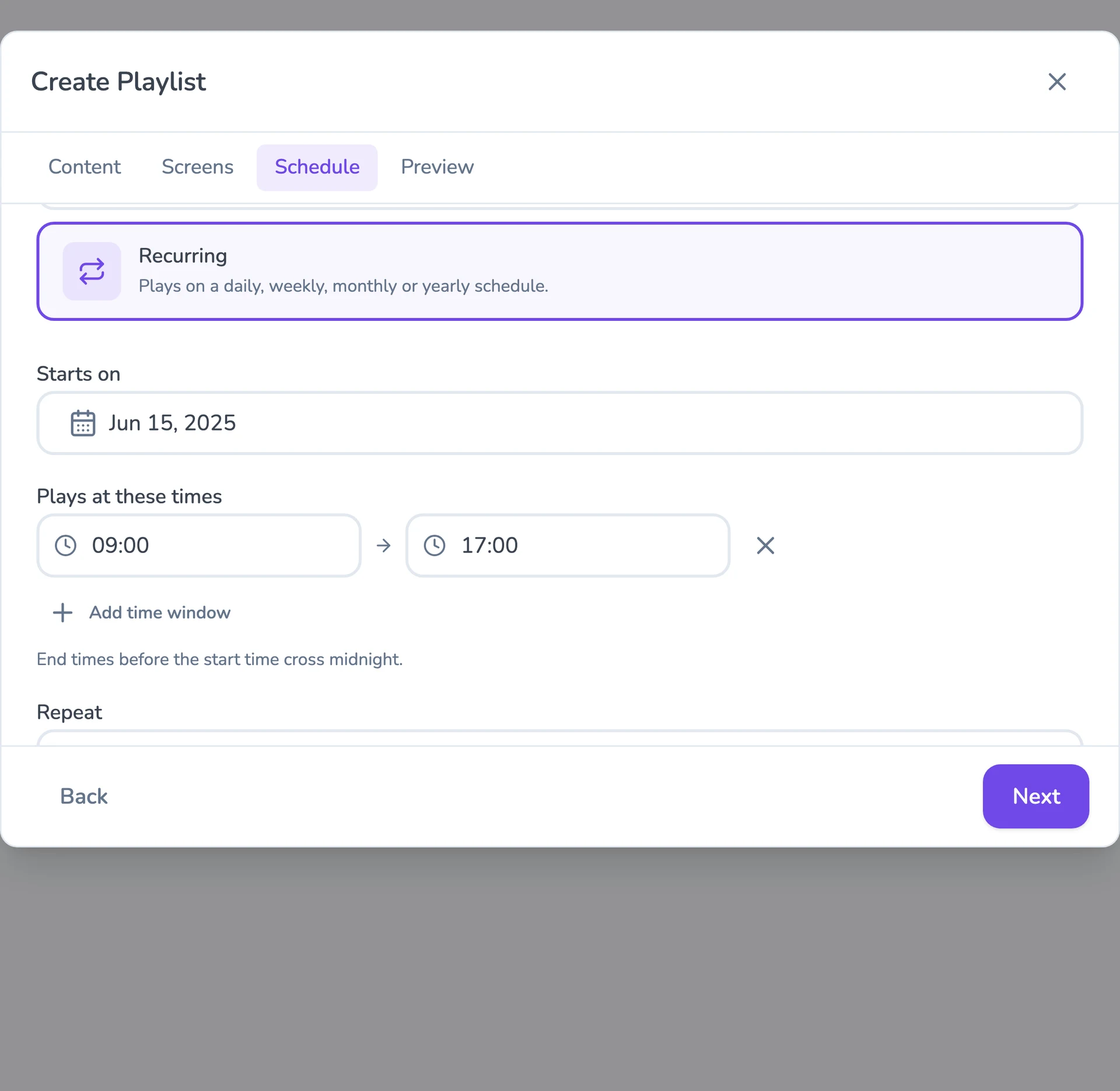
Set start and end dates, recurring blocks, and priority takeovers so the right content plays at the right time. Schedule once and Fugo keeps every ChromeOS screen on plan, even offline, thanks to local media caching.

Live data dashboard placed on the canvas in Fugo Design Studio

Live data & dashboards

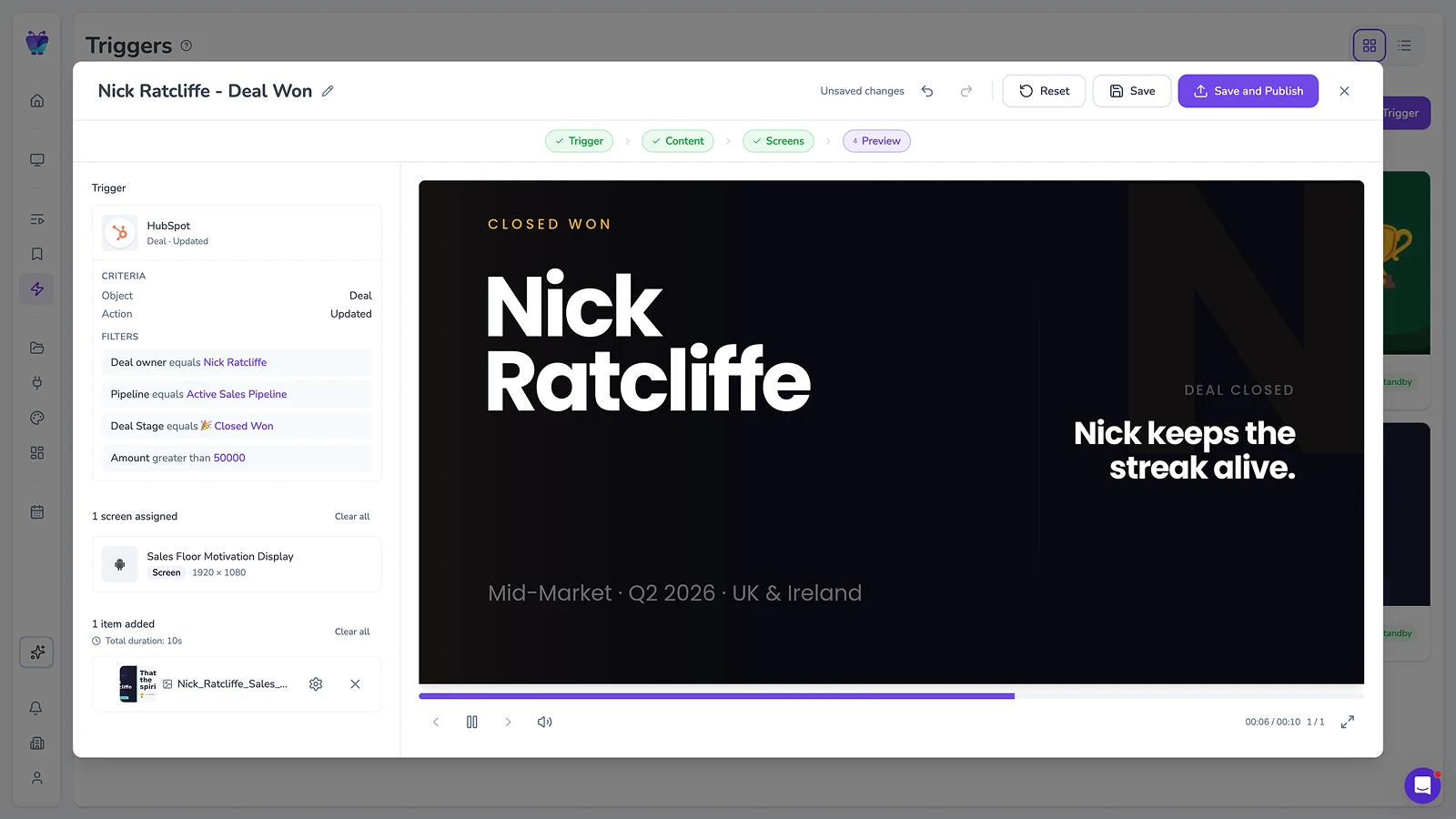
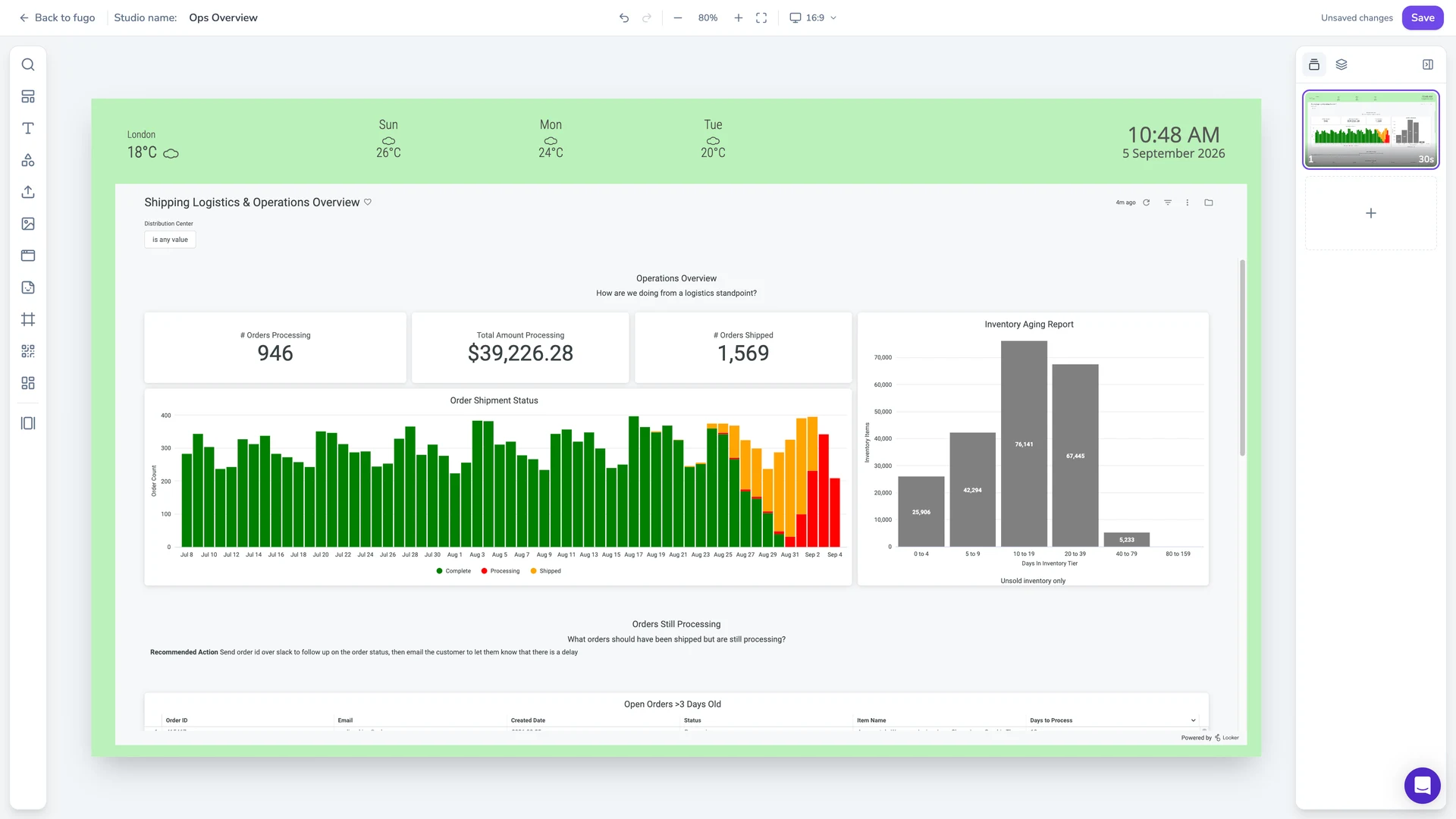
Drop live BI dashboards, KPIs, and web content straight onto the canvas. Connect Power BI, Tableau, Grafana, and more to turn any ChromeOS screen into an always-current data display for teams and visitors.

Central management
Fugo screens page grid view showing the health and status of a managed ChromeOS fleet

Kiosk mode and central management from the Google admin console

Running Fugo in kiosk mode unlocks the system-management features built into the Google Admin console — the reason ChromeOS is such a strong fit for signage at scale. Set screen ON/OFF schedules so displays power down overnight, schedule automatic reboots to keep devices fresh, and use Chrome Enterprise’s device monitoring and reporting to spot a screen that needs attention. Combined with Fugo’s own remote screenshots and over-the-air updates, you can run a fleet of Chromeboxes and Chromebases across every location without ever touching them.

Kiosk mode vs extension

Run Fugo in kiosk mode, not just as an extension

Kiosk mode is the recommended way to run Fugo on ChromeOS. Without it, Fugo runs only as a Chrome extension — with real limitations.

Kiosk mode (recommended)

A single, secure, full-screen app that auto-starts and relaunches after reboots or power loss. Requires a Chrome Enterprise Upgrade or Kiosk & Signage Upgrade, and unlocks Admin-panel system management — screen on/off schedules, scheduled reboots, and fleet monitoring.

Chrome extension (limited)

Fugo can also run as a Chrome extension, but performance is limited and there’s no auto-start after a reboot. It’s fine for quick trials, but for always-on signage a Chrome Enterprise or Kiosk & Signage Upgrade is strongly recommended.

ChromeOS digital signage FAQs

What is a Chromebox?

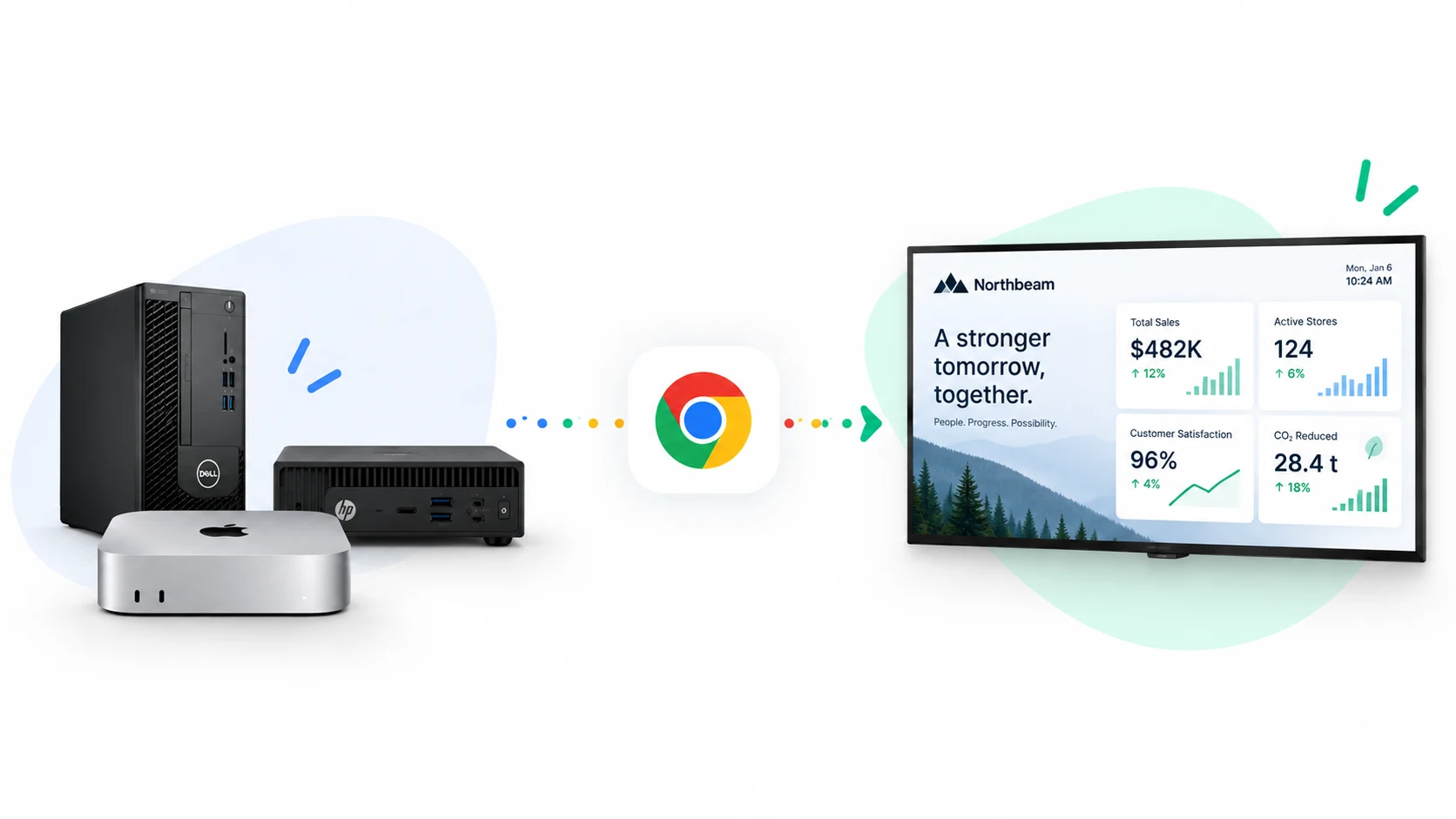
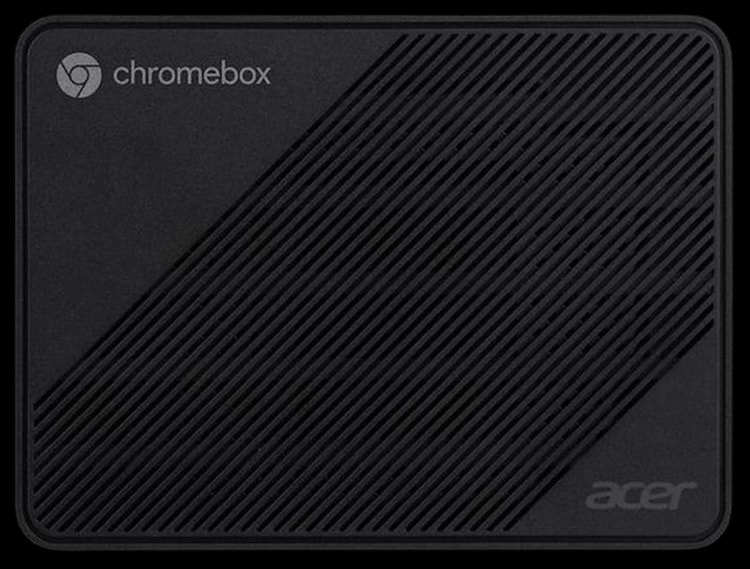
A Chromebox is a small desktop computer that runs ChromeOS — Google’s lightweight, secure operating system. Paired with a display it makes a compact, reliable digital signage player. A Chromebase is the same idea in an all-in-one form factor with the screen built in, which is well suited to touch and self-service kiosks. Both run the Fugo kiosk app.

Do I need a Chrome enterprise license?

For always-on signage in kiosk mode, yes. A Chrome Enterprise license (or Kiosk & Signage Upgrade) is required to enrol the device in the Google Admin console and push Fugo as a managed kiosk app. Licensing is roughly $25 per device per year or $150 perpetual, and requires Google Workspace integration. See the ChromeOS hardware directory for the full requirements.

What’s the difference between kiosk mode and the Chrome extension?

Kiosk mode runs Fugo as a single, locked-down app that auto-starts and relaunches on boot, and it unlocks Admin-panel system management like screen on/off schedules and scheduled reboots. The Chrome extension is performance-limited and does not auto-start after a reboot, so it’s only suitable for quick trials. For production signage we recommend a Chrome Enterprise Upgrade or Kiosk & Signage Upgrade.

What is the auto update expiration (AUE) date and why does it matter?

Every Chrome device has an Auto Update Expiration (AUE) date — the point after which Google stops shipping automatic ChromeOS updates and security fixes for that model. Because self-updating is a core reason to choose ChromeOS for signage, you should buy a device with at least a year of AUE remaining, and ideally 3 years or more, so your screens stay secure and supported for the life of the deployment. You can look up any model’s AUE date in Google’s AUE reference.

How is this different from the Fugo Chromebox?

This page covers running Fugo on generic ChromeOS devices you buy and configure yourself — any supported Chromebox or Chromebase enrolled in your Google Admin console. The Fugo Chromebox is our own pre-configured player: it arrives signage-ready so you skip the licensing and Admin-console setup. Choose generic ChromeOS if you already run Google Workspace and want to standardise on your own hardware; choose the Fugo Chromebox if you’d rather it worked out of the box.

Which ChromeOS device should I buy?

For most deployments an ASUS Chromebox 4, CTL Chromebox, or AOpen Chromebox Commercial 2 works well. For touch and self-service, an AOpen Chromebase Mini or Chromebase Commercial combines the player and screen in one unit. Whatever you choose, pick a device with at least a year until its Auto Update Expiration — 3 years or more is preferred. Compare options on our player comparison page, or browse all signage hardware.

What can I show on ChromeOS screens?

The full Fugo media set: landscape and portrait layouts, multi-zone playback with up to two concurrent streams, App Store apps, webpages, and offline media (JPEG, PNG, WebP, SVG, GIF images; MP4, MOV, AVI video; PDF documents). You can also connect live TV dashboards, drive content by industry use case, and manage screens remotely with remote screenshots and updates — plus Admin-panel fleet monitoring on ChromeOS.